Jane Austen has been part of my life for as long as I can remember. Her novels were assigned in school, reread later by choice, and adapted into films I have watched more times than I care to admit. And yet, traveling through England to mark her 250th birthday made me realize how little I knew about the woman who had penned these classics.
Austen has been so thoroughly canonized that it’s easy to forget she lived a very specific, very ordinary kind of life. She spent her days in small townhouses and cottages. She walked the same routes again and again. She sat in rooms watching people interact, quietly clocking dynamics that would later become novels sharp enough to survive two centuries of rereading. Traveling through England didn’t make her feel larger than life. It did the opposite. It made her feel close, human, and made me realize how deeply shaped she was by the places she knew best.
Rather than treating Austen like a literary monument, this journey followed her through London, Hampshire, Bath, and the Cotswolds — each revealing a different side of her world. Taken together, they offered a slower, more observant way to experience England, one rooted in the kind of slow travel and quiet observation Austen practiced so well.
London: Where She Learned the Rules
Like many British journeys, you’ll want to start in London. Not because it was Austen’s emotional center, but because it’s where she learned how society actually works. She spent long stretches here visiting family, especially her eldest brother Henry, absorbing the rhythms of city life and watching reputation, money, and ambition circulate in real time. London is where people perform, and Austen was paying attention.
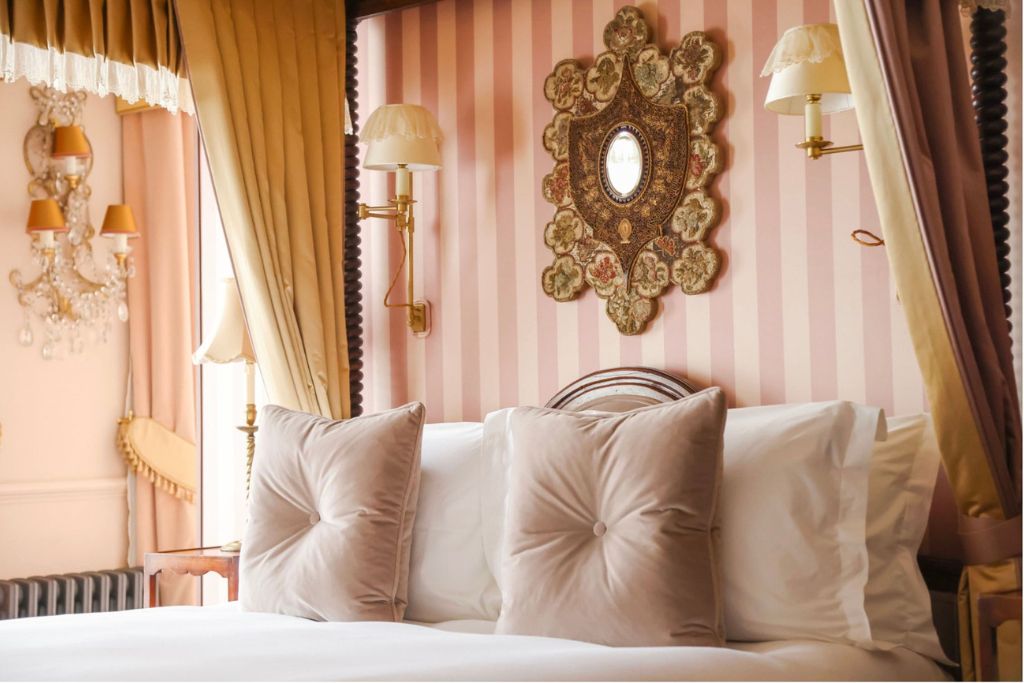
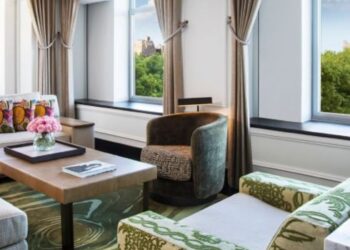
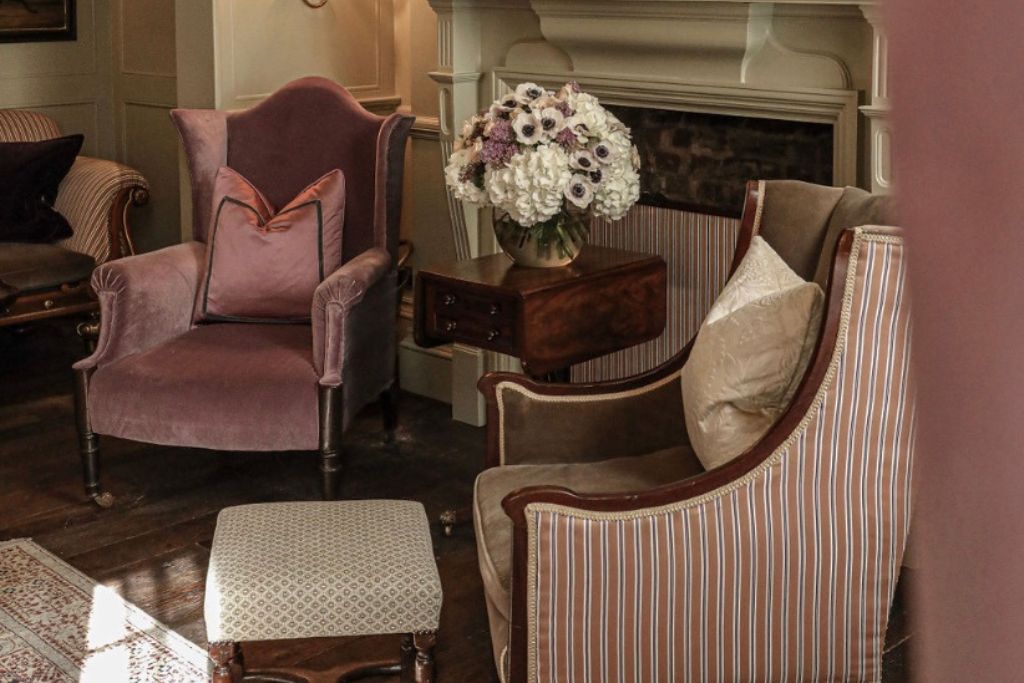
The best possible home base is Henry’s Townhouse, a six-room Regency townhouse in Marylebone once inhabited by Henry himself. From the outside, it looks like just another handsome Georgian home, but inside it feels warm and personal. There are high ceilings and a winding staircase, yes, but also velvet armchairs, portraits that feel mid-conversation, and rooms that encourage lingering. Each bedroom is named for a member of the Austen family, which could feel gimmicky but somehow doesn’t.
Hampshire: Where the Writing Happened
Leaving London for Hampshire feels like exhaling. This is not a place of grandeur, but of repetition and routine, which is exactly where Austen’s writing life took shape. A brief stop in Steventon, where she was born and spent much of her childhood, sets the tone. Her family home is long gone, but the village still claims her, most charmingly via a red phone booth labeled “Jane Austen,” now a tiny free library stocked with her novels. It’s understated and communal, which feels right.
From there, Chawton is the real anchor. Jane Austen’s House still stands and is open to visitors, a small, unassuming cottage with low ceilings, narrow rooms, and softly patterned, hand-blocked wallpapers reproduced from period designs. Austen worked in the shared sitting room at a small round table light enough to move aside when company arrived. That table supported Pride and Prejudice, Emma, Mansfield Park, Sense and Sensibility, and Persuasion, and it’s where she first read her work aloud to her mother and sister Cassandra. The house now holds first editions of her novels, all originally published anonymously.
Just down the road, Chawton House, once home to her brother Edward, offers a revealing counterpoint. The Elizabethan manor and its library devoted to early women’s writing underscore how closely Austen lived to privilege without fully inhabiting it, a proximity that sharpened her insight and is well worth lingering over.
Winchester: A Quiet Ending
From Chawton, it’s just a 30-minute trip to Winchester, a small city that marks the final chapter of Austen’s life. A guided walking tour traces her last weeks, passing College Street where she stayed with Cassandra as her health declined. The walk ends at Winchester Cathedral, vast and quietly humbling, where Austen is buried. She was just 41 years old when she passed, and how incredible to think that she wrote a lifetime of classic literature in her brief time on earth.
Her grave is modest and easy to miss. The original inscription focuses on her character rather than her novels, a reminder that she never knew how famous she would become. Winchester isn’t about beginnings or inspiration. It’s about endurance, and the fact that even here, even at the end, Austen was still writing.
Bath: Where the Scenes Took Place
Next up, Bath. The city boasts honey-colored stone, sweeping crescents, and carefully choreographed streets that make it feel like you’re always part of the scene. Austen lived here for several years before moving to Chawton, and she used the city as both setting and subject in Northanger Abbey and Persuasion. Staying at the Royal Crescent Hotel and Spa places you right in the heart of it.
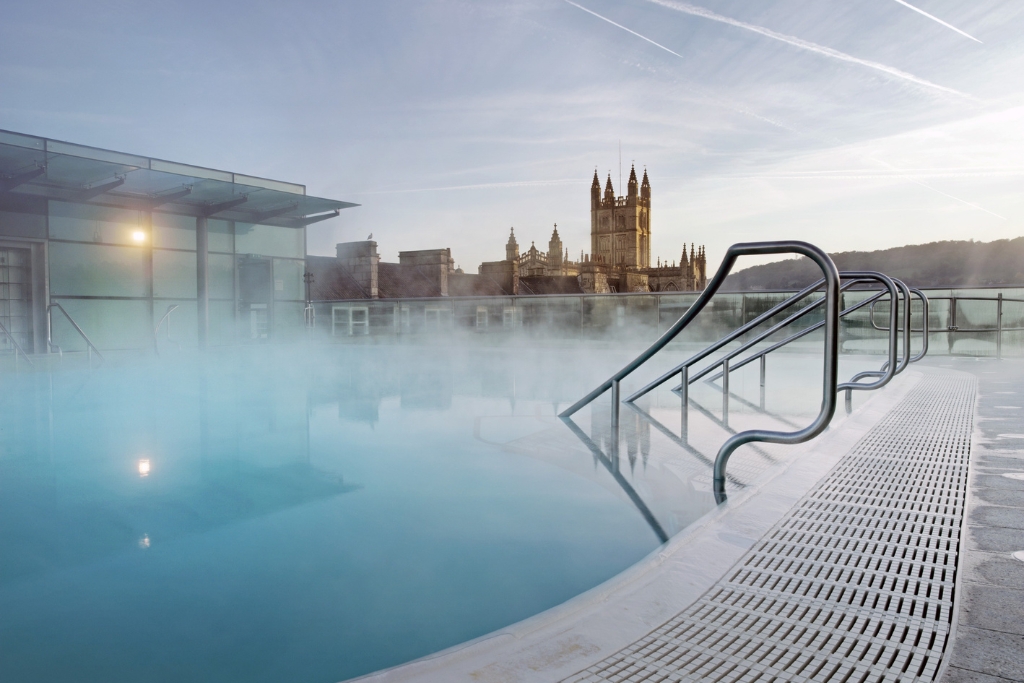
Beyond the headline sights (The Roman Baths, Bath Abbey), Bath is full of quieter Austen moments. 4 Sydney Place, the only house she’s definitively linked to by address, is an easy walk.
Bath is a city made for wandering. Crossing Pulteney Bridge, looping through crescents, and ducking down side streets reveals a rhythm that feels deliberately repetitive, and that repetition is the point. Bath didn’t give Austen peace. It gave her endless material. Walking it now, her writing feels less like satire and more like the work of someone who was always paying attention, and maybe enjoying it just a little more than she let on.
Outside Bath: Austen on Screen
Before leaving the area, it’s worth venturing into the surrounding countryside to visit several filming locations that have come to define the visual language of Austen on screen. Lacock Village famously stood in for Meryton in the 1995 Pride and Prejudice, and its preserved streetscape makes the casting feel inevitable. Nearby in Luckington, St. Mary with St. Ethelbert Church served as the wedding setting for the same adaptation, a quiet and atmospheric stop that many visitors recognize instantly once inside. Dyrham Park, grand yet unexpectedly approachable, rounds out the circuit. Its sweeping Baroque architecture and landscaped grounds were used in the 2008 Sense & Sensibility television miniseries, and walking the estate makes clear why it works so well on screen. Together, these sites bridge Austen’s novels with their modern interpretations, grounding the stories in real landscapes that continue to shape how we imagine her world.
The Cotswolds: a Respite for Thinking
From Bath, head to the Cotswolds, making a pitstop for lunch in picturesque Castle Combe before settling down in Broadway at the Lygon Arms where evenings unfold slowly, with firelit rooms and long dinners that feel made for conversation. It’s easy to imagine Austen’s characters passing through a place like this, pausing long enough for a realization before moving on.
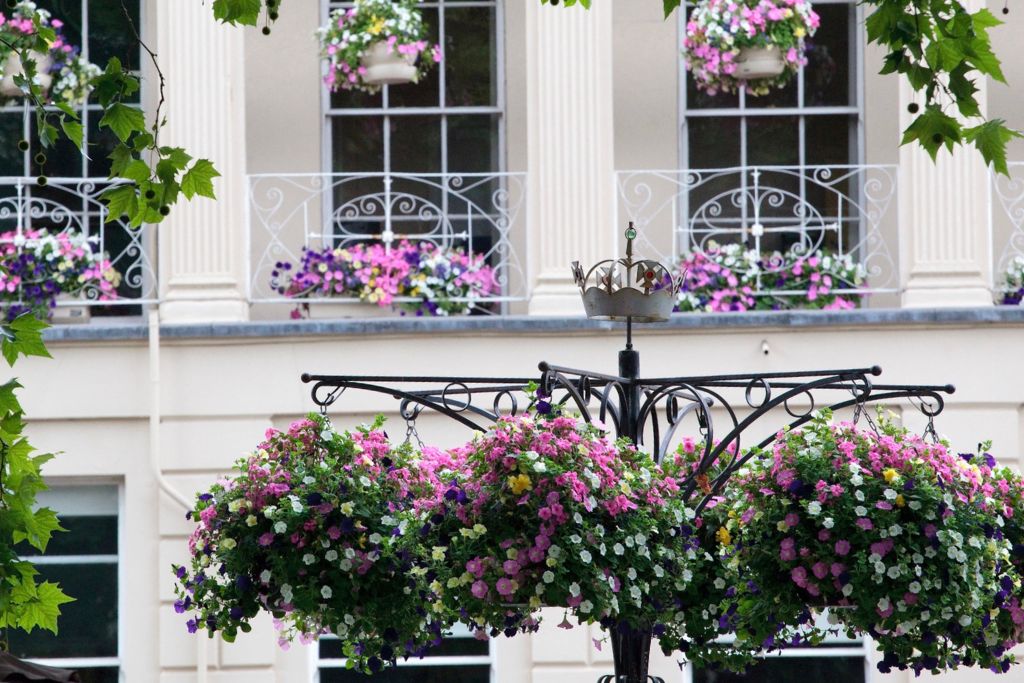
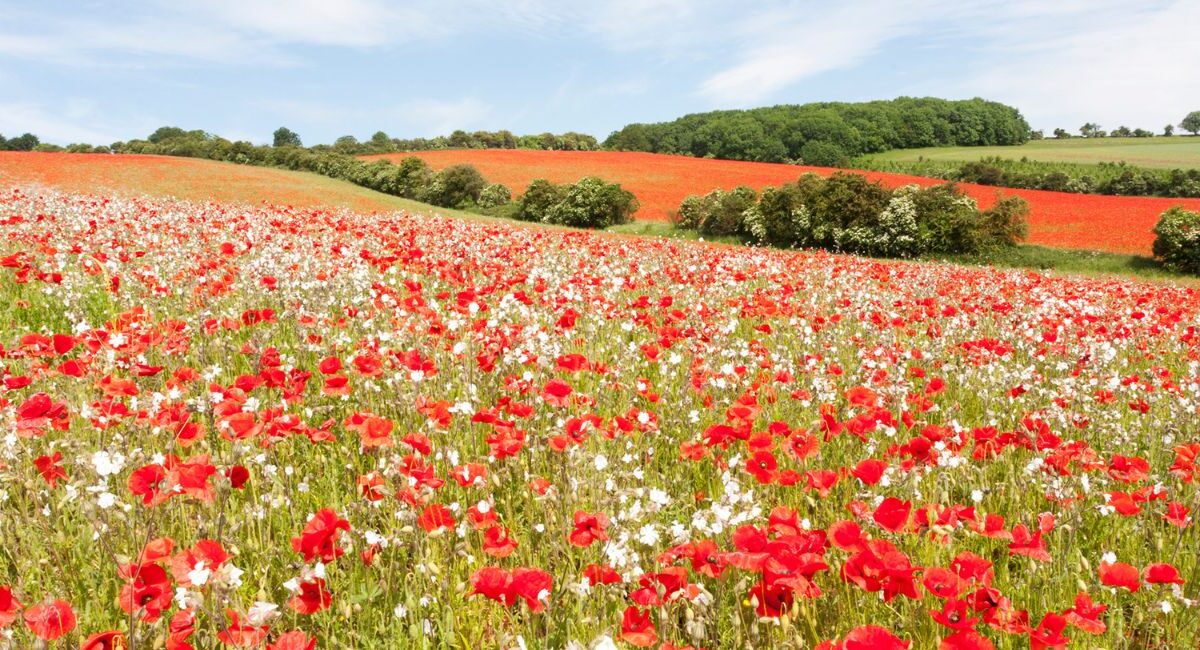
What struck me most about the Cotswolds was how much the landscape explains Austen’s pacing. Her characters walk. They travel. They sit with their thoughts. Feelings change gradually here, not all at once. After the social intensity of London and Bath, the Cotswolds offered something different, not escape, but clarity. It’s the physical space her novels so often rely on to let people come to terms with themselves.
You can’t leave this part of the trip without visiting Blenheim Palace, the grand Baroque estate in Woodstock that was built in the early 18th century as a gift to the first Duke of Marlborough and has been the ancestral home of the Churchill family ever since. Walking through its sprawling rooms and grounds is the kind of experience that makes it easy to see why estates like this loom so large in stories about high society and social display — the very world that captured Austen’s eye and imagination.
Closing the Book
By the end of the trip, what stayed with me wasn’t a checklist of Austen landmarks, but a shift in how I moved through the world. Slowing down, paying attention, and letting places reveal themselves over time felt unexpectedly aligned with how she wrote and lived. England, seen through this lens, becomes less about spectacle and more about texture: rooms, routines, walks, and conversations. Two hundred and fifty years later, Austen’s world is still here, not preserved behind glass but lived in, and experiencing it firsthand makes her work feel less like history and more like a way of seeing that still holds up.
Feature image by Steve, CPL, courtesy of Cotswolds Tourism.