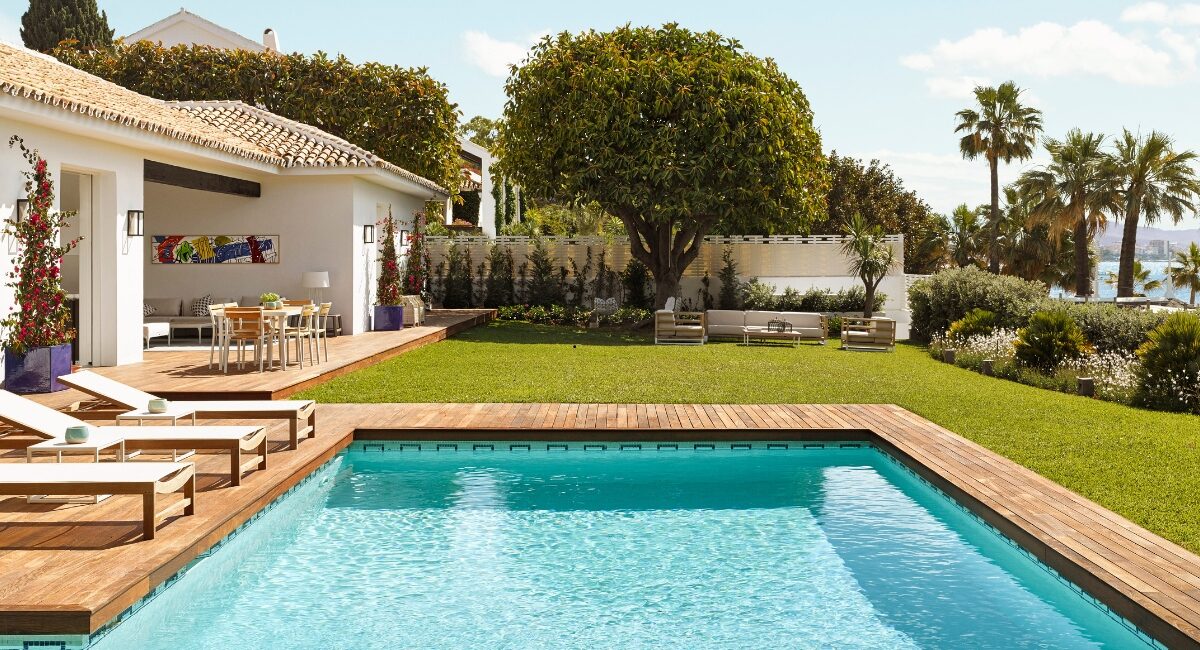
Marbella is always a good idea. The stylish beach resort city on the southern edge of Andalusia, Spain, has long benefited from more than 300 days of sun each year, an abundance of Blue Flag beaches, and its scenic position between the Mediterranean and the steep limestone peaks of the Sierra Blanca.
It started to become what it is today in the 1950s, when the German Prince Alfonso of Hohenlohe-Langenburg had a mishap on his grand tour of southern Europe. When his Rolls-Royce broke down and he found himself stuck in what was then a sleepy fishing village, he made the most of it and invited friends. Word got around, and it wasn’t long before celebrities, billionaires, and assorted royals added it to their holiday circuit.
In 1954, Prince Alfonso opened the Marbella Club, a grand hotel on the site of an old farm that turned the place into even more of a magnet for the international jet set. In 1979, along with Mouaffak Al Midani, he built the area’s most lavish resort, Puente Romano Beach Club. Both are still going strong — even as the destination’s innocent sun-kissed, Slim Aarons glamour has given way to a sometimes-flashy world of see-and-be-seen restaurants along the Golden Mile, supercars, mega-yachts, and booming nightclubs around the marina — and they’ve been joined by a slew of newer hotels that coddle guests in comfort while celebrating the city’s aristocratic history.
The Marbella Club
Even with its 70-plus-year history of fabulousness, the beachfront Marbella Club still feels genuine in its embrace of tradition and Andalusian spirit. The colors feel sun-burnished, the wood is well-weathered, and the Mediterranean breeze is always wafting through. The hotel’s low-slung design gives it the feel of a village, with 115 rooms and suites, plus a collection of bungalows and villas with two to four bedrooms, all set among the plans of a subtropical garden. In recent years, the property has developed a stronger focus on wellness and connection with nature, especially in the form of Finca Ana María, a three-acre extension with a five-year “ephemeral garden” masterminded by the French institution Deyrolle.
Puente Romano Marbella
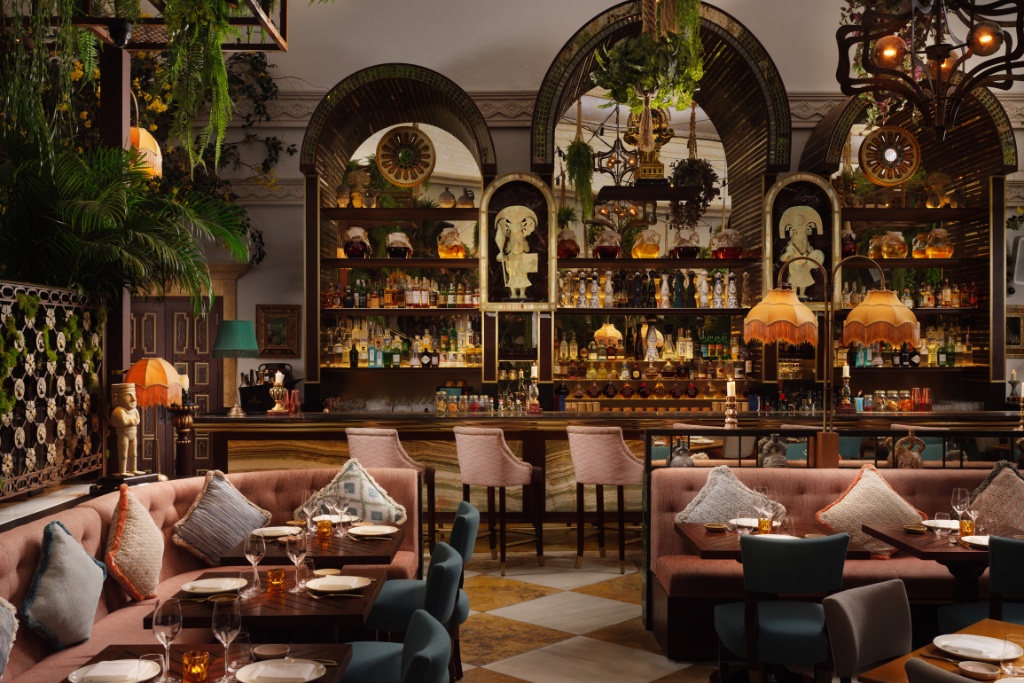
The other titan in Marbella lore, Puente Romano continues to raise the hospitality bar with its increasingly lavish offerings. This is the sort of resort where you check in and then have no reason to leave. After all, half of Marbella society is coming onto the grounds to dine at Nobu, Cipriani, or Coya (among roughly two dozen restaurants), relax at the Six Senses Spa, play a few rounds at the tennis club that’s hosted the Davis Cup and ATP world tour, or simply to join the scene at La Plaza, the social hub of the hotel. Its 216 guest rooms, which are spread around the grounds in low, residential-style buildings, have a generosity of space and a winning nautical design.
Nobu Marbella
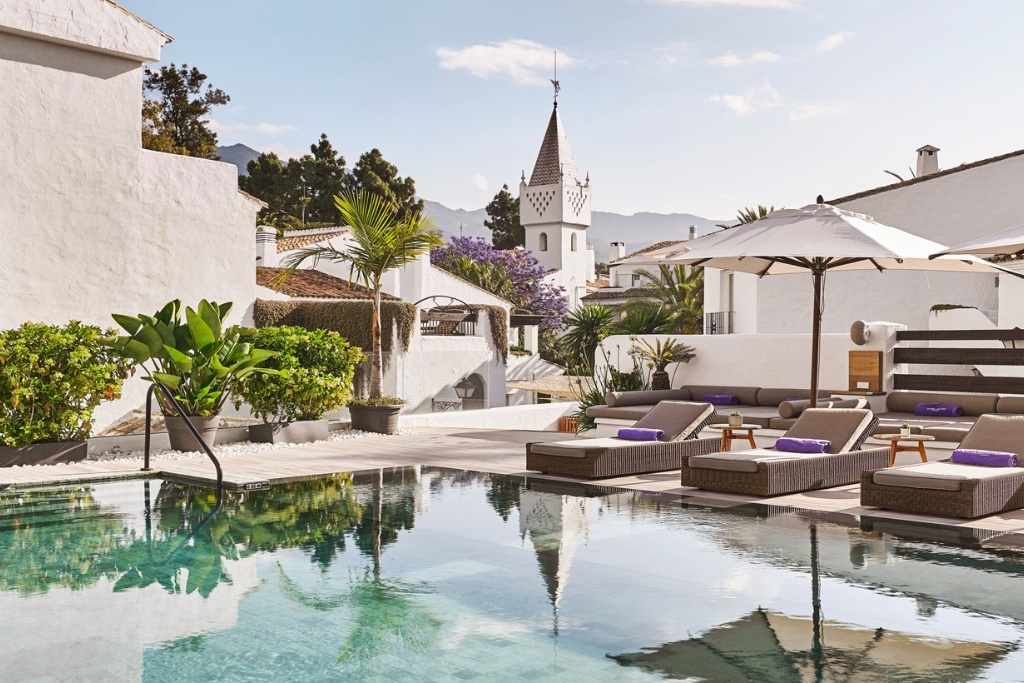
The “hotel within the hotel” concept often falls flat, but it works spectacularly well here. Nobu Marbella occupies its own building — with its own discreet entrance and services—on the grounds of Puente Romano Beach Club. Nobu guests get the best of both worlds: the brand’s signature Japanese accents (blond wood furnishings, cotton yukata bathrobes), quiet, and privacy, but also the energy and amenities of the larger resort that surrounds it, including the Six Senses Spa, professional-caliber tennis club, and, of course, the signature Nobu restaurant.
Gran Marbella Resort & Beach Club
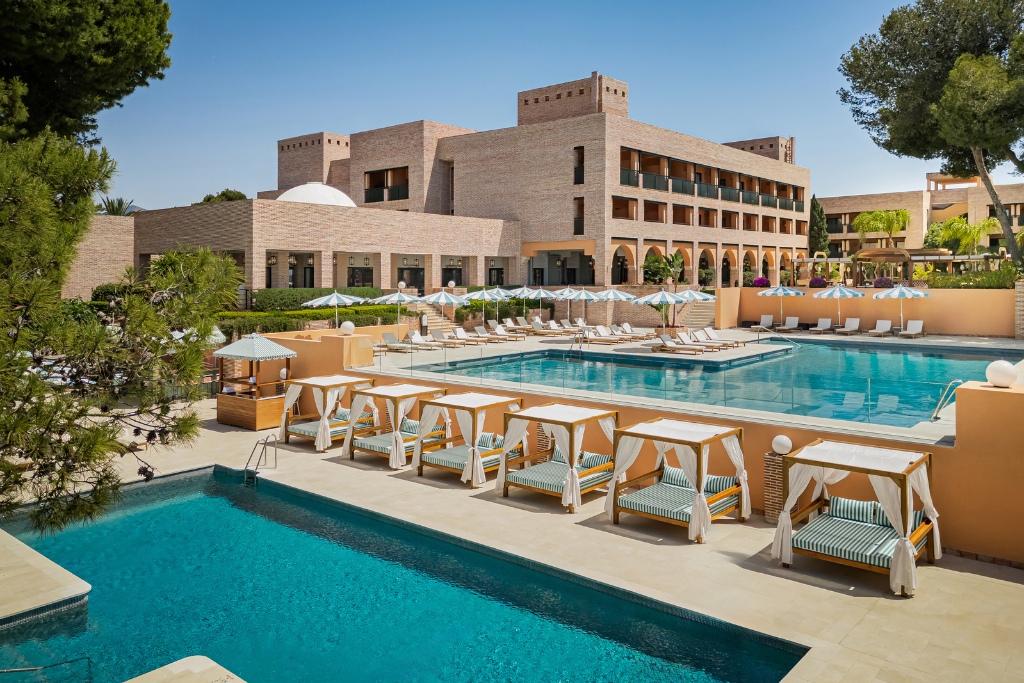
Opened last year, Gran Marbella Resort & Beach Club is the newest five-star addition to the city’s hospitality scene. Its 135 rooms blend classic Andalusian style — prints and archways inspired by Moorish architecture, graceful wide-bladed ceiling fans to stir the summer air — with contemporary design. The offerings include a Riviera-style social hotspot (an outpost of Monte Carlo’s Amù Beach Club) on the quiet Real de Zaragoza beach, the first spa outside the UK from the British wellness leader Champneys, and an all-day Mediterranean fine dining restaurant that turns out classics like linguini with seafood and Malagueñan-style tuna.
Finca Cortesin
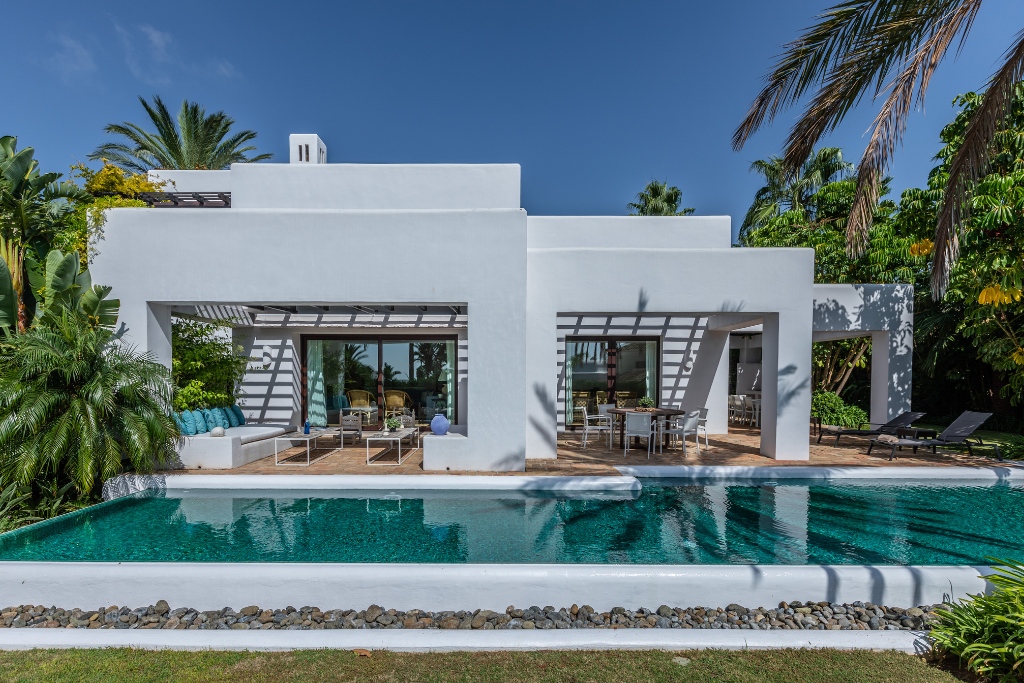
More understated than many of its Marbella neighbors, Finca Cortesin blends traditional Costa del Sol style with a bit of avant-garde reimagination. The 67 rooms occupy low-rise Hacienda-style buildings around two palatial garden courtyards, which are tricked out with burbling fountains and riots of colorful flowers. They’re enormous — even the smallest is more than 500 square feet — and their ceilings are some 13 feet high. Elsewhere, the resort has an award-winning, environmentally friendly 18-hole golf course, a luxurious spa offering Thai treatments, four swimming pools, a lavish and lively beach club, and a signature fine dining restaurant, Rei, that blends Japanese artistry with Mediterranean products and influences.
Don Carlos Marbella
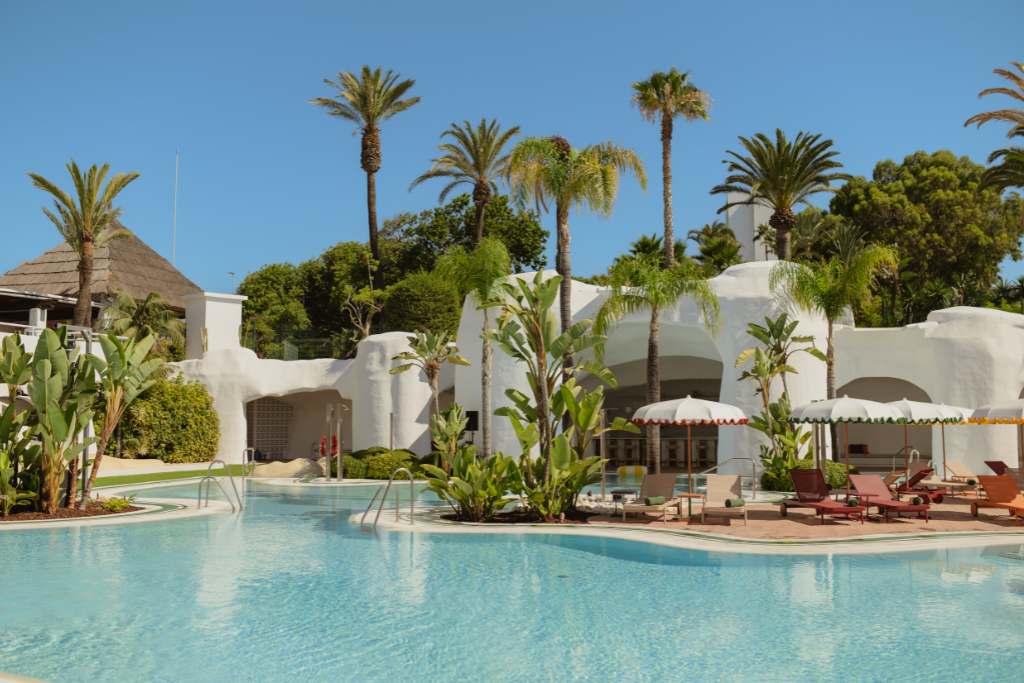
Strategic partnerships are what set the newly refurbished Don Carlos apart. Spanish legend Rafa Nadal signed the tennis center, which has seven clay courts and two padel courts, personalized training programs, and the star player’s signature methodology. Natura Bissé and Biologique Recherche supply the spa, which also has an extensive hydrotherapy circuit. The barefoot luxury Nikki Beach Marbella club makes the most of the resort’s location on Elviria Beach, and the gorgeous, sultry Campari Bar Manero is a spinoff from the Madrid gastro-lifestyle brand Manero that combines maximalist design with heaping spoonfuls of caviar. The guest rooms are handsome and bright, and many have gorgeous views over the Costa del Sol or the resort’s extensive gardens from their terraces.
Kimpton Los Monteros
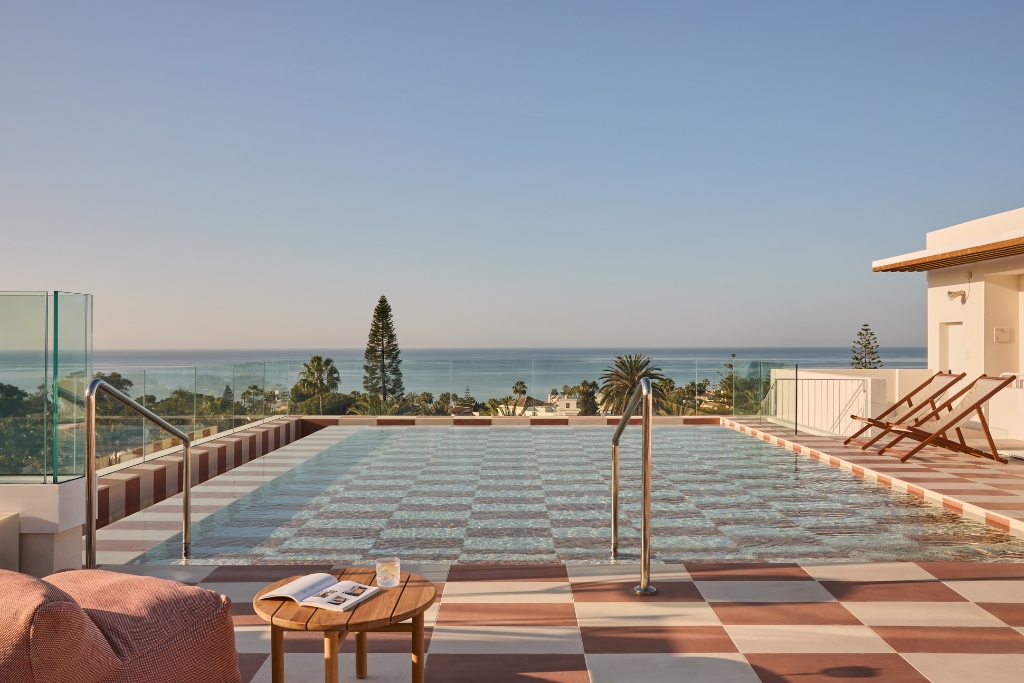
Kimpton’s warm, playful style makes perfect sense at its Los Monteros hotel, which is a tribute to Marbella’s 1970s heyday. That retro appeal shines through in a pool area that’s filled with striped cushions and scallop-edged parasols, swooping midcentury lines and a vaguely Picasso-esque check-in desk at reception, and pop arty prints in the 60 guest rooms and suites. The rooftop restaurant, Escondido, has unbeatable sunset views and a menu inspired by Mexican cuisine, while the signature fine dining restaurant, Jura, is overseen by chef José Carlos García, who holds a Michelin star at his namesake restaurant in Málaga. Here, he puts local ingredients front and center in its menu of elevated classics like Málaga-style almond ajoblanco (chilled soup) and baby squid stuffed with seafood and cooked in its own ink.
METT Marbella
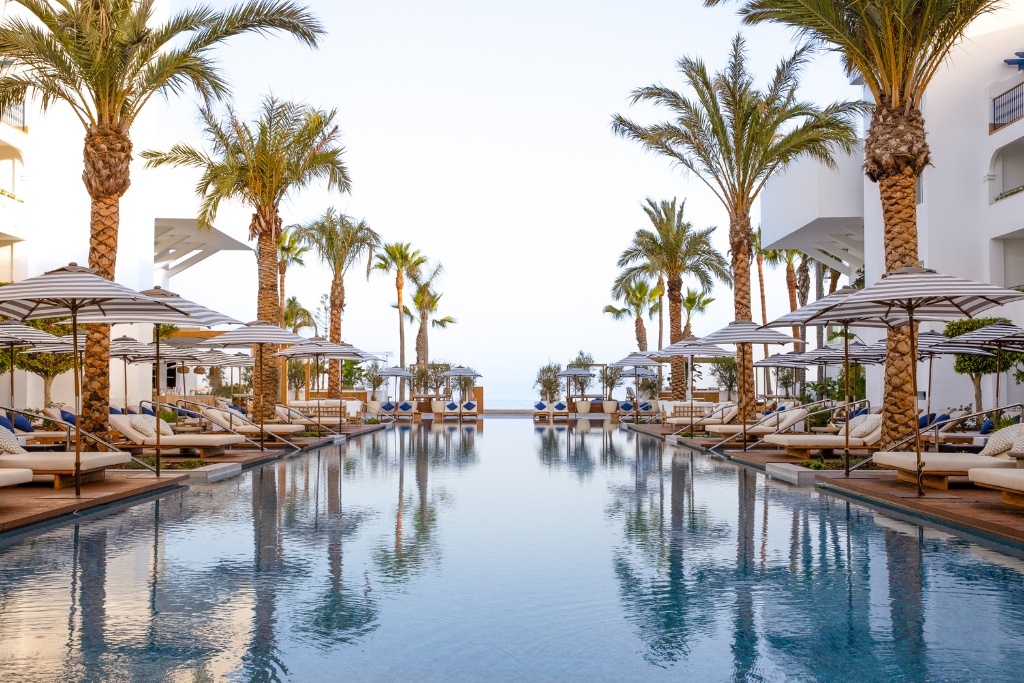
A bit outside the cosmopolitan center of Marbella, the METT Marbella has a prime beachfront location along the road to the beach resort town of Estepona. Its premium rooms face east, toward the sea, and are bathed in golden light each morning at sunrise. All the rooms are handsome and contemporary, but the resort is designed for life outside. Azure Beach is a day club that combines sunbeds in the sand with poolside lounge chairs, with exclusive cabanas for relaxing in private. The other restaurants are influenced by other corners of the Mediterranean, with Aegean notes in the Greek-inspired Ammos, and an Italian-by-way-of-Dubai concept at Ristorante Isola. A Latin American–accented bar, a spa, and special agreements with more than 15 golf courses in the area round out the offerings.
Feature image by Puente Romano Beach Club. Travel Curator may earn a commission from product or booking links on this page.