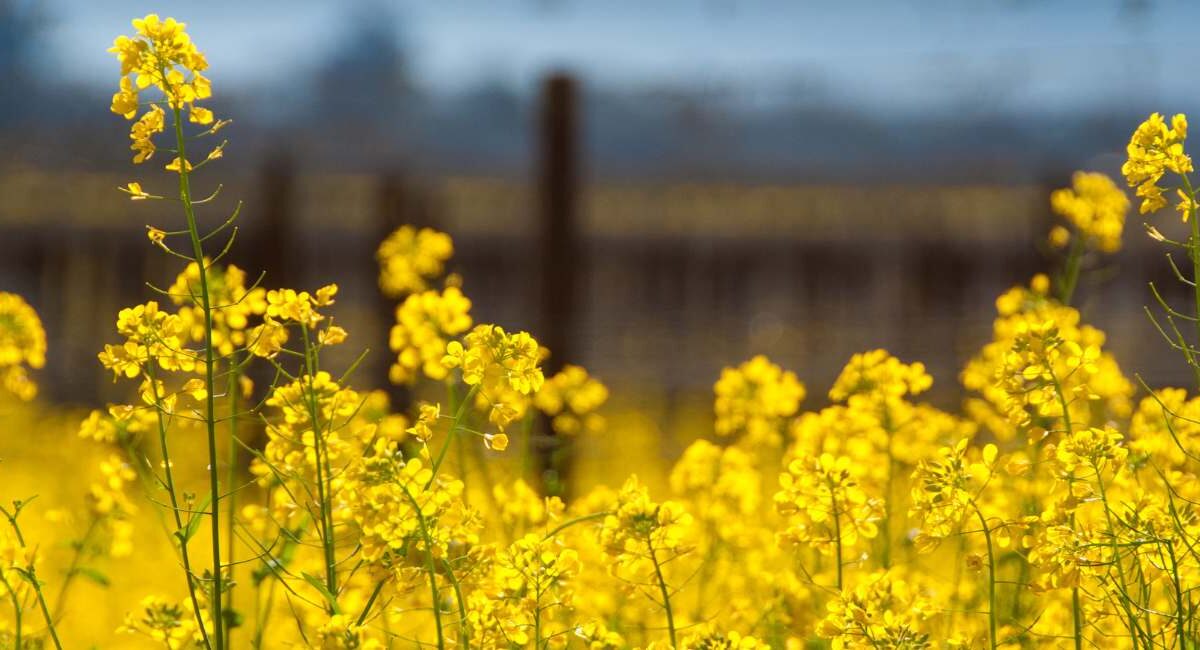
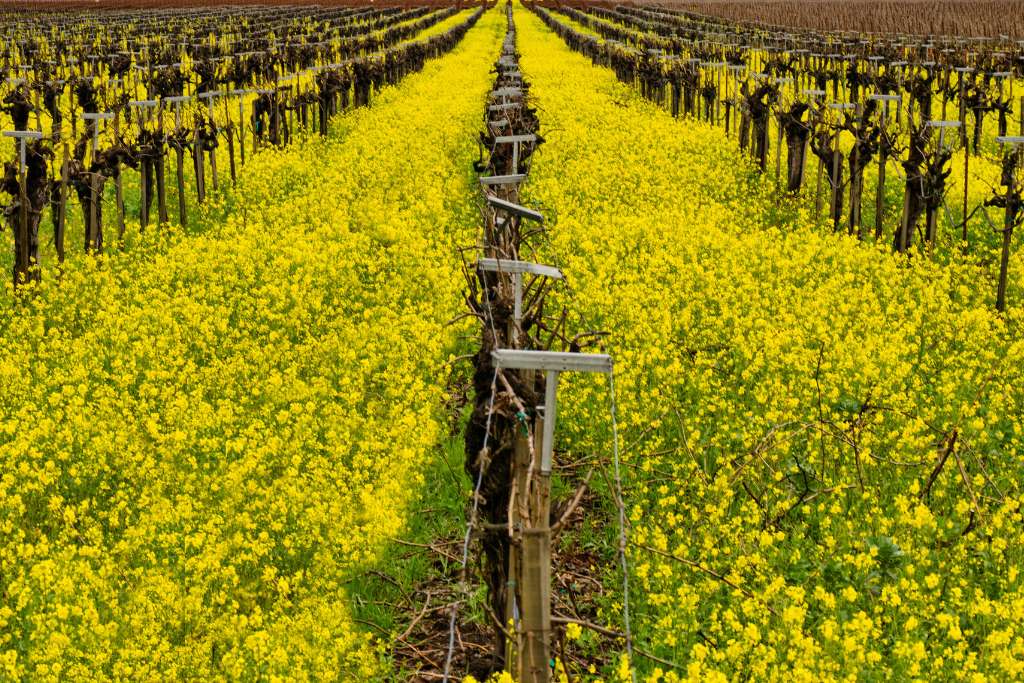
Wild mustard season is quietly spectacular in California’s Napa Valley. Ribbons of yellow flowers twist between rows of emerald vines. The wine presses have fallen silent, the valley exhales, and a softer, quieter rhythm takes hold — which is exactly why I’ve come.
That — and the mud.
Calistoga — its name the result of a tipsy mash-up of Saratoga and California — is renowned for its mud baths, a tradition powered by the region’s natural geothermal hot springs and mineral-rich volcanic ash. Long before a Napa Valley chardonnay stunned French judges at the now-legendary Judgment of Paris in 1976, there was wellness. And mud baths.
Geothermal Mud Bliss
While mud baths appear in varying forms all over town, none are more synonymous with Calistoga than Dr. Wilkinson’s Backyard Resort & Mineral Springs. The spa — a vintage icon with its neon pink signage and retro motor-lodge architecture — opened in 1952 when chiropractor John “Doc” Wilkinson and his wife Edy began offering therapeutic mud baths to visitors. The couple set up giant wood vats filled with ash, peat, and hot mineral spring water for their guests to soak in — the mud’s rich healing properties said to soothe muscles, improve circulation, relieve psoriasis, and soften the skin. A warm bath (to rinse) was followed by massage and long soaks in heated mineral pools. The entire ritual was experienced family style, adding to the spa’s nostalgic intrigue.
Although the experience is no longer communal — curtains are drawn between the mud-filled concrete tubs for privacy — the original mud bath formula is still utilized. A proprietary blend of peat moss, volcanic ash, composted botanicals, and mineral water heated to 107°F, the mud is thick, dark-coffee in hue, and gloriously gooey.
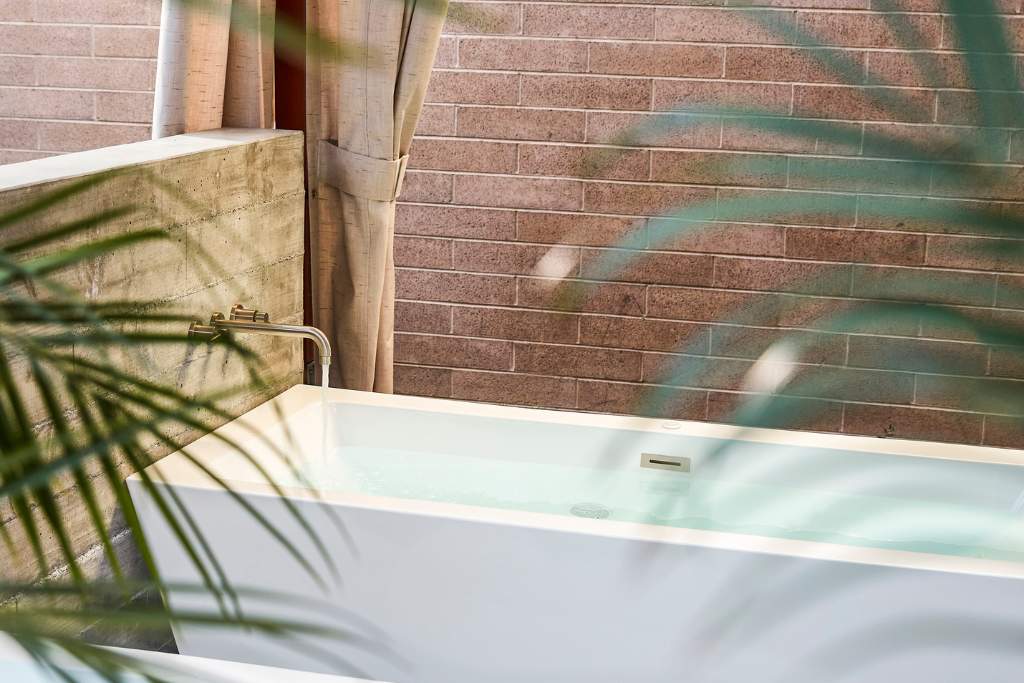
A bathing suit is optional — a choice I will absolutely make next time, as the mud goes, literally, everywhere. But today, I’m clearly a novice. As I settle into the oversized tub, I extend my arms and legs too quickly, too deeply — and it’s hot. 107°F hot.
“Stay near the surface,” my attendant, Maria, laughs, gently pulling my arms and legs back up and packing peat around them. “It’s hotter the deeper you go.” Watching me wrinkle my nose at the subtle sulphur smell, she smiles. “You’re going to love how soft your skin feels.”
Throughout my Mudslinger treatment — which also includes a warm mineral-water bath, Caudalie face mask, steam sauna, and wrap in blankets — Maria is constantly by my side, placing cool cucumbers over my eyes and bringing endless glasses of lemon water. The experience isn’t polished luxury (save for the Caudalie mask), but earthy, unfussy, and deeply authentic.
Stillness & Rest
Muscles relaxed and skin not only soft but glowing, I meander along Calistoga’s leafy side streets — past Craftsman bungalows framed by lemon and orange trees — to Okaeri, a ryokan-style inn whose name in Japanese means “welcome home.”
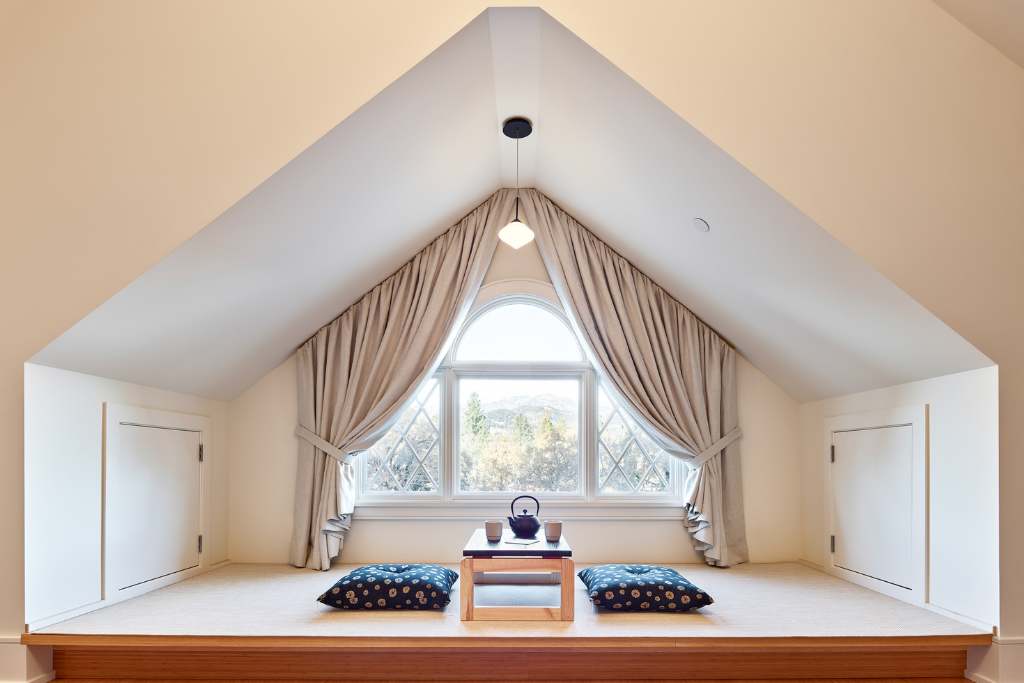
Long known by locals as the bubble gum-hued pink mansion, the intimate boutique hotel opened in 2025 with just seven rooms. Owner Eva Chen — whose family owns Napa’s Kanpai Wines — saw Calistoga as a traditional Japanese hot-springs town and dreamed of turning the pink mansion into a ryokan.
Her restoration took eight years and includes mindful touches including shoji screens, a tatami tea area, shou sugi ban (charred wood) panels, a Japanese garden, and in-room hinoki and cedar soaking tubs where I begin and end each day (yes, even after my Dr. Wilkinson’s Mudslinger). Each room takes its name from a Kanpai wine label. Mine is Fuyu No Tsuki — “winter moon,” a port-style, cabernet dessert wine symbolized by the rabbit.

Still, the highlight comes in the dining room where the pink mansion’s former 10,000-gallon, indoor swimming pool has been dramatically transformed into a koi pond beneath a transparent floor. Anchored by a black olive tree, the koi — with names like Sunny Side Up, Kim Karpdashian, and Winona Ryder — glide beneath the dining tables as the hotel’s traditional Japanese breakfast is served. The ritual unfolds with tea service followed by a parade of Japanese delicacies: miso soup, cod, rice, and pickled vegetables. The experience — and the entire stay — is calming and luxuriously slow, evoking a sense of stillness not found in the crush of Napa’s high season.
Above the Fog Line
The meditative cadence continues at CADE Estate Winery set high above the fog line atop Howell Mountain. A winding stone path leads past Portuguese cork trees to an expansive terrace framed with a firepit on one end, and a trickling water-pool fountain on the other. A glass of sauvignon blanc in hand, paired with a locally made passion fruit chocolate, I take in the extraordinary view of the valley. The winery was established in 2005 by Gavin Newsom (yes, Governor Newsom), philanthropist Gordon Getty, and wine connoisseur John Conover as part of the broader PlumpJack winery group. Its name gives nod to the word cade, the historical term for wine casks shipped from Bordeaux to England; while its ultra-modern design is by Mexican architect Juan Carlos Fernández, known for blending contemporary structures into dramatic natural terrain.
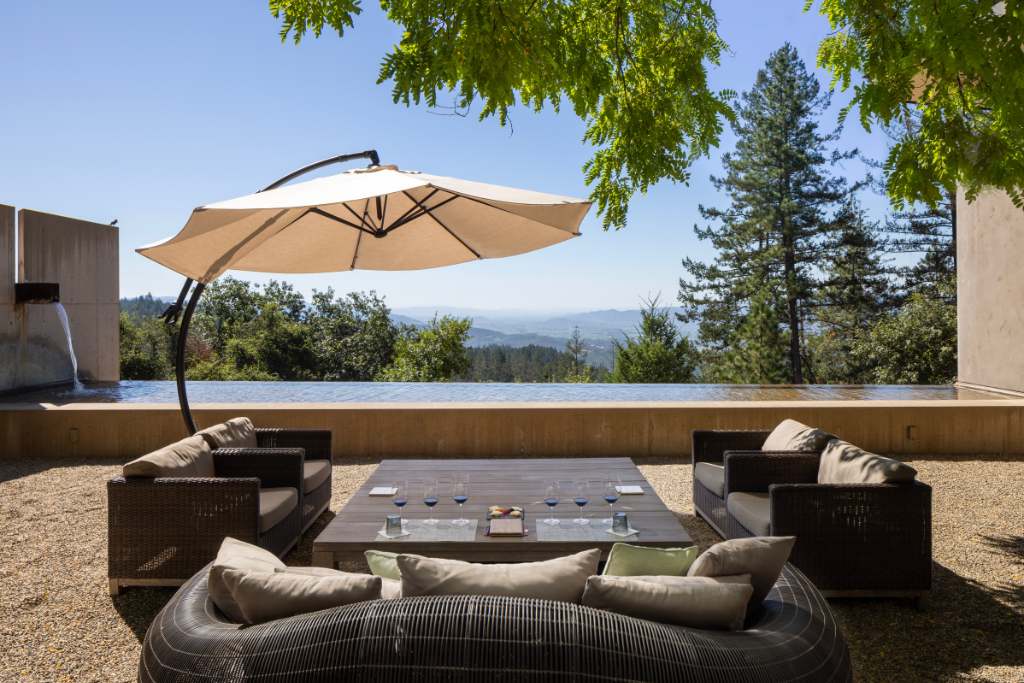
After moving through the sleek buildings and caves and discovering some delightful nuances — only new French oak barrels are used; just a handful of visitors are permitted each day (the winery sits in a dry town) — I’m guided to a massive table, the wood carved from mahogany salvaged from the Phuket (Thailand) tsunami. A giant charcuterie board and seemingly endless glasses await, as the red pours begin.
CADE is very much a cabernet house — its sauvignons appear on steakhouse menus around the country, including CUT by Wolfgang Puck in Beverly Hills and Pappas Bros. Steakhouse in Houston and Dallas. The signature CADE Howell Mountain Cabernet Sauvignon is a cab-dominant blend with dense black fruit (blackberry, cassis, dark cherry), layered with cocoa, and small amounts of malbec, petit verdot, and merlot. The Reserve — a collector’s bottle — is produced in smaller productions and aged for decades, while the Napa Valley cabernet sauvignon is made from a broader blend (not just estate fruit). CADE also produces limited batches of merlot and cabernet Franc (a Bordeaux-style blend).
Off Season Is the Right Season
After a few long walks under shady redwoods, a glass of bubbly aboard the vintage Napa Valley Wine Train, and more spa time (hello, Four Seasons Napa Valley and Solage, an Auberge Resort), I completely unwind.
My ease continues with an easy-to-score-in-the-off-season table at Angèle (pronounced “ahn-GEL”). The airy Country French restaurant is the creation of proprietors Claude Rouas of Auberge du Soleil and Redd, and daughter, Bettina Rouas. Originally a dilapidated and abandoned ship’s chandlery dating to 1890, the small restaurant sits in downtown Napa’s historic Hatt Building along a scenic bend of the Napa River. All of the anticipated French fare is served (classic onion soup with 14-month gruyere, roasted heritage chicken, and provencal lamb). But there is house-made pasta too (don’t miss the bucatini with black périgord truffles and parmigiano reggiano), and for dessert, chocolate mousse with chantilly creme.
“You’ve really come at the perfect time,” one longtime resident tells me. “It’s my personal favorite — and when locals love Napa most. Everyone from everywhere comes in September for harvest. No one comes now.”
And it’s true. Mustard season may be Napa’s quietest moment — and also its most magical.
Note: Mustard season is from January through March, with peak blooms appearing in February. Low season — marked by thinner crowds and lower rates — spans from November to May, while peak high season is June through October.
Feature image, courtesy, Visit Napa Valley.