For most first-timers Morocco means Marrakech. And there’s nothing wrong with that. The country’s tourism capital continues to dazzle like few other places on earth. But for those who’ve gotten their fill of that kaleidoscopic whirl, there’s Fez.
The northeastern city is the third largest in Morocco, and it carries a reputation for being mysterious, subdued, and steeped in tradition. While it doesn’t have an iconic hotel like La Mamounia, nor a must-visit attraction like Jardin Majorelle or Jemaa el-Fnaa, it has a nearly endless warren of narrow streets and alleyways to discover, all lined with beauty and steeped in history.
That walled medina, called Fes El Bali, is listed as a UNESCO World Heritage site and is one of the world’s oldest and biggest urban pedestrian areas. As every tour guide will tell you, the medina encompasses nearly 10,000 streets, and knowing them all is impossible. But throughout, there are some welcome constants, like the medieval Marinid architecture, vibrant souks selling everything from cell phones to saffron, and ancient religious schools adorned with cedar carvings and elaborate tile work. It’s also home to the University of al-Qarawiyyin, which was founded in 857 and is the world’s oldest continuously functioning institution of higher education.
Morocco’s Artisan Capital
Fez was Morocco’s ancient imperial capital, and today it’s still the country’s center of culture and artisanship. Centuries-old techniques still prevail. Wealthy Moroccans and foreign investors go here when they want to decorate their riads or homes with traditional textiles, copper lanterns, and leather goods. It’s also a casual shopper’s dream.
The famous Chouara Tannery stretches over many city blocks — and some of the savvier shop owners lead shoppers up to the rooftop to give them a bird’s eye overview (and sprigs of fresh mint to mask the bird-poop smell, as pigeon droppings provide the natural ammonia that’s used to clean and soften the animal hides) —and other quarters are given over to specific wares, such as copper kitchenware or blue-and-white Fassi ceramics. The medina operates as a living workshop, with artisans organized by trade and making their crafts in the same place they sell them.
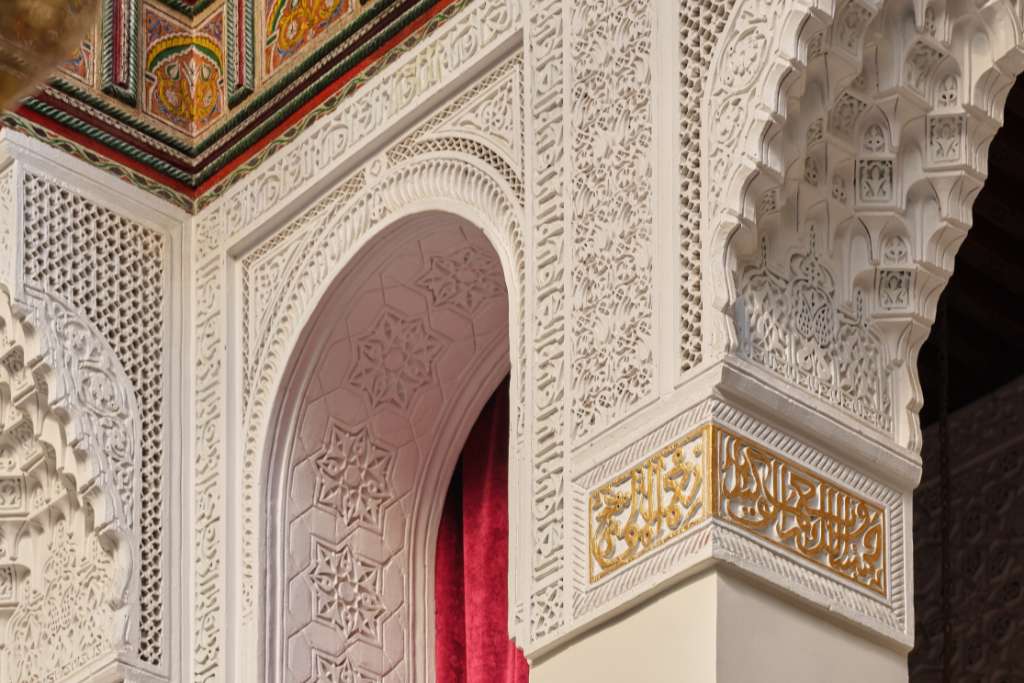
Shopping aside, a reference for craft pervades the city. Its old houses, dars, and riads are generally Morocco’s most exuberant and ornate. They’re showplaces of carved cedar ceilings, calligraphy-patterned tadelakt plaster, and colorful zellige tiles. Every surface is honed by hand, the living embodiment of centuries of artistic heritage.
Where to Stay
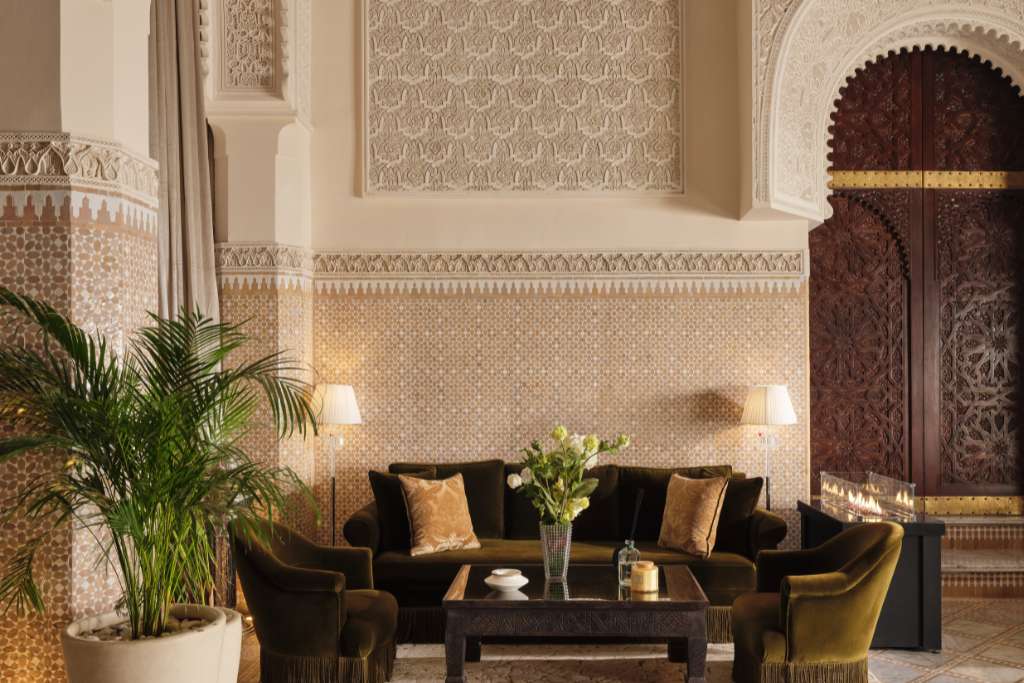
Fez has its share of international-style, name-brand hotels, but the best way to immerse yourself in the ancient city’s ancient side is to stay in one of its riads, or old courtyard houses. A number of the city’s old imperial palaces, which often date as far back as the 14th century, have become bastions of contemporary Moroccan hospitality.
There are flashier riads around town, including the magnificent Riad Laaroussa and the sumptuous Karawan Riad, both of which have been awarded with Michelin keys. But for a deep dive into the city’s past and present, it’s hard to top Palais de Fes. The palace, which dates from the 14th century, has taken on new life as the passion project of a brother-and-sister team who grew up in the restaurant that remains on the site. After a high-flying career in Miami and Dubai, they returned to their native Fez to restore the palace hotel that sits beneath the rooftop restaurant and turned it into a five-star homage to their father’s legacy.
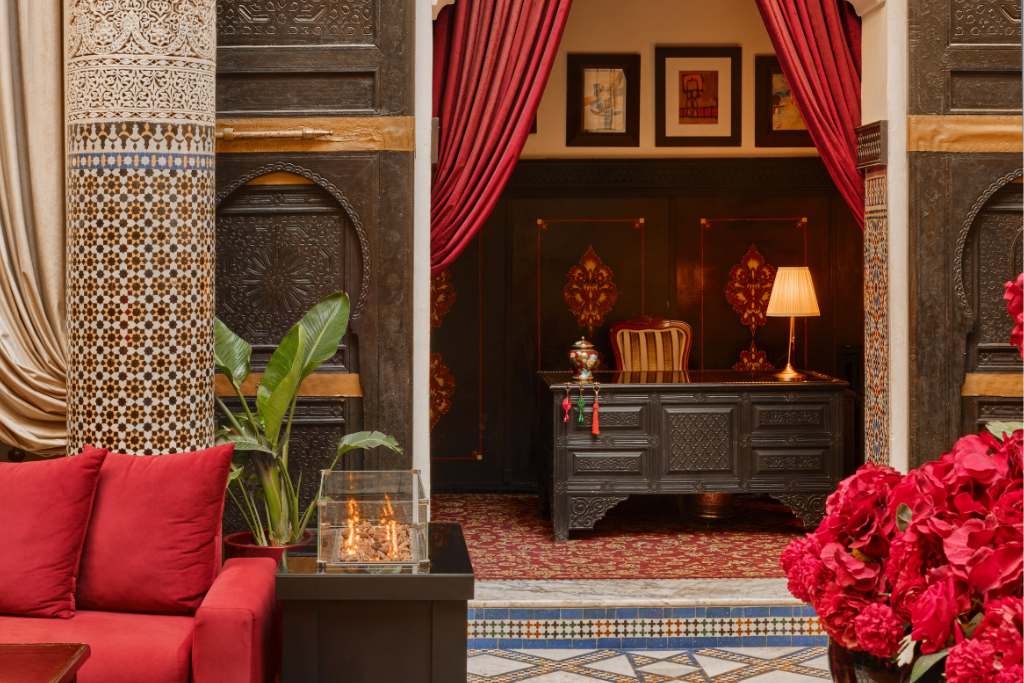
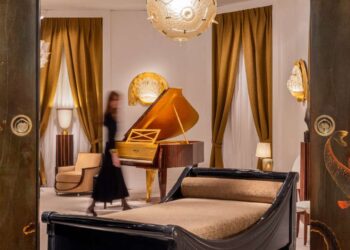
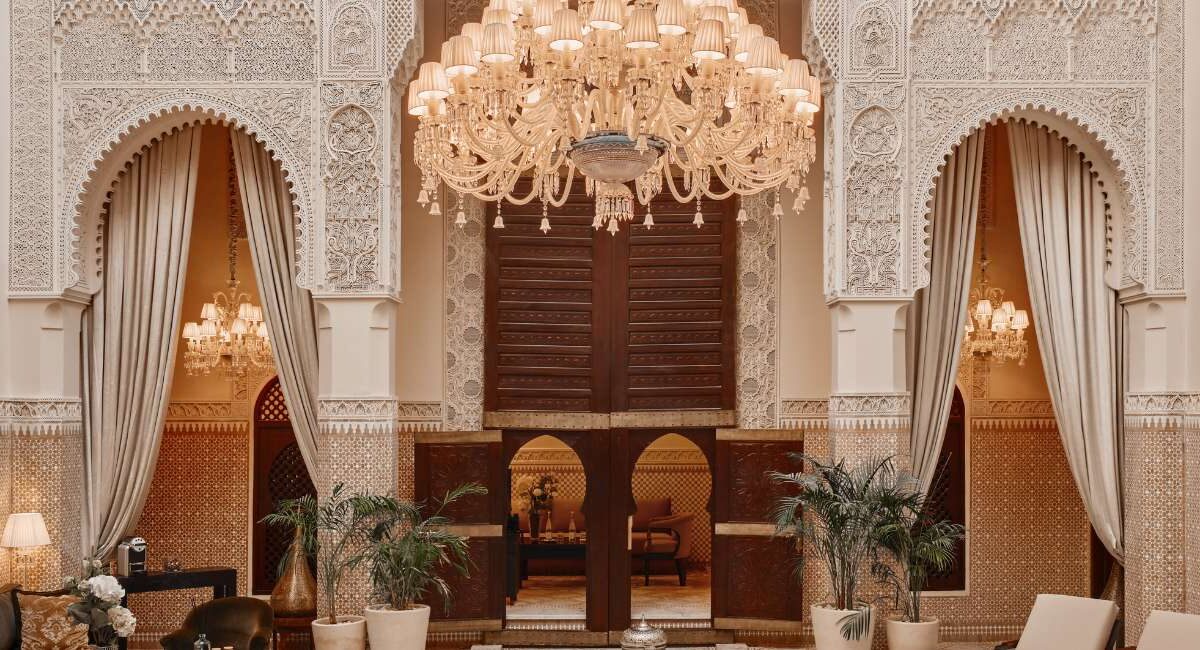
A few months ago, they unveiled a lavish extension, in one of several adjacent palaces that they’ve acquired. Years in the making, the new palace trades Fez’s usual color overload for a stylish white-and-shimmery-cream palette, bringing a new sophistication to the edge of the medina. The top room, though, reprises one of the best design tricks of the original hotel — its dominant color is what they call Hermès orange, a burnt umber hue that’s popular with the fashion set who make this their home in Fez.
A bit simpler but no less lovely is Riad Fes Maya, another 14th-century palace whose nine rooms are filled with antique furnishings and gorgeous stained-glass windows. The owners’ mother mans the stoves in the rooftop restaurant, whose terrace has 360-degree views over the city.
Where to Eat
The dining room of Palais de Fes, Dar Tazi, has been in operation since 1980, when Azzeddine Tazi opened it as the first modern-day restaurant in the city. In the decades that followed, it has lived an illustrious life; photos of the Tazi family with Ronald Reagan and Middle Eastern royal families still hang on the walls. But for all the changes it’s seen, the food has barely altered. Abundance is the watchword: Meals start with dozens of colorful salads — spiced carrots, smoked eggplant, marinated peppers — then move on to Moroccan classics like tagines, couscous, and the signature seafood pastilla, a sort of pie wrapped in phyllo dough.
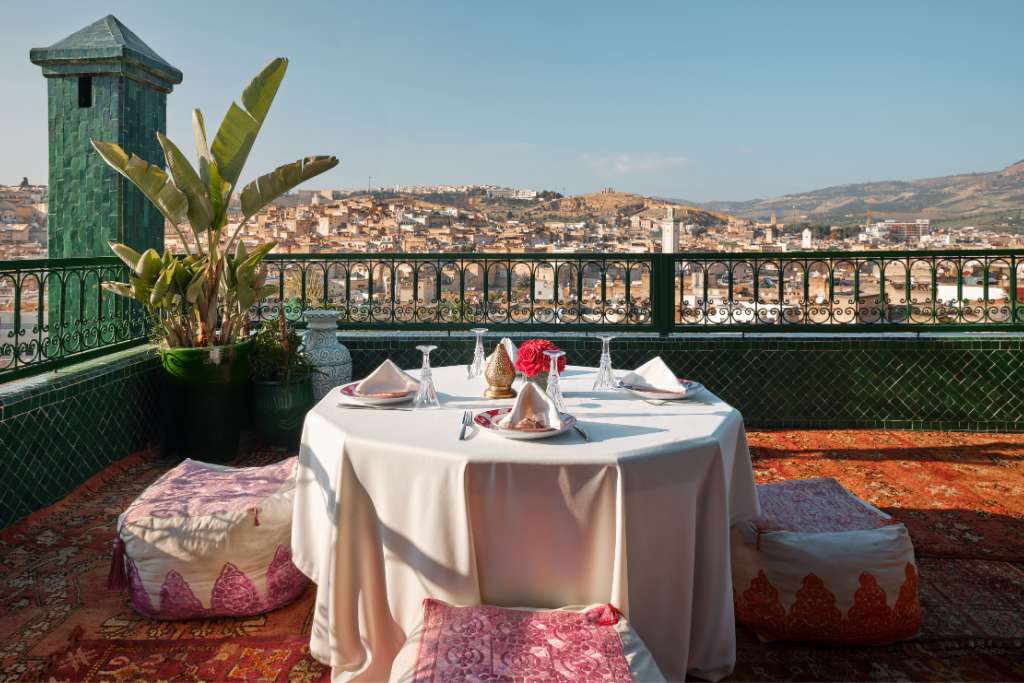
For a more elevated dining experience, there’s the fine dining restaurant Ishq. There, in another gorgeous riad on the outskirts of the ancient city, the proprietors — two women from Fez — are offering a combination of Moroccan tradition and international fusion cuisine. (The name comes from ishquer, meaning “the awakening of the senses.”) They brought on Franco-Cameroonian chef Pierre Siewe to oversee the international dishes, while Dada Rachida honors the city’s famous Fassi cuisine. The result is an impressive variety, ranging from chicken pastilla with almonds and cinnamon syrup to royal sea bream gravlax with beetroot and cardamom coulis, pomelo segments, and vegetable pickles.
Where to Shop
Since Fez is the artisan capital of Morocco, it’s hard to go wrong. Still, a few addresses in the medina stand out. The sprawling Chouara Tannery is the place to go for leather goods, from sandals to backpacks. The best shops for metal and cookware are collected around the leafy square at Place Seffarine, while the top copper lanterns are at Fes Lampe Sqalli. There’s a good selection of high-quality rugs at Le Petit Coin Berbere, plus an array of textiles alongside the spices and cosmetics at Attare Medena (Mahmoud & Younes).
It’s also worth venturing beyond the medina. The best ceramics shops are in the Ain Nokbi district, particularly the Art Naji cooperative, where visitors can watch artisans undertaking the whole process from raw clay to hand-painted tableware. There are also the specialized studios at Fez Blue Art, where fourth-generation ceramicists turn out a vast array of pottery with natural glazes, particularly the midnight blue for which the city is famous.
Where to End Up
Fez isn’t so overwhelming that it requires a decompression stop on the way home, but it’s still worth adding a day or two to relax in the countryside. Less than an hour from the city lies Ifrane, a Swiss-style village that dates from the time of French occupation. The colonialists missed their mountain chalets, it seems, so they built a town of A-frame houses here in the Mid Atlas Mountains.
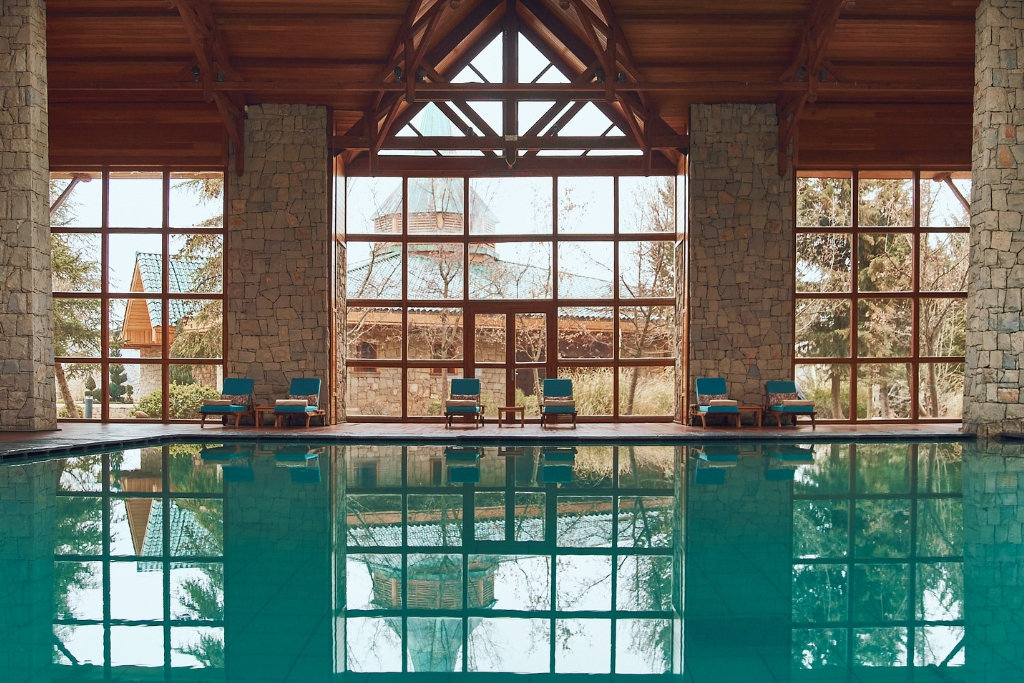
Now it’s a haven for Moroccan elites, who like the European aesthetic and the uncanny wintertime snow. It’s also home to the country’s most unlikely hotel. After a $100 million renovation a decade and a half ago, Michlifen, whose name means “snowflake,” is a grand luxury hotel that’s filled with noble materials and designer furnishings and fabrics from Ralph Lauren, Chellini, Pierre Frey, and Rubelli. Its massive, wood-paneled rooms have various themes, from the American West to the French Alps of Savoie. There’s also an award-winning golf course, the largest spa in Africa, and a stunning swimming pool inside a windowed pavilion that’s perfect for watching the snow fall outside.
Feature photo by Omar Tajmouati Photography courtesy of Palais de Fes