These ghosts have stories to tell.
In Boston, one of the world’s most haunted cities, I go ghost spotting at the Omni Parker House, the longest, continuously operating hotel in the U.S. Renowned as a hotbed of long researched paranormal activity, the Omni Parker House, set on the renowned Freedom Trail, has a multitude of ghosts — such as oft-sighted former owner, Harvey Parker, who roams through the halls in his stove pipe hat consorting with guests. The petrifying problem? Harvey Parker died in 1884. We guess he’s just a passionate hotelier on a mission, a perfectionist who returns to ensure guests are satisfied with their stay.
Longing to meet him, I take a room on the 10th floor, purportedly the most paranormally active, according to a host of ghost hunters. My blood chilling interludes begin in the elevator. Even before I press the button, the elevator rapidly ascends to the 3rd floor — and the doors open. The elevator refuses to move up or down. Eventually, I make it back to the lobby. When I mention this irregularity to the front desk, the receptionist looks at me sagely and says: “Ah yes, that elevator’s been doing that since Charlotte Cushman died in 1876.”
Apparently, the Omni Parker’s third floor has two ghosts: Cushman, a legendary actress, and a nameless man who guffaws and emits the odor of whiskey. Neither spectre steps into the elevator with me — thankfully — and, finally, I do reach the 10th floor. I huddle in my room before a pre-arranged ghost tour through the Boston Commons, hoping for a seance with Harvey Parker. He doesn’t grace me with his wraith-like appearance. Nevertheless, I hear the fervent click-clack sound of a rocking chair and goose-pimple-provoking, sibilant whispering that sometimes rises to mournful tones. Later, I’m told the hotel has no rocking chairs.
More About Haunted Boston
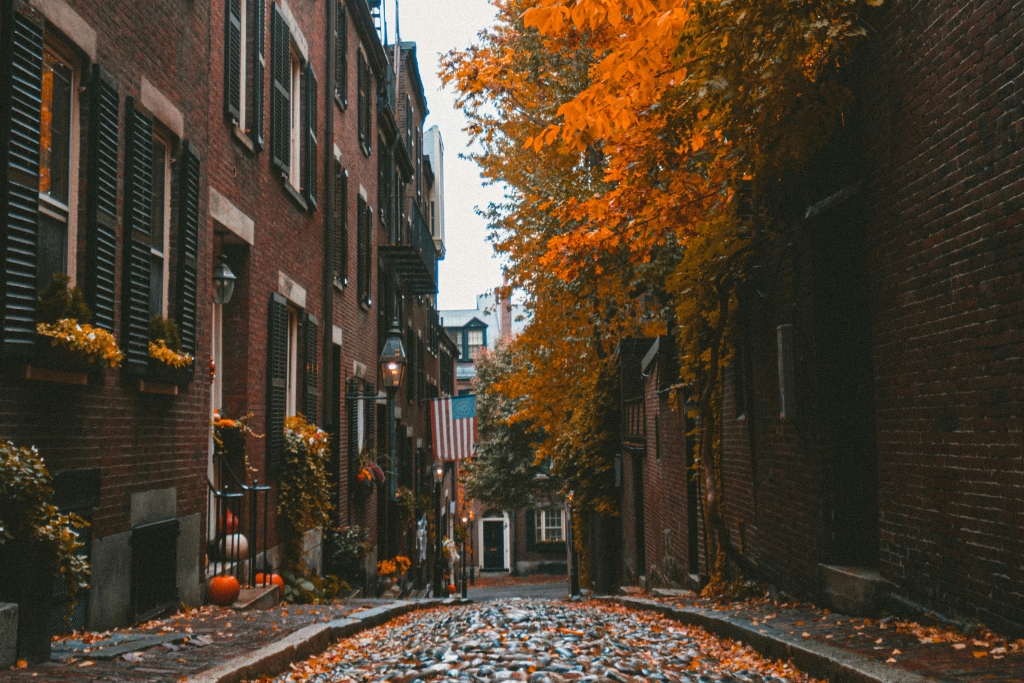
Naturally a city as old as Boston, founded in 1630, would shelter a nefarious collection of incorporeal bodies, disembodied phenomenon, goblins, spirits, and such. Join one of the myriad spooky walking tours to discover an array of restless spirits, some of whom may simply tap you on your shoulder, then disappear. With a history that ranges from plagues to massacres to pirates, the city brandishes an impressive array of mortifying characters. I wander the Commons with a guide who tells me to look for his favorite spooky duo, a pair of elderly women, dressed in Edwardian-style outfits, as if ready for teatime. Apparently, daily, they stroll arm in arm about the park.
Near the Central Burying Ground, a horrific cemetery that guards the remains of untold children who died from diseases such as small pox and typhoid, I meet a very pale little boy. He tells me about his friend (a fellow phantom?) who watches over the children. “You’ll see her sitting on the fence,” he says, before disappearing like smoke before my eyes. At that moment, I do see a little girl, her arms reaching toward me imploringly.
Chic-ly Outré in Paris
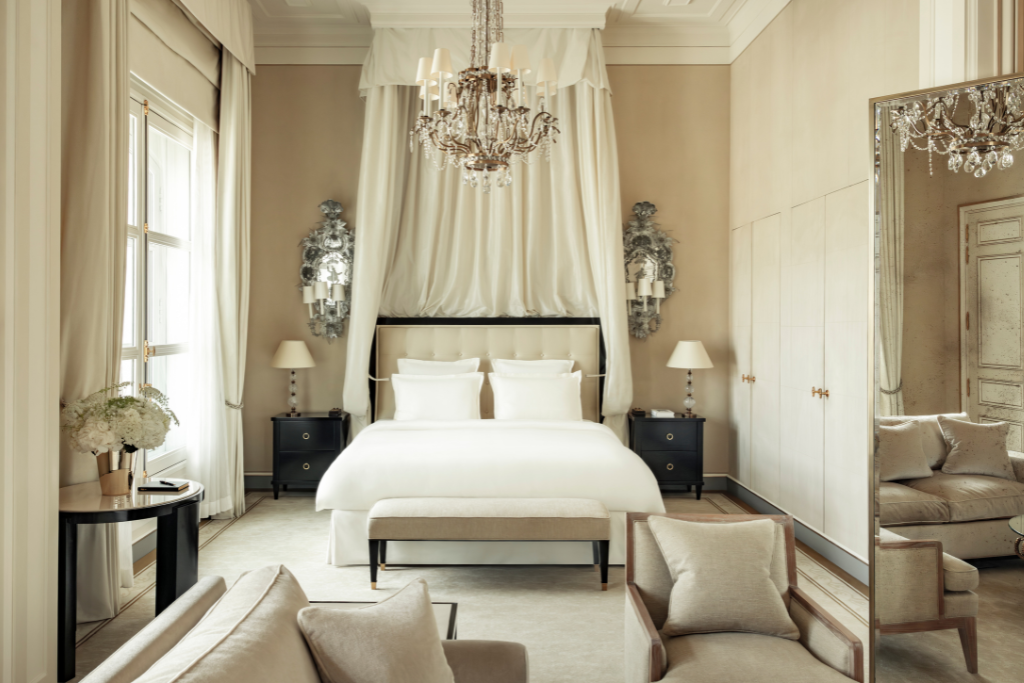
Though not officially haunted, Ritz Paris may have the world’s most stylish incorporeal visitant, a trendsetting fashion plate who was a resident of the hotel for more than 30 years. Some guests at the glamorous hotel, situated on the Place Vendôme, swear they’ve seen Coco Chanel materializing in mirrors with a nod of acceptance or — in some cases — a moue of stark disapproval as they dress. Chanel, ever conveying her timeless fashion sense and clean lines, has been said to manifest via whispers, quivering lights, and floating objects — especially lightbulbs. Though her namesake suite at Ritz Paris honors Chanel with things she loved — gild and Coromandel screens, for example — her actual room was simpler, located higher up toward the rafters. Accordingly, her en vogue spirit roams freely throughout the entire hotel as if it continues to be her personal catwalk. While visiting this iconic hotel (which was the first to institute such luxuries as en suite bathrooms and telephones), perhaps you’ll come across the ghosts of Marcel Proust and Ernest Hemingway, other Ritz regulars.
Spine Chilling in Spain
Spain’s collection of Paradores Hotels, a state-run hotel group, launched in 1928 under the auspices of King Alfonso XIII. He collaborated with the nation’s trust to open experiential lodges in historic structures, including centuries-old castles, fortresses, and monasteries. The fascinating group includes both luxurious inns and more affordable stays — and each has a backstory. Ghost stories abound. Whether it’s Parador Olite, a 15th-century castle in Spain’s Navarre region, where a former resident, an erstwhile prince, continues to illuminate a mysterious light above his portrait even when the electricity is off, or Catalonia’s Parador Cardona (a medieval castle with a 11th-century Romanesque church) where a tenacious spirit moves the furniture each night, each parador (inn) has a host of disembodied occupants. Particularly popular for ghost hunters Parador de Jaén in Andalucia, harbors a lugubrious female ghost in Room 22, who purportedly died of heartbreak. She continues to sob for eternity. Also inhabiting the fortress, Terrible Lagarto (Terrible Lizard) roams the castle in search of a meal. According to legend, he died of hunger as a prisoner here, and can never manage to eat his fill.
Pulse Pounding in Prague
Kafka came from Prague, just one of many enigmatic facts that tip the scales of scariness in the haunted direction. A medieval city, abundant with Gothic accoutrements, alchemical hearsay, and cursed secrets, it stands out as one of the world’s most haunted. Most pointedly, its 13th-century Augustine Hotel Prague, soon to be reflagged as a Kempinski, serves as a cache for the city’s preternatural spirit. Constructed into the walls of a still extant and operating Augustinian monastery, the opulent hotel brandishes a unique design composed of various ancient buildings. It shares walls where the prayerful modern monks still cloister and practice, giving guests the chance to interface with the brothers and friars, both the living ones (most often) and those long dead. Consider one confounding apparition, clad in the tunic and monkish hood, who continues his service and monastery duties at night. He’s known to turn on and off lights, as well as tidying up, organizing small objects in guest rooms. Some say he comes back for the St. Thomas Beer, made from the 13th-century monks’ secret recipe and still served at the hotel’s The Refectory Bar, one of Prague’s oldest and most atmospheric beer pubs.
Bone Chilling in Mobile, Alabama
At The Malaga Inn, composed from twin townhouses built in 1862, eerie experiences are everyday occurrences. Located in downtown Mobile, the historic, five-star inn, touted as one of the most ghost brimming in the United States, has been the setting for a reality TV drama about haunted hotels. Guests regularly referencing horrific happenings in their online reviews. Check in to witness the swaying chandelier with flickering lights, furniture that moves by itself, and an ominous woman dressed in white who paces eternally on the balcony of Room 7.
Gravely Vampiric in Transylvania
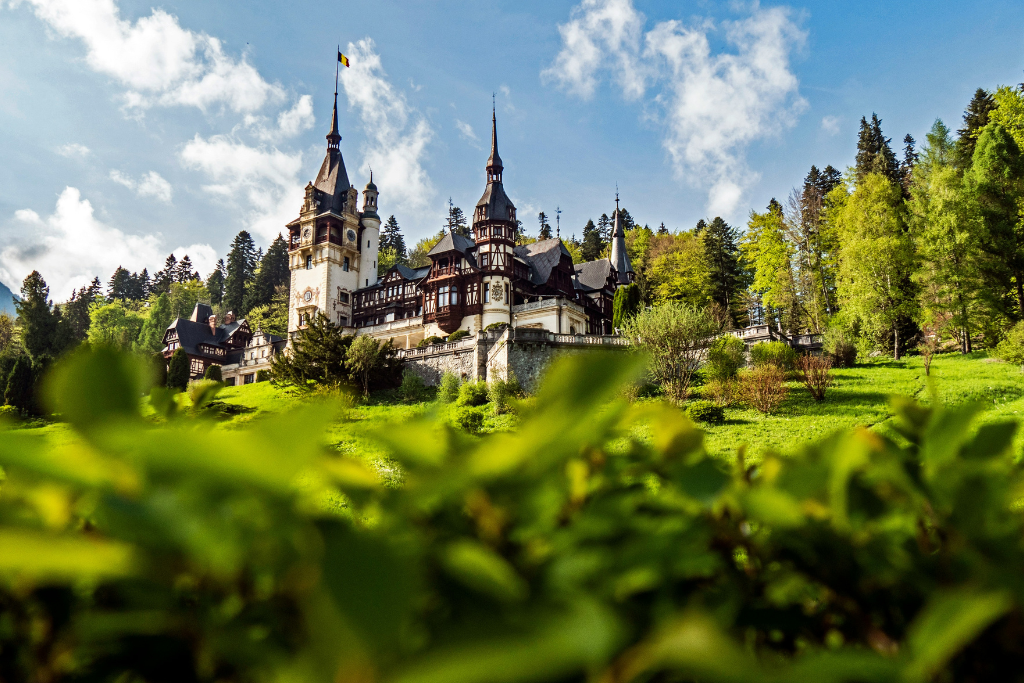
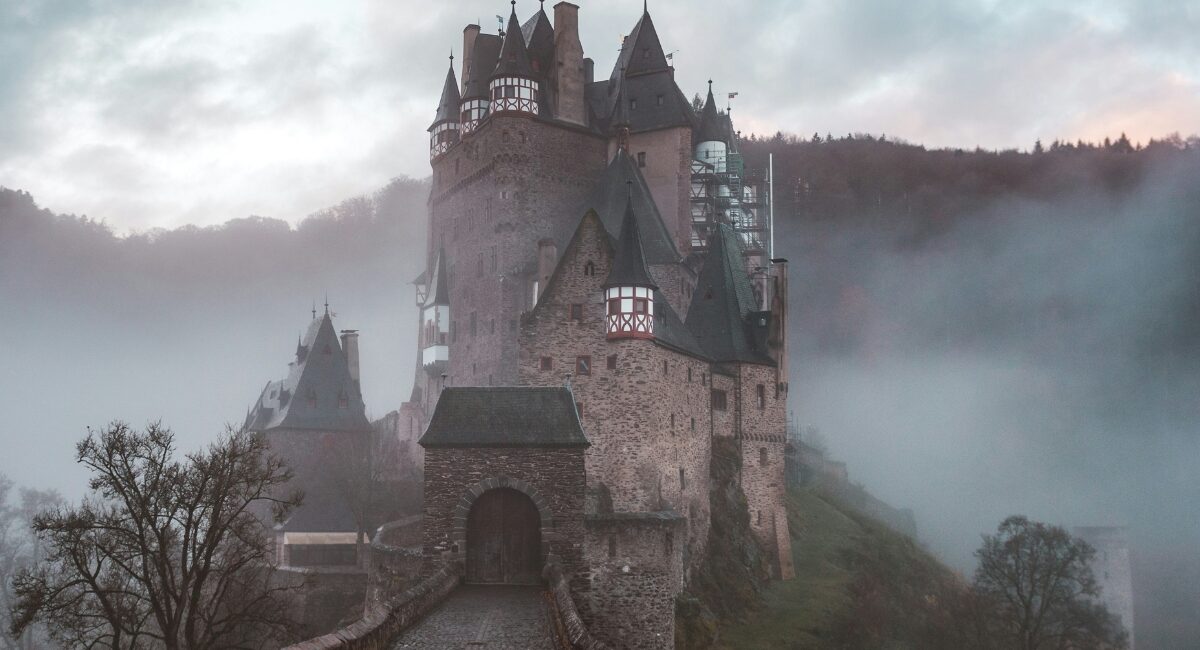
You can thank Gothic Literature, especially Bram Stoker’s 1897 novel “Dracula,” for the blood-curdling reaction most people have when they see Romania’s beautiful region of Transylvania on an itinerary. Stoker set his fictional book in the dramatic Carpathian Mountains, a remote area steeped in spooky folklore, intense medieval violence, and dark tales of paranormal realms. Part of the history includes the horrors put forth by Vlad the Impaler, a cruel ruler. For the inscrutably curious and lovers of heart-thumping terror impression, partake of the region’s variety of terrifying tours. Visit castles such as Bran Castle, a touristic haven, renowned as Dracula’s home. To immerse in the foreboding vibe, rent a car and visit a range of other castles and cobble-stoned towns such as Corvin Castle and Sighisoara, the birthplace of Vlad himself. After focusing on atrocities and vampires, treat yourself to a luxury stay at Small Luxury Collection’s Zabola Estate in the untamed forests of the East Carpathian mountains, about an hour from Bran Castle. The boutique mansion, a pampering hotel hideaway, has a theatrical Wes Anderson vibe.
Direful in Dublin
Born from the amalgamation of three classic Georgian townhouses in 1824, Dublin’s The Shelbourne, a lavish hotel across from St. Stephens Green, has had two centuries to rack up some hair-raising ghost stories. Opened with the beau monde set in mind, its halls and staircases were wide enough to allow two crinoline-donning dames to pass without touching. Listen carefully late at night for the sounds of skirts rustling and festive women chattering, their perpetual soiree happening in parallel time. More likely, you’ll meet The Shelbourne’s most famous wraith: mischievous Mary Masters. Eternally aged seven, she legendarily died from cholera, but returns from the grave to unnerve guests on the upper floors. She particularly loves to flood rooms, naughtily turning on and off shower, tub, and sink faucets.
Blood Curdling in Victoria, BC
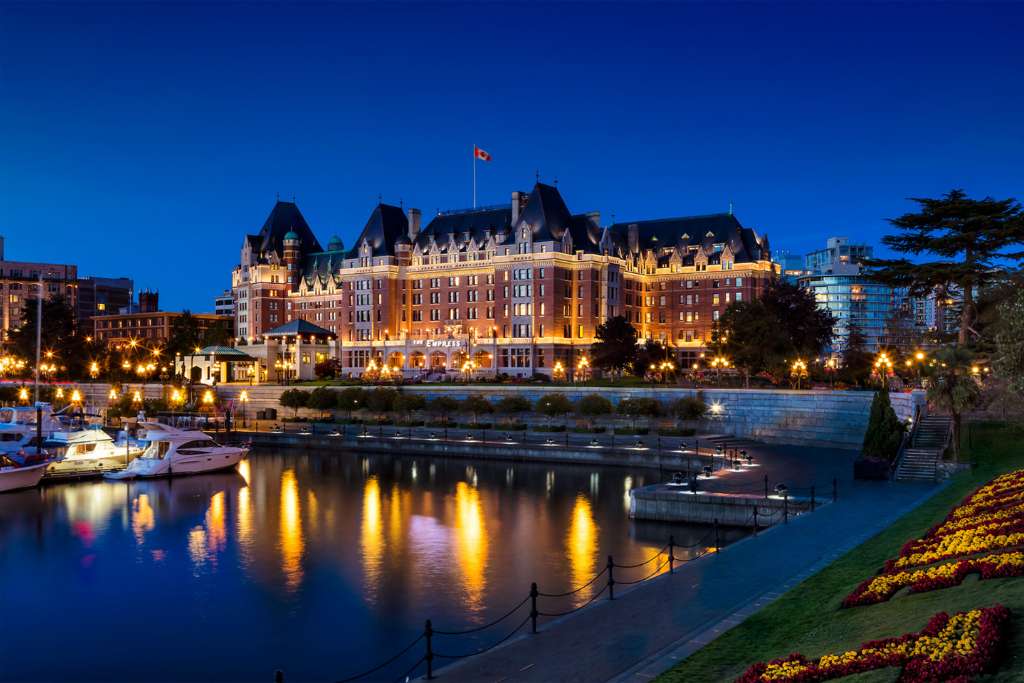
A townsite since 1862, Harbourside Victoria with its colorful gardens and English influences stands out as a ghostly hotbed. Commune with the undead at majestic Fairmont Empress, one of the oldest and most renowned hotels in North America. Strike up a confab with a slender moustached ghost who taps through the halls with a cane. He’s believed to be Francis Rattenbury, the building’s architect, ever watching over his creation. On the 6th floor, you may be visited by an elderly woman in pajamas, perpetually knocking on doors, then vanishing without a trace.
Scared Witless in Kansas City
Who knew BBQ capital Kansas City also ruled the roost as “The Haunted House Capital of the world. Shake like a leaf at The Sallie House, a physician’s mansion home that once also served as his operating theater. Sadly, one patient, Sallie, a six-year-old girl, died despite his best intentions. In modern times, her spirit roams the rooms, bringing cold air, putting out fires, and creating havoc with dogs who bark for no apparent reason whatsoever. Some residents have complained of being physically attacked by the phantom. Ready for a spooky slumber party? The house can be rented for overnight stays.
Paralyzed with Fear in Portland
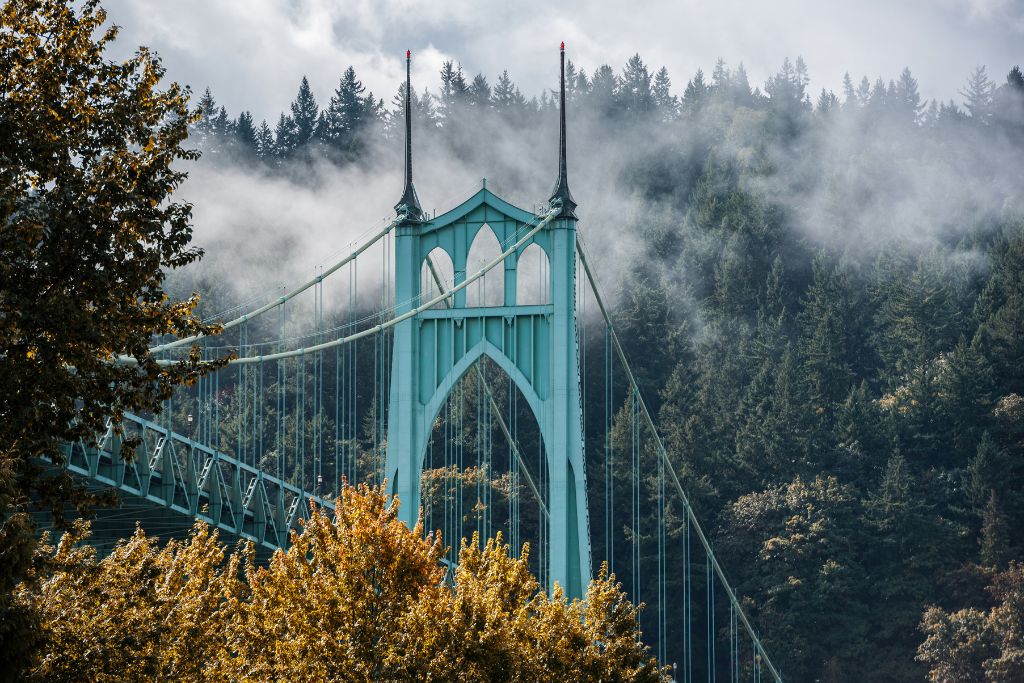
Since 1927, Portland’s iconic The Heathman Hotel, much loved by the literati, has embodied the city’s cultural verve as a landmark awash in history. Its mezzanine library holds myriad volumes from authors who have been past guests. But behind the scenes, ghostly guests stir up trouble — especially in rooms ending in 03. That may be thanks to the woebegone ghost of a person who leapt to their death from room 703, falling through the glass of the library below. Cries from empty rooms, luggage in motion, televisions that blink off and on, and a housekeeper’s photo of an energy ball in room 503 evince a heap of ongoing paranormal activity.
Shrieks and Shadows in Charleston
Billed as the “finest hotel south of New York City” when it opened in 1853, Charleston’s The Mills House continues to cater to fancy travelers. A beacon through Charleston’s range of catastrophes, including the Great Fire of 1861, the hotel straddles the intersection of Queen and Meeting Streets, home to phantasms aplenty. Beware the Purple Lady, a posh female spirit, legendarily a prostitute. She was stabbed to death by a customer, a notorious plantation owner. Today, she wanders the halls, howling, rustling her satin dress, and knocking on doors. Just as arresting, the Shadow Man mischievously appears in photos taken in Room 333 and in the hotel’s hallways.
Terror Stricken in Northumberland, U.K.
Dating back 1,400 years, Bamburgh Castle, a fortress on the unbridled Northumberland coastline, has two towers visitors can book for a “restless” night’s sleep. The castle boasts legions of spectral beings, each indicative of the Norman monument’s long history. Consider the Lady in Pink, a beautiful Northumbrian princess whose father sent away her unsuitable lover. Inconsolable, she donned a pink gown, climbed the stairs — and threw herself from the castle’s highest battlements. Today, guests see her, clad in pink, roaming the halls, then gliding to the beach to await her long, lost love. Less sorrowful, kindly Dr. John Sharp, the castle’s 19th-century restoration architect, also lingers incorporeally on property. Staff believe he haunts the corridors ever supervising his renovations.
Featured Image courtesy of Cederic Vandenberghe on Unsplash. Travel Curator may earn a commission from product or booking links on this page.