America’s big Semiquincentennial is here, and the original 13 colonies will be partying like it’s 1776. There are the usual suspects like Philly with its cracked Liberty Bell and Boston with its brick Freedom Trail. And there are other contenders like Georgia’s Augusta and South Carolina’s Charleston.
Go all out for authenticity and stay at luxury historic inns with wood-burning fireplaces and no TVS. Or opt for resorts where luxury means Netflix and a spa.
Cheers to the USA — in all its glory, from its big shots to its quieter spots. Here are some ideas for where to celebrate the big 250 in the original 13.
THE NEW ENGLAND COLONIES
NEW HAMPSHIRE
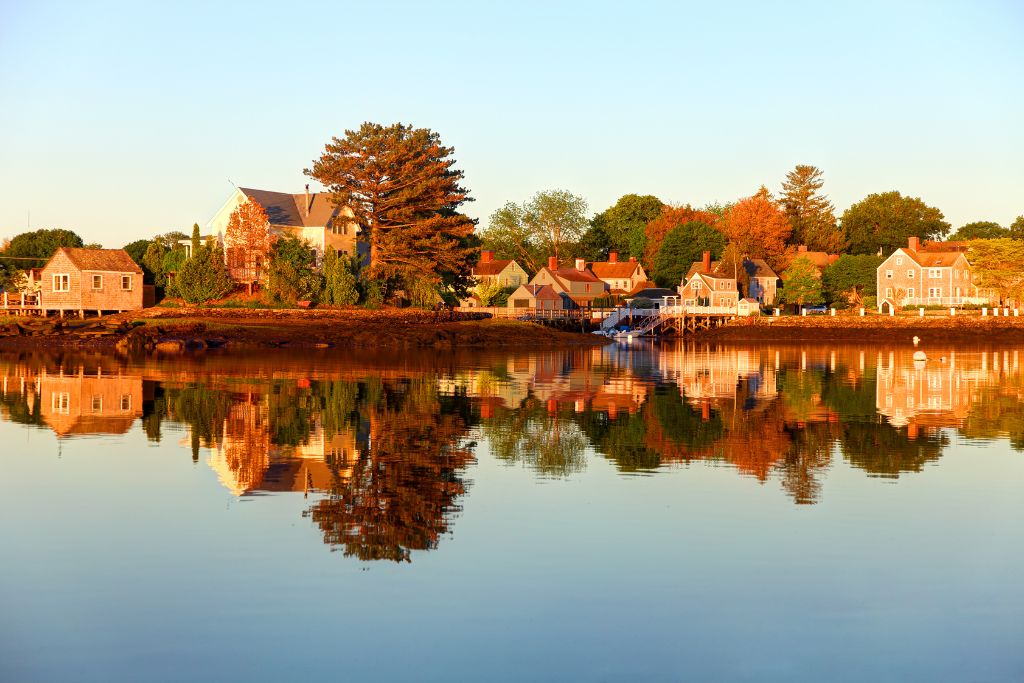
New Hampshire adopted the first state constitution in January 1776. Portsmouth, a cobblestoned seaport town incorporated in 1653, sits pretty on the busy Piscataqua River. It was Portsmouth where Paul Revere first rode, in December 1774, to declare the British are coming, the British are coming, as part of frantic efforts to reinforce Fort William and Mary in nearby New Castle.
Where To Stay: The sprawling historic Wentworth by the Sea resort in New Castle (a ten-minute drive from Portsmouth) is a Gilded Age jewel that debuted in 1874, hosting many presidents and dignitaries since. It has all the bells and whistles—tennis courts, a pair of swimming pools, a spa, and a picturesque marina. Latitudes restaurant is iconic for its fresh lobster rolls.
The land on which the Sailmakers House sits was once a sailmaker’s shop in the 1830s and eventually turned into an inn. The inn is centrally located in town, and guestrooms are uniquely historic with nautical-inspired décor, refinished pine wood floors, modern amenities like Matouk linens, and views of perennial gardens.
Where To Go: Fort Constitution Historic Site on New Castle Island, formerly Fort William and Mary, is where the legendary 1774 Raid took place, and the fort was built to protect the colonists. Today, it is a national park, and fort ruins are visible.
The Strawberry Banke Museum is an outdoor living history museum right in town that explores 300 years of New England, from the colonial days to the 20th century, with activities like candle making and lovely grounds to stroll.
Tip: Opt to dine at one of the handful of restaurants on the waterfront for sunset views and fresh fish and seafood.
MASSACHUSETTS
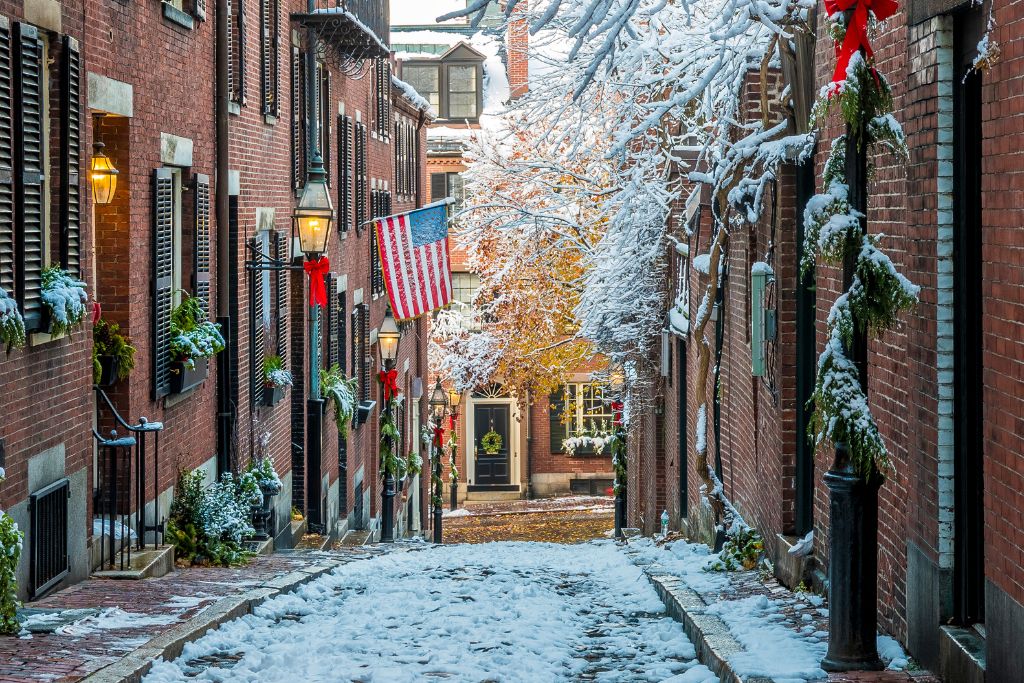
The fight for liberty began here. Lexington and Concord were where the shot heard ‘round the world was fired, the American Revolution began, and the towns staged reenactments at Concord’s Minute Man Historical Park and Lexington’s Battle Green last year to mark the 1775 anniversary. But it’s Boston’s Freedom Trail and historic sites that will be the center of celebrations next summer.
Where to Stay: The InterContinental Boston waterfront hotel is located on the original site of the Boston Tea Party. The shiny luxury hotel pays homage to Boston’s history with new debuts, including the Loyall Counting Room speakeasy inspired by hideaways where revolutionaries plotted their next moves (you enter with a secret password) and a menu that features colonial-era spirits like the Smuggler’s Elixir with rum and tobacco bitters. Some of the spacious guestrooms look out at the Boston Tea Party Ships & Museum through floor-to-ceiling windows. There is a spa and a Club Lounge, too. Waterfront firepits for sweet s’mores are summer on a stick.
Book the “Cheers to 250” package at the glamorous Boston Harbor Hotel, and you’ll get a historic-themed amenity; 250th Historic Guide; $250 Freedom Card and more for stays next spring, summer, and fall. The five-star hotel on Rowes Wharf has water views from many of its 232 guest rooms and suites. The health club has an indoor pool, even a golf simulator, and individual exercise pods.
The luxe Liberty Hotel, located in the former Charles Street Jail, is a perfect spot for a weekend escape. The hotel will celebrate the country’s freedom next summer with an exclusive, guest-only 250th Sail-abration Event for the Fourth, including fireworks viewing from the fourth-floor catwalk, and waterfront views of the Boston Pops concert with Ben & Jerry’s ice cream and more.
The Omni Parker House, the oldest continuously operating hotel in the U.S. dating to 1855, just debuted an extensive renovation of its guestrooms, but the bones of the historic hotel are intact. This is where Boston Cream Pie was invented, and Parker House rolls were discovered. The hotel has a prime location on the Freedom Trail and has hosted many presidents since Ulysses S. Grant.
Where to Go: The Boston Tea Party Ships & Museum is steeping big plans for next summer’s tea tossing. Expect special live-actor reenactments aboard replica 18th-century ships, culminating with guests tossing tea into the harbor.
The USS Constitution, Paul Revere’s House, and Bunker Hill Monument are a few must-see experiences. Also, the 2.5-mile Freedom Trail that begins at Boston Common and ends at Charlestown is a solid history lesson amble. Fireworks and the Boston Pops concert on the Charles River at The Hatch Shell is a perennial favorite. Fenway Park, the oldest ballpark in the country, turns 114 in 2026, and you can catch a game and/or take a tour. Sail Boston will celebrate the 250th with tall ships and vessels from July 11 to 16.
Tip: Union Oyster House is the oldest restaurant in Boston and the oldest in continuous service in the U.S. It celebrates its 200th in 2026—Daniel Webster slurped oysters at the circular bar, which is still here, and a favorite of Julia Child’s too. President Kennedy’s booth on the second floor is a popular request, as is the chowder.
CONNECTICUT
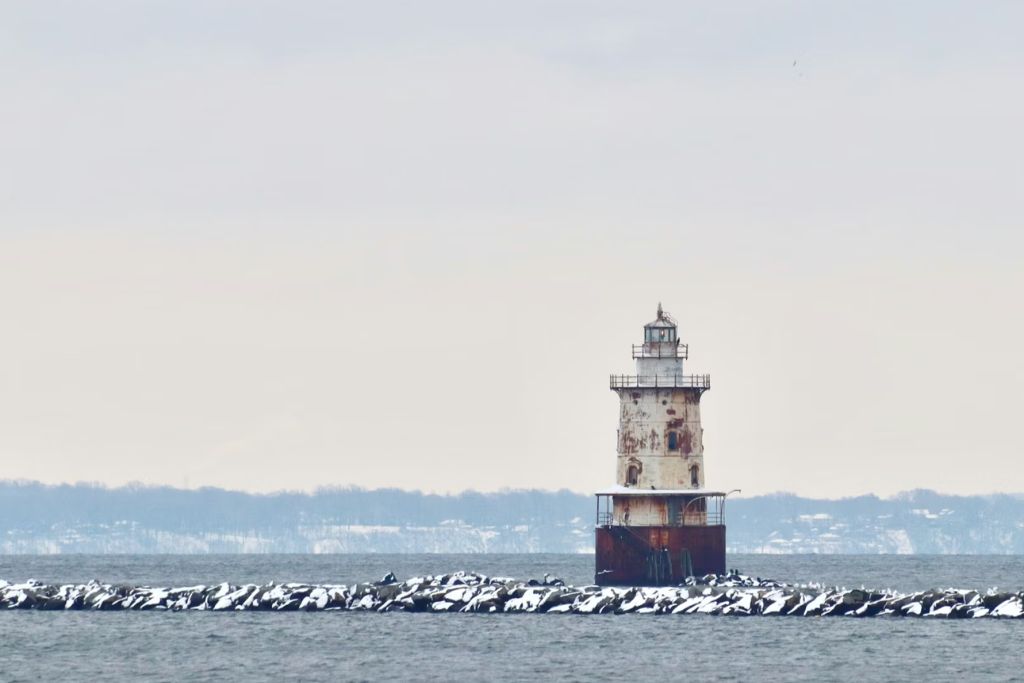
The Constitution State is also known as The Provision State. Though Connecticut was never occupied by the British, the state made sizable contributions to General George Washington’s army by providing valuable goods (food, munitions) that could be sailed out on the Long Island Sound. Americana is always on display in coastal Essex, which was once named ‘The Perfect Small American Town,’ and next year will be a special visit.
Where To Stay: The Griswold Inn is one of the oldest continuously operating inns in the U.S., celebrating its 250th anniversary in 2026. The Gris, as it’s known to locals, shows off an impressive collection of maritime paintings and artifacts, and a taproom where sea shanties are still sung as part of a long-standing tradition. Guestrooms feature Leonard’s beds—authentic reproductions from the 1700-1850 period, and some rooms have fireplaces. There are no televisions in guestrooms—a game of cribbage or good books are all you’ll need.
The Madison Beach Hotel in nearby Madison is a luxury 34-guestroom resort with balconies that front the Long Island Sound. Book a rub or wrap in the intimate Sounds of the Sea Spa and dig into fresh fish at The Wharf restaurant. Comp mixology classes are offered weekly, and The Porch is open year-round for al fresco meals and sunset sips.
Where To Go: At the end of Main Street in Essex sits the Connecticut River Museum, where you can explore maritime history, see the Revolutionary War’s “turtle” submarine, and board the historic ship On Rust, a replica of Adriaen Block’s 1614; the Dutch explorer was the first European to sail up the river. Also in Connecticut, travel the Washington-Rochambeau Revolutionary Trail, hitting Revolutionary points of interest, including museums and notable landmarks; this is the route traveled by French troops in 1781 and 1782.
Tip: Visit RJ Julia, one of the country’s most iconic bookstores, in downtown Madison. There is a bustling café and bistro with an outdoor patio. Frequent events and signings with locals like celebrity chef Jacques Pepin are hosted year-round.
RHODE ISLAND
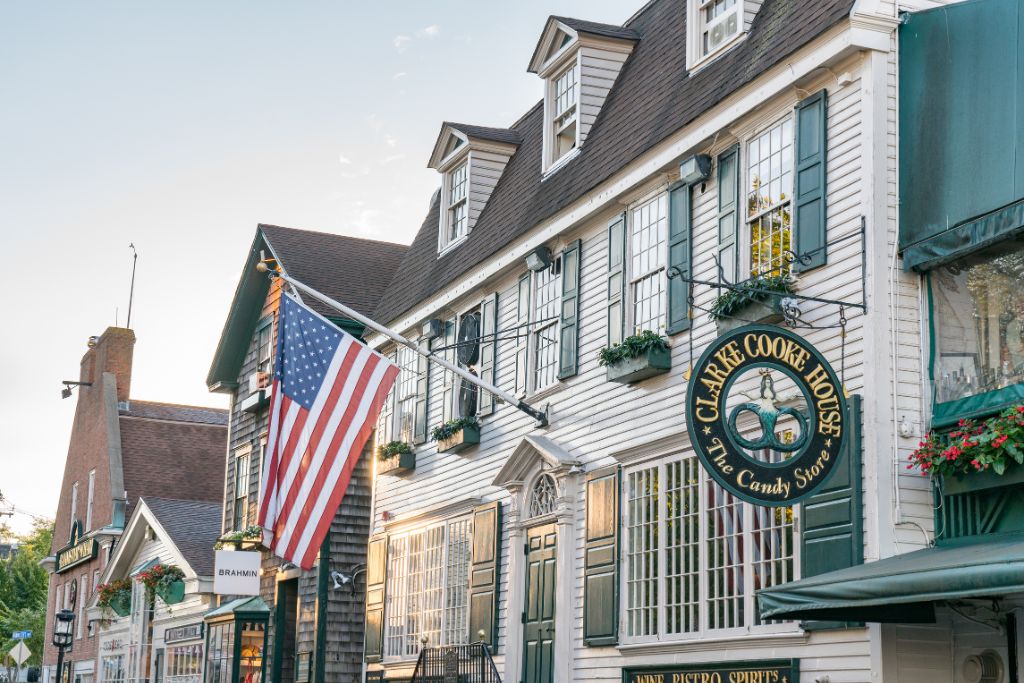
The Ocean State was the first colony to declare independence from England, and the last to ratify the Constitution. Providence played an enormous role in the war, notably the Gaspee Affair, a spark of the Revolution in 1772. And Newport is home to the origin of the Franco-American Alliance, which brought the war’s end. Off-the-beaten-path Bristol, 15 miles from Newport, is known as ‘America’s Summer Playground’ and is flagged for the mother of all Fourth of July parades; the parade has been a tradition since 1785 and is the oldest continuous Independence Day celebration in the country.
Where To Stay: Hotel Viking in Newport was a favorite haunt in the Roaring Twenties when it debuted as a place for the rich and famous to stay while partying at Newport’s mansions. And apparently, it still—rumors swirl that the hotel is haunted. There is a nice rooftop for sips and water views.
The Bradford-Dimond-Norris Inn in Bristol was built in 1792 for Deputy Governor William Bradford and shows off five lovely guest rooms and a porch for lazy summer days.
Where To Go: Bike or walk the East Bay Bike Path, a coastal trail that snakes along Narragansett Bay from Bristol all the way to Providence, the state capital.
The White Horse Tavern in Newport was founded in 1673 and is a National Historic Landmark. The restaurant offers a taste of colonial and modern New England cuisine in a historic building with fireside dining.
Tip: Rhode Island is the tiniest state in the nation, and it is perfectly doable to visit Providence, Newport, and Bristol all in one weekend.
MIDDLE COLONIES
NEW YORK
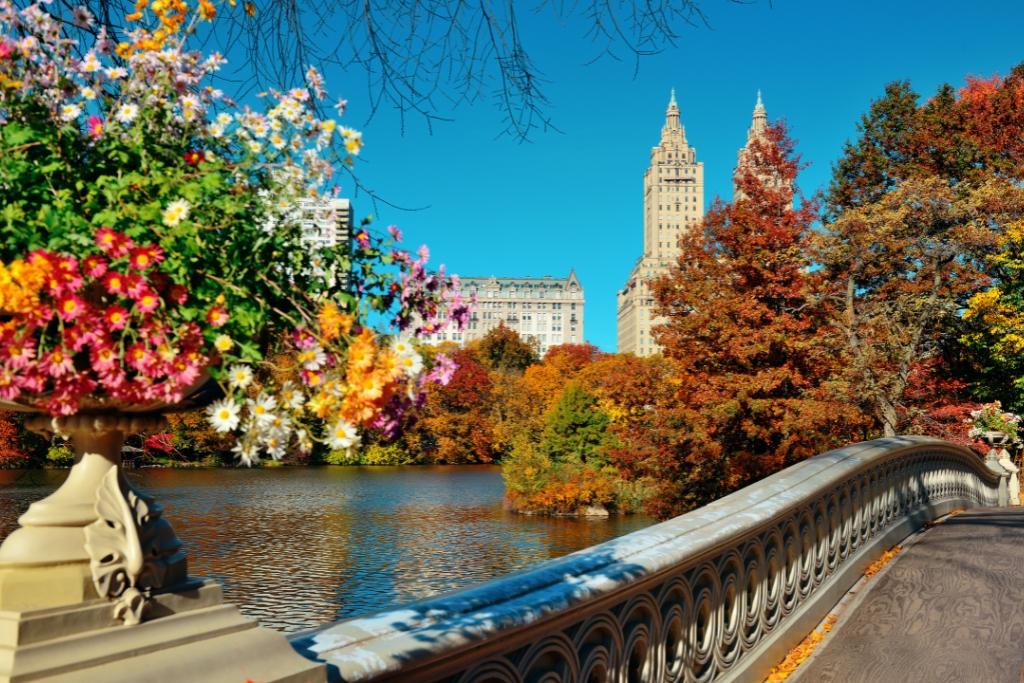
Many regions in the Empire State have ties to the American Revolution, from Fort Ticonderoga to Saratoga to Manhattan to Long Island, each playing a significant role in the nation’s birth. It is believed that New York earned the Empire State nickname by George Washington, who referred to it as the ‘Seat of the Empire’ in a 1785 letter he wrote admiring New York’s power and resilience.
Manhattan’s southern tip, founded in 1600 by Dutch immigrants escaping religious persecution, was called New Amsterdam. And during the war, it was the site of many American Revolution events, many of which occurred in Lower Manhattan in what is today the Financial District of FiDi.
Where To Stay: The Algonquin Hotel has had many chapters since its opening in 1902. It’s located around the corner from the storied New York Public Library and celebrated for its literary Round Table, where Dorothy Parker held court—if only walls could talk. The Blue Bar snuck on the scene during Prohibition’s demise in 1933 and was the place to see and be seen for Broadway stars.
Another oldie but goodie is the classy Beaux-Arts Omni Berkshire Place, which turns 100 in 2026. The presidential suite is named for Rodgers & Hammerstein, who met and collaborated on the Oklahoma musical sensation. Some of the Beaux-Art-inspired hotel’s guestrooms and suites feature balconies.
Where To Go: In spring 2026, The New York Public Library in midtown, a steward of important founding documents, will host Semiquincentennial tie-in programming.
The Fraunces Tavern Museum in Lower Manhattan interprets the history of the American Revolutionary War era with ongoing collections and public programs, and is even featured in the opening scenes of Hamilton. It was here that the Sons of Liberty often met and where General George Washington bid farewell to his officers. Visit the new special exhibition: Path to Liberty: The Emergence of a Nation. Also, dine at the restaurant here, which dates to 1792.
Also dine at Delmonico’s, which debuted in 1837 and where Baked Alaska was invented and where women were welcomed to dine independent of men for the first time.
Alexander Hamilton’s life is memorialized at The Hamilton Grange National Memorial, the country estate home in uptown Manhattan; it stands today as a tribute to Hamilton.
The Ellis Island National Museum of Immigration has refreshed exhibits spotlighting the nation’s immigration history.
Sail 250, the largest-ever flotilla of tall ships, will sail into the Port of New York and New Jersey on July 4th as part of the nationwide Sail250 project.
Tip: Walk across the Brooklyn Bridge at night, and you’ll spy the Statue of Liberty’s lighted crown and downtown Manhattan’s twinkling skyline.
HUDSON VALLEY
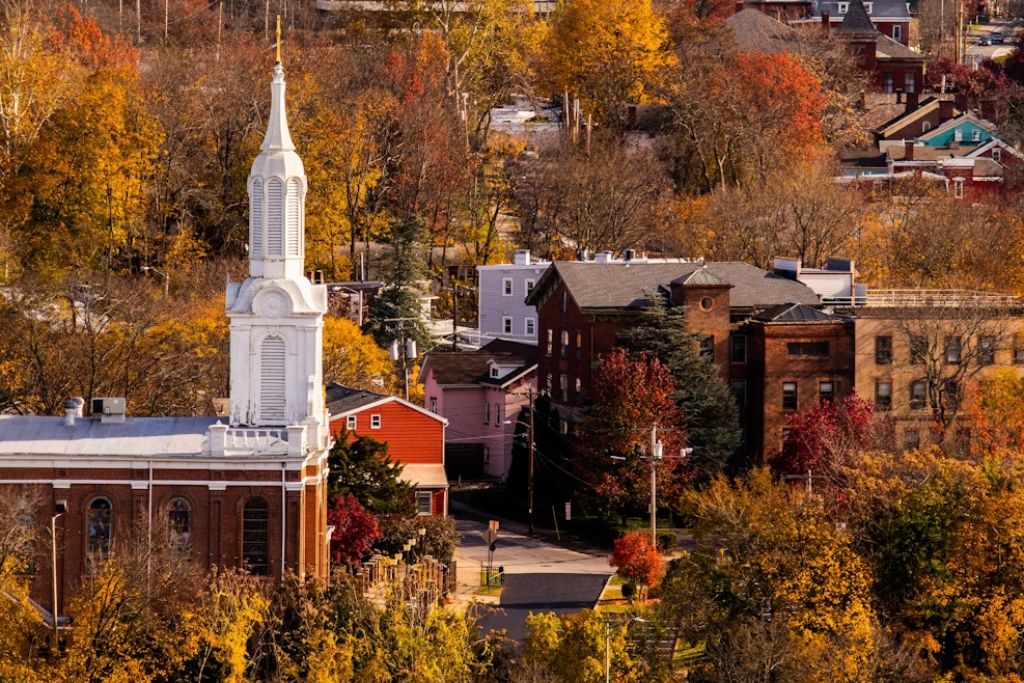
Also in New York, just north of New York City in Westchester, patriots fought fierce battles against the British in a campaign directed by George Washington while he was stationed in the bucolic Hudson Valley. The Valley’s strategic location on the Hudson River was important, and it is still pastoral and worth a visit for a taste of the Revolution in this neck of the woods.
Where To Stay: The Heartwood in Poughkeepsie, across the street from historic Vassar College, has 50 guestrooms and suites handsomely decorated with Vassar alum artwork and floor-to-ceiling windows. The Salt Line restaurant celebrates locally sourced food, and there’s a lovely patio for dining. The hotel is a centrally located spot for exploring the Hudson Valley, as well as the campus and nearby trails.
The Millbrook Inn in Millbrook is a reimagined grand colonial country inn tucked away from the world, but its Vintage restaurant is on the map for its culinary exploits that star ingredients that are locally sourced from the Hudson Valley, including beers and spirits (translation: don’t order a Sam Adams.) The fireplaces in the living room and restaurant are timeless, as are the paintings of colonial times. The guestrooms are draped in chic country with modern touches like heated radiant floors. A wood burning firepit in the gardens is the finishing touch with sunset views through the woods.
Where To Go: There are many compelling reasons to visit the Hudson Valley. The rolling farms and meadows evoke a time not so distant from the American Revolution. The Clinton House State Historic Site, named for Revolutionary War Governor George Clinton, is a restored Georgian/Dutch Colonial house built in 1765; from 1777 to 1783, it played an important role when Poughkeepsie was the state capital, and today it houses historical Valley documents.
LONG ISLAND
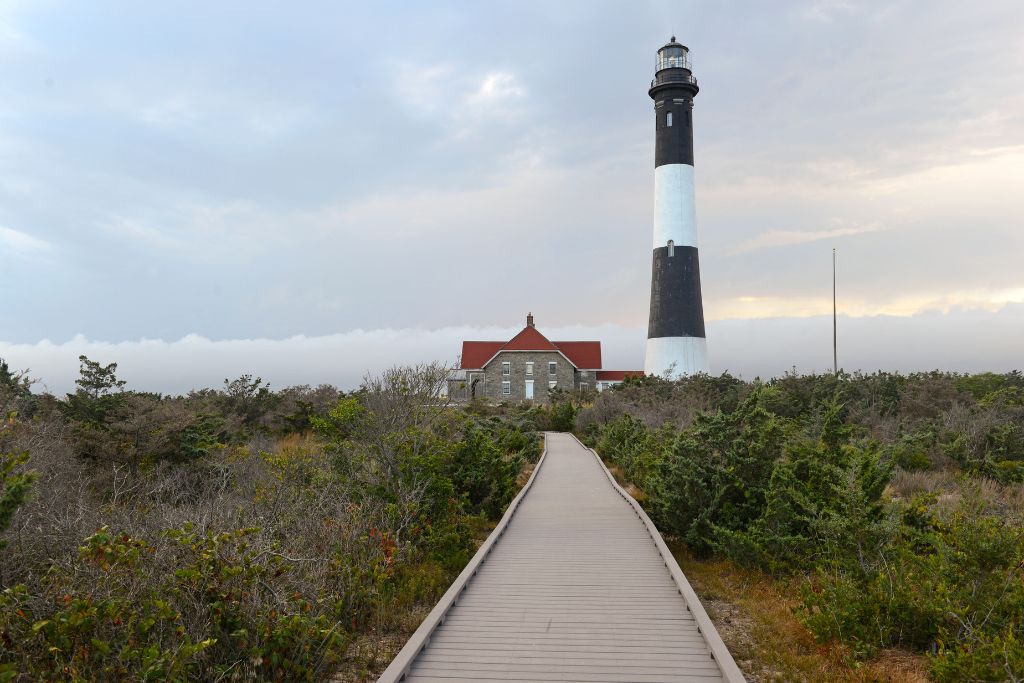
Long Island was key to many of the battles won in Manhattan and Brooklyn in the war, and, in fact, according to documentarian Ken Burns, it is here that the most important battle, the Battle of Long Island, took place. It was the waters surrounding Long Island and New York that the British first sought to take control of, and the Battle of Long Island in 1776, aka the Battle of Brooklyn, was the first major battle after the US declared independence. In fact, Long Island was one of the last places to see the British withdrawal, and Long Islanders suffered immeasurably. The Hamptons and Montauk on the East End were sites of many naval engagements, including Hampton Bays, with its proximity to the Shinnecock Canal and Atlantic Ocean making it prime time for invasions. The Culper Spy Ring, which gathered intelligence for General George Washington, was also a player here.
Where To Stay: The Hampton Maid. The chic hotel turns 65 in 2026, and it’s one of the sought-after spots in the Hamptons for both its sustainability initiatives and unique comfort suites, which feature indoor/outdoor fireplaces. There is also an outdoor pool and lovely grounds for embracing nature—look for the signature bird houses made from repurposed scrap wood. The restaurant, R.aire, shows off paella and tapas, dishes inspired by the chef’s Mediterranean roots—ingredients are grown on site, sourced from local farms, or imported from Spain.
Where To Go: Southampton History Museum will offer engaging lectures and exhibits about the American Revolution and its connection to Long Island and the Hamptons. Walking tours are also offered.
The Montauk Lighthouse. The lighthouse was authorized by President George Washington in 1792 and became the first public works project commissioned by the federal government under the newly formed United States. Guided tours are available.
The East Hampton Historical Society will offer special programming for the Semiquincentennial next summer.
Tip: In addition to its white-sand beaches, Long Island’s East End is known for its farmland and wineries; take advantage of them.
PENNSYLVANIA
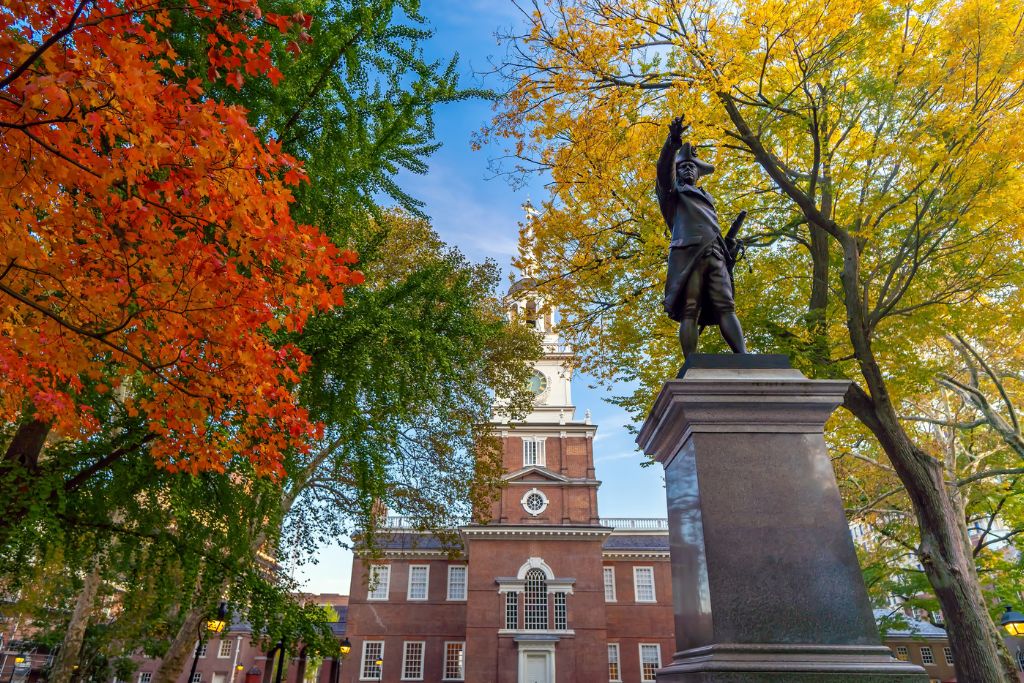
The Keystone State has a rich American Revolution history, and Philly is its heartbeat. Next summer, that heart will skip to the beat of a different drum—not only will the City of Brotherly Love celebrate the 250th American Revolution, but Philly will also host the FIFA World Cup match on July 4, and the MLB All-Star Game in July. Translation: Party time.
Where To Stay: The Kimpton Monaco Philadelphia in Philly’s enviable Old City is located within a quick march from where the Declaration of Independence was signed. Guestrooms are bright and bold, much like the Patriots who fought for the city’s independence.
The Guild House. For a unique experience, stay at this historic boutique hotel housed in what once was a women’s guild hall. There are 12 elegant suites, each inspired by female leaders and local women-owned businesses. Guestroom amenities include everything from kitchenettes to pianos.
Where To Go: The historic Reading Terminal, a sprawling food hall, was founded in 1893 (think: Philly cheesesteaks and Amish venues); you can take a tour, too.
Independence Hall and The Museum of the American Revolution are the nation’s best show-and-tell spots. The Historic District will celebrate a year-long 2026 celebration called 52 Weeks of Firsts, highlighting the city’s innovation spirit with weekly tours, lectures, and installations at prominent sites.
Tip: Philadelphia is home to many gardens that pop up in unexpected places, especially in the historic brick-lined streets in Society Hill and Old Town neighborhoods. Seek out these lovely pocket gardens for respite while touring the Revolutionary spots.
NEW JERSEY
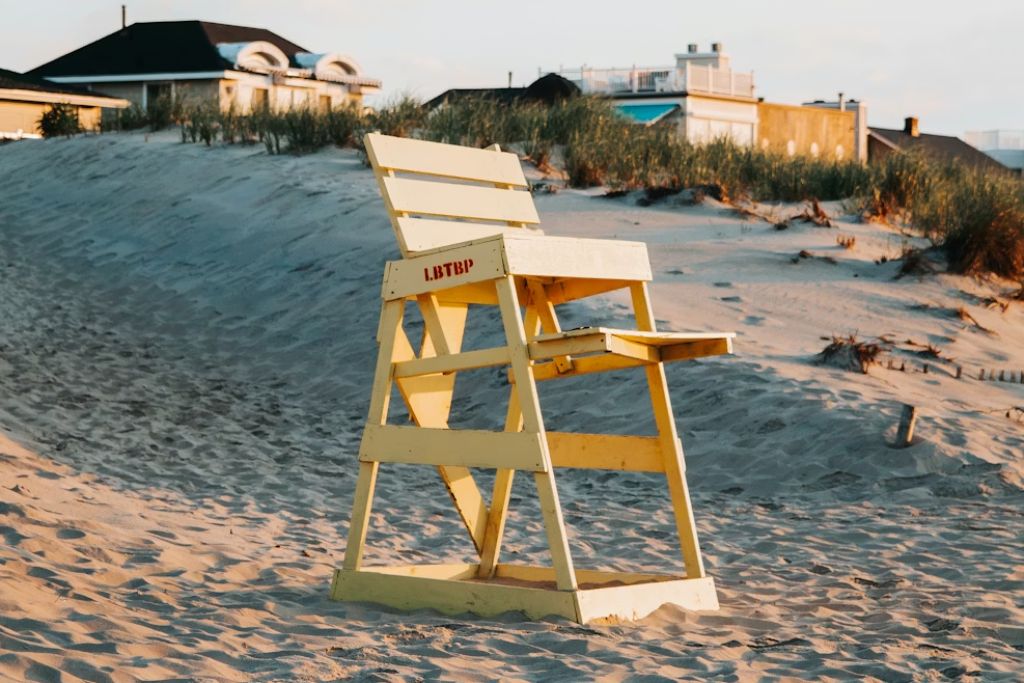
Located between New York and Philly, New Jersey is sometimes known as the Crossroads of the American Revolution. In fact, the state was the site of more Revolutionary War battles, skirmishes, and naval engagements than any of the colonies, including the Crossing of the Delaware and Battle of Monmouth, and George Washington spent a lot of time here. Hoboken, too, played a pivotal role in the New York/New Jersey campaign with its strategic location between Philly and New York. But Frank Sinatra is Hoboken’s real treasure; he was born and raised in Hoboken, and there are remembrances at every corner.
Where To Stay: Inn at Glencairn Princeton. A luxury bed and breakfast housed in a 1736 Georgian manor on three acres, this inn is about four miles from Princeton University. An important battle took place in Princeton in January 1777 when General George Washington led a surprise attack, and his Continental Army defeated British forces.
Once upon a time, in the late 1700s. The Woolverton Inn in Stockton was a manor turned into a working sheep farm. Fast forward to today, the 1830s stone barn is now Northridge Restaurant with country breakfast and TK. The Historic Hotels of America inn has fireplaces in most of the 14 guestrooms in the Manor House and Cottages, baths with whirlpool tubs, and cozy reading nooks. Fresh-baked cookies and locally sourced fruit are served in the afternoon. You’ll fall asleep to counting sheep-there are still sheep roaming the pastoral fields. And gardens, too. Popular New Hope and Lambertville are a few miles away with bookstores and a colorful arts and music scene.
Where To Go: Take part in Tavern Talks interactive history event that engages debate on critical issues of New Jerseyans 250 years ago—in a local tavern. Historical reenactors in period dress engage American Revolution convo in some of Jersey’s microbreweries. Upcoming Tavern Talks are posted at RevNJ.org.
The Hoboken Historical Museum houses 100,000-plus documents that spill the stories about Hoboken and New Jersey.
Tip: Next summer, eight World Cup matches will be played in Jersey — more than any other state — including the final match on July 18. RevolutionNJ and FIFA will unveil a historical exhibit for visitors to learn about the state’s revolutionary role. And a celebration is planned for July 2 and 3 in conjunction with the World Cup, including a concert, regional food vendors, an exhibition hall, a naturalization ceremony, and fireworks.
DELAWARE
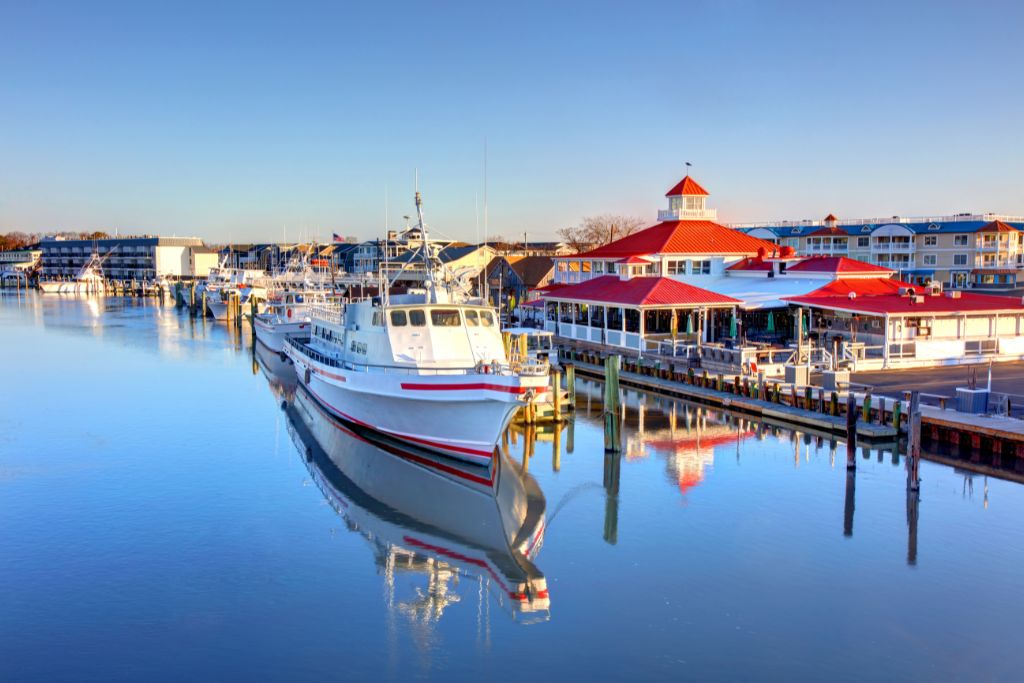
Historic New Castle was the former capital of Delaware and home to loyalists and patriots; Delaware’s separation from Pennsylvania and Great Britain was declared here in 1776. The cobblestoned streets are flanked by elegant colonial homes, restaurants, and shops. Stop at one of the information centers (the New Castle Historical Society and another operated by the National Parks Service) in town for an audio walk and map. And take a walk along the river, too.
Where To Stay: Terry House Boutique Hotel. Location, location, location, the inn has an enviable address in the middle of Historic New Castle. Dating to 1851, it has had several lives, even serving as a place for the Red Cross in World War 1. It has been lovingly restored and today has a living room with a fireplace, and several floors of guestrooms and suites that are elegantly decorated, some with gas fireplaces.
The landmark Hotel DuPont in downtown Wilmington debuted in 1913 as quite the place to see and be seen, with 150 guest rooms, a men’s café, a women’s reading room, and a Broadway touring theater. DuPont is a celebrated figure in Delaware. Today, the hotel still has that Gilded Age glam with modern amenities.
Where To Go: Deer Park Tavern in Newark (Delaware) debuted in 1851. It was originally the St. Patrick’s Inn in 1747 and a place for soldiers to stay, including George Washington, during the American Revolution; order the fish and chips.
Jessop’s Tavern in Old New Castle is a colonial-inspired experience in a 300-year-old building with cozy fireplaces and a menu that stars Shepherd’s Pie and an impressive Belgian beer list.
The Grand Opera was once the Wilmington Academy and served as barracks, a hospital, and a holding facility for Continental Army prisoners waiting to board British Navy prison ships. Today, it is where ovations are given for Broadway-worthy concerts and performances.
The Hayle-Byrnes House is a lone sight on a country road on the banks of the White Clay Creek in Newark, Delaware. Built in 1750, the lovely brick home was the site of an important war council presided over by General George Washington in September 1777, days before the Battle of Brandywine. Admire the river views from the back of the house, and make sure to see the remarkable 500-year-old-plus Sycamore tree in front of the house. Tours and programs are offered throughout the year.
Cooch’s Bridge Historic Site is where the only Revolutionary War land battle was fought on Delaware soil in September 1777. The impressive, expansive homestead and Cooch-Dayett Mill Complex are being meticulously preserved and restored for the big birthday bash.
The Mercury Café and Tea House is steeped in history. The colonial-era building dates to 1682 and is aka the “William Penn House”—apparently, when Penn came to America, he spent his first night here. Today, it is the place for vegetarian/vegan breakfasts and warm local chatter.
SOUTHERN COLONIES
MARYLAND
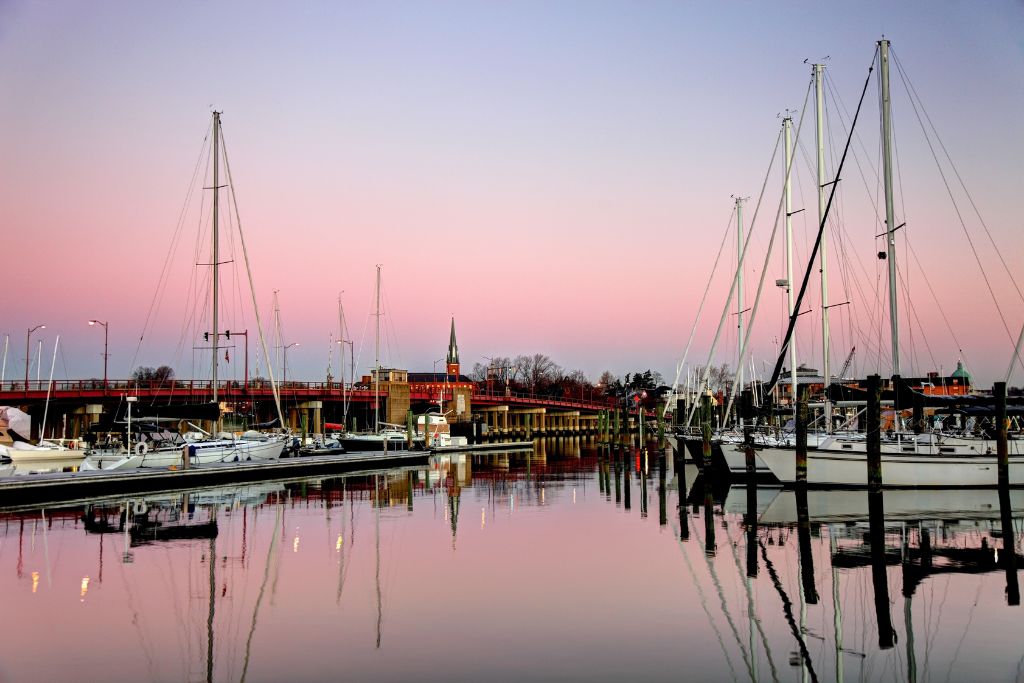
Baltimore, aka Charm City, is the birthplace of the Star-Spangled Banner at Fort McHenry. And the Mount Vernon neighborhood in Baltimore is home to the Washington Monument, which was inspired by George Washington’s Mount Vernon home in Virginia.
Where To Stay: Pendry Baltimore has a prime waterfront spot overlooking the Inner Harbor in Fell’s Point. The 128-room luxury hotel dates to 1914 on the historic Recreation Pier, and The Cannon Room is spot on to toast to the 250th with an American whiskey.
Where To Go: Climb to the top of America’s first Washington Monument—the monument is a tribute to George Washington and was the first architectural monument erected to honor him.
Visit the Fort McHenry National Monument and Historic Shrine.
And explore Black history at the Frederick Douglass-Isaac Myers Museum.
Tip: Visit Baltimore’s newest neighborhood, Baltimore Peninsula, which splashed onto the scene in recent years with waterfront parks and restaurants.
VIRGINIA
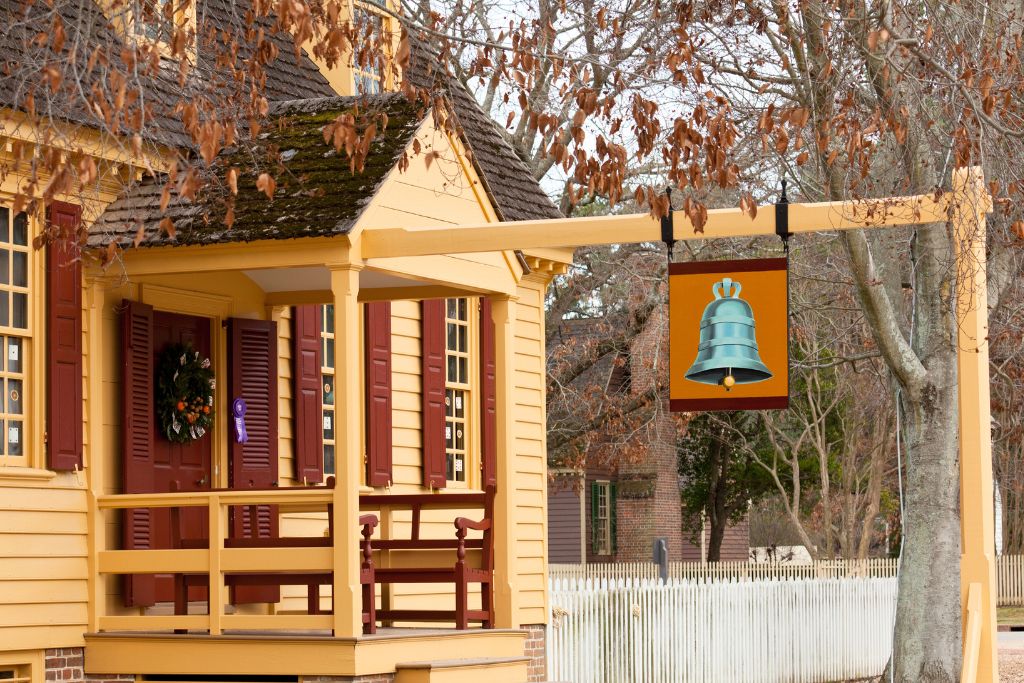
The Old Dominion State is where Patrick Henry’s iconic “Give me liberty or give me death” speech was given in March 1775, in Richmond. The Historic Triangle (Williamsburg, Jamestown, and Yorktown) is known as the birthplace of America; in May 1776, the 5th Virginia Revolutionary Convention instructed delegates to call for independence in Williamsburg. Also in Virginia, the Virginia Declaration of Rights in June 1776 established a framework for individual liberties and limited government power, laying the foundation for the U.S. Bill of Rights.
Where To Stay: The Inn at Warner Hall on the shores of the Severn River in Gloucester, near the Historic Triangle, was built by President George Washington’s great, great-grandfather in 1642 as one of the country’s earlier manor houses, and hosted George Washington and Thomas Jefferson. Legend has it that George Washington learned to dance the Waltz in the Drawing Room. There are 11 newly renovated guestrooms, a boathouse, and a mile-long running track on the property.
Where To Go: The Historic Triangle will celebrate with a year-long lineup of activities at Colonial Williamsburg, the largest living history museum, and a Lights of Freedom concert with fireworks. Explore the rows of authentic and recreated colonial houses from the original 1700s as part of a time travel experience.
Tip: Dine at Christiana Campbell’s Tavern in Colonial Williamsburg, where George Washington once dined. Huzzah!
GEORGIA
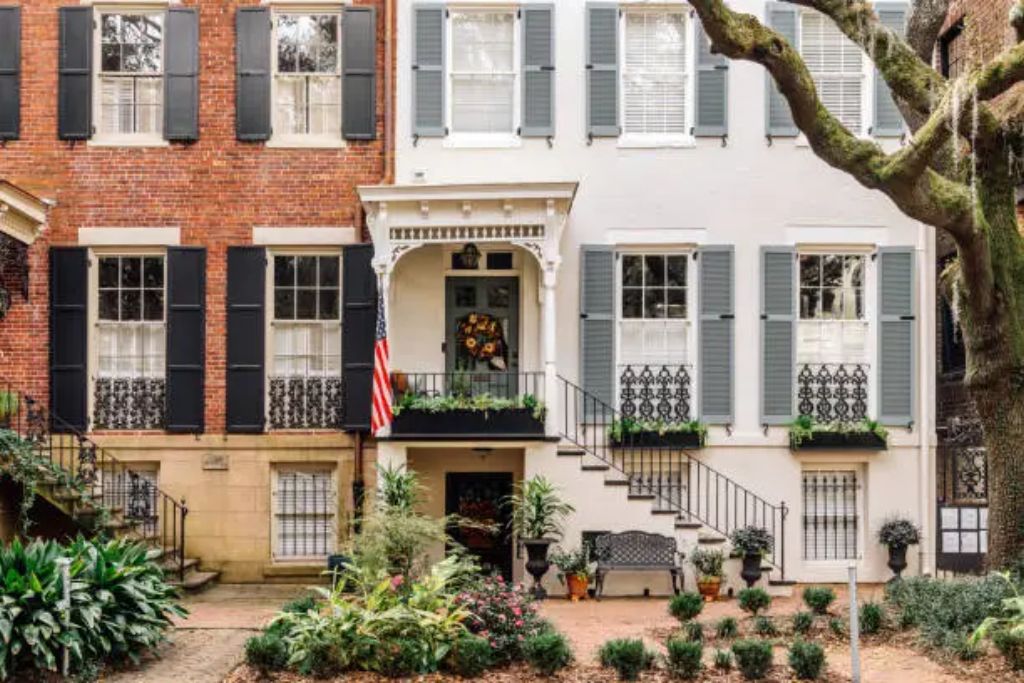
Many historic travelers will have Georgia on their mind next year. Augusta has special roots to the Revolutionary War as deep as those of the Magnolia trees that line the Masters’ Augusta National Golf Club course here. Augusta is also the childhood home of President Woodrow Wilson.
Where To Stay: William Howard Taft stayed at The Patridge Inn, once a social club for the city’s elite in Augusta. The inn features 144 guestrooms, studios, and suites, some with kitchens, and decorated with period furnishings. The Six South Rooftop bar crowns the hotel with intoxicating views of downtown and classic cocktails like the Azalea. And the hotel’s restaurant 8595 dishes traditional Southern fried green tomatoes, shrimp and grits, and deviled eggs.
Where To Go: Visitors can walk in the footsteps of the Founding Fathers at Meadow Garden, home of George Walton — one of Georgia’s three signers of the Declaration of Independence — and pay respects at the Signers Monument, Revolutionary War Cemetery, and Fort Cornwallis.
Tip: Anticipate themed menus, specialty drinks, and culinary competitions for a taste of authentic Augusta in a nod to America’s 250th and Southern hospitality next summer throughout the city.
SOUTH CAROLINA
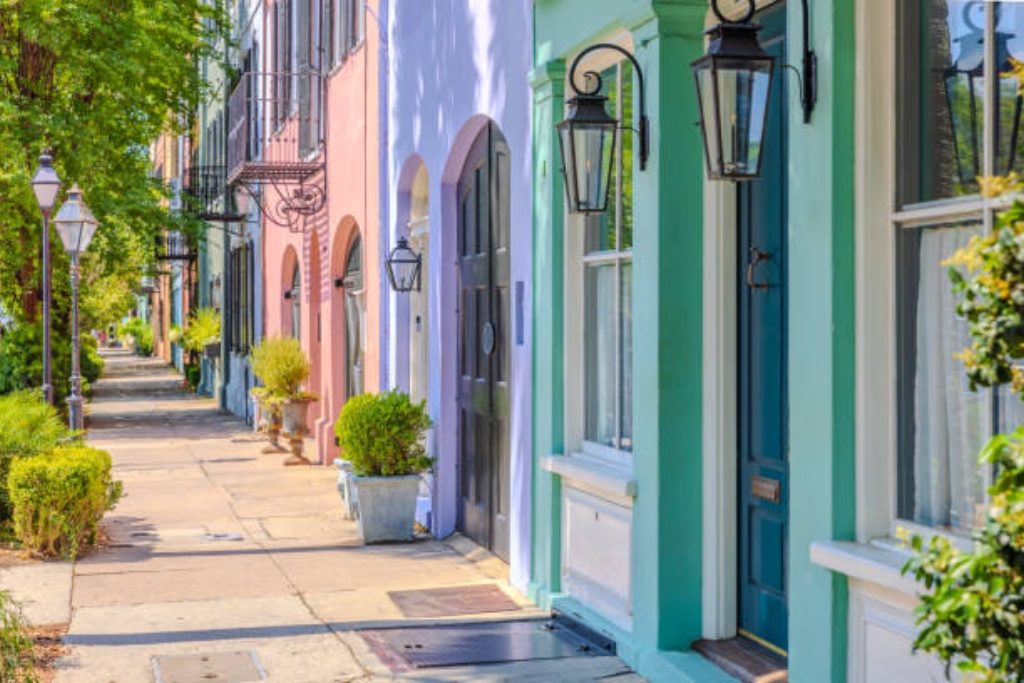
The Palmetto State was home to 200-plus Revolutionary War battles, and the ninth colony, joining the original 13. You win some, you lose some: Charleston had a strategic harbor location and suffered a loss in the British siege of 1780, but it won the first American victory in the war at the Battle of Sullivan’s Island in 1776. Charleston was also the home of the original Tea Party, pre-dating the Boston Tea Party by 13 days.
Where To Stay: There is no shortage of historic inns in Charleston. A couple of standouts include The John Rutledge House Inn, the former home of the Constitution signer and a National Historic Landmark. And The Francis Marion Hotel, named for the Revolutionary War hero.
Where To Go: The Charleston Museum’s Becoming Americans and Ringleaders of Rebellion exhibit takes a deep dive into the city’s path through the Revolution, including African American experiences and Lowcountry daily life.
Visit the Heyward Washington House downtown by the Battery, once owned by Declaration of Independence signer Thomas Heyward Jr.—and George Washington really did sleep here during his 1791 city tour.
Tip: Plan for signature America250 events and Carolina Day (June 28th) festivities, including battle reenactments, public lectures, drone shows, and more at historical sites all across Charleston.
NORTH CAROLINA
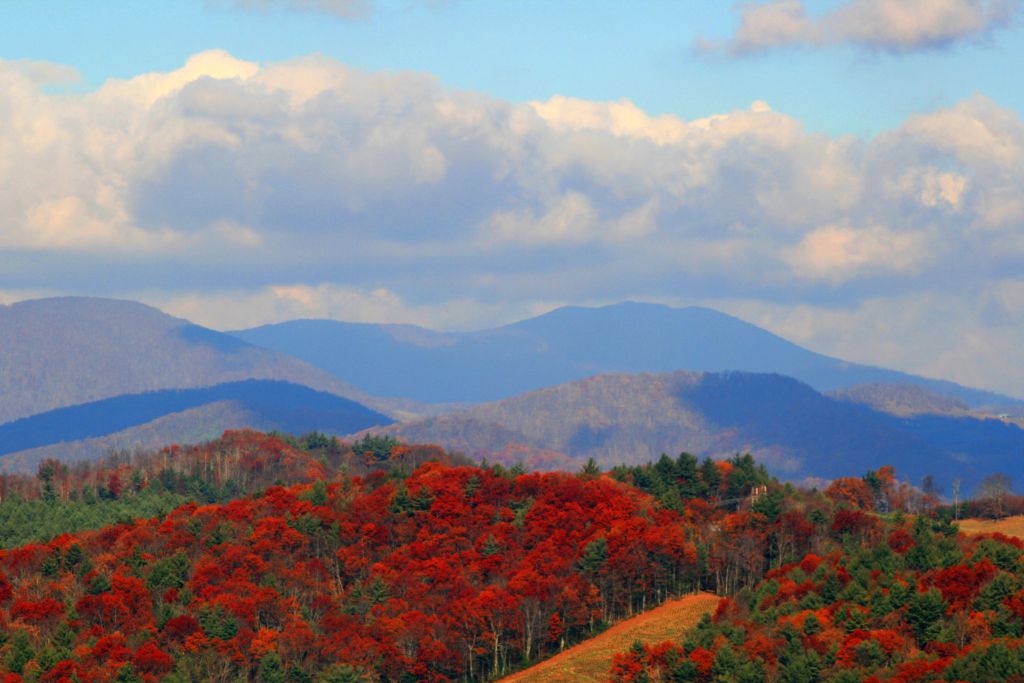
Charlotte was the 11th state to ratify the Constitution. It’s a modern city today with hints of colonial days. The Mecklenburg Declaration of Independence has been fighting a battle as to the document’s authenticity—apparently, Captain Jack rode to Philadelphia in May of 1775 to deliver the Mecklenburg Declaration of Independence, considered the first draft of the Declaration of Independence. The state symbol and flag, in fact, bear the date May 20, 1775, believing that to be the state’s significant contribution to America’s independence. But others are doubtful, and the controversy continues to play out.
Where To Stay: The Duke Mansion dates to 1915. Flaunting colonial revival architecture, the beauty was built by James Buchanan Duke. There are 20 elegant guestrooms, a library, 12 gardens, and a full complimentary breakfast.
Kimpton Tryon Park Hotel is located in the heart of Uptown Charlotte. Southern hospitality meets skyline views from Merchant and Trade, a rooftop lounge with views of the city. Guestrooms feature in-room yoga mats, and social hours are hosted to chat about the American Revolutionary days with other like-minded (or not) guests next summer.
Where To Go: Charlotte has many mindful spots to visit that share the story of the town’s special relationship with the American Revolution. The Battle of McIntyre Farm Monument commemorates a monumental skirmish during the war in 1780 with a 15-foot boulder monument and a plaque that resembles a hornet’s nest.
The Hezekiah Alexander Rock House is the last standing home of one of the framers of North Carolina’s first Constitution and first Bill of Rights, and is the last remaining building of the town’s Revolutionary past.
Tip: Visit the Olde Mecklenburg Brewery in Charlotte and order a Captain Jack Pilsner while chatting up a local Charlottean about the merits of the Mecklenburg Declaration of Independence and Captain Jacks’ 1775 ride to Philadelphia.
Feature image by Keith Luke, courtesy of Unsplash. Travel Curator may earn a commission from product or booking links on this page.