“They all have names. That’s Creamsicle, Sunny Side Up, and that one” — Joey Ovenstone, a manager at Okaeri Calistoga, laughs — “is Kim Carpdashian.”
We are standing in the tranquil dining area beside Okaeri’s signature indoor koi pond — built on the footprint of a former swimming pool — where I’ve just finished a traditional Japanese breakfast of miso soup, steamed rice, marinated cod, and pickled daikon. The elegant Japanese-inspired hotel opened in 2025 after years of mindful transformation. Originally built in 1875, the historic pink mansion, as locals affectionately called it, was purchased in 2017 by Eva Chen — whose family owns Kanpai Wines — after she spent time soaking in Calistoga’s mineral waters.
“She was mesmerized,” Ovenstone tells me. “She saw in Calistoga a traditional Japanese hot springs town and dreamed of turning the pink mansion into a ryokan.”
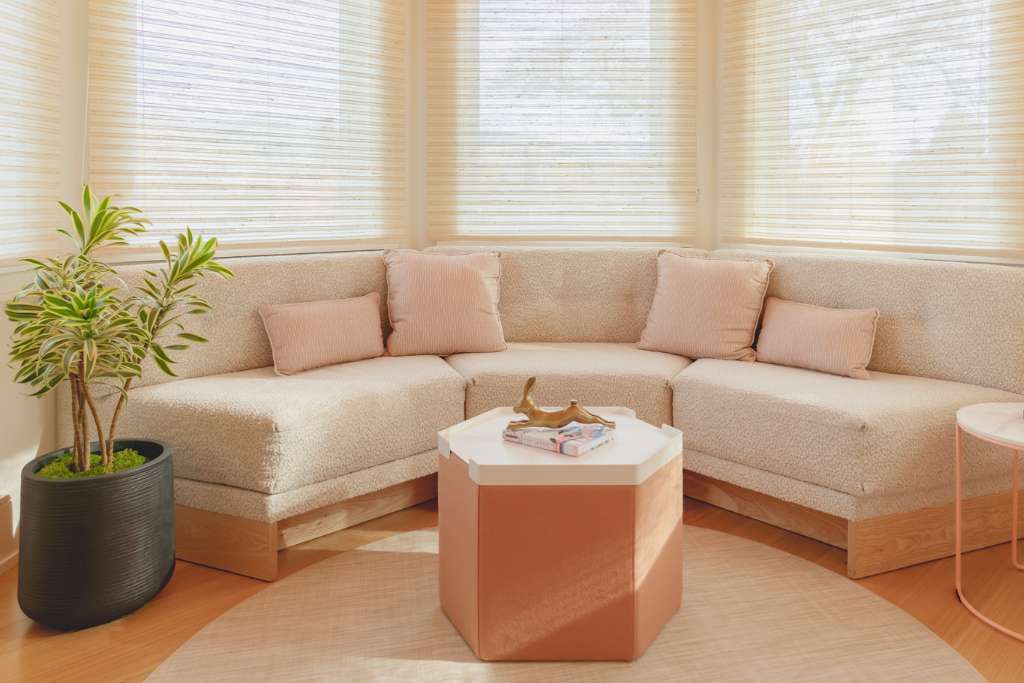
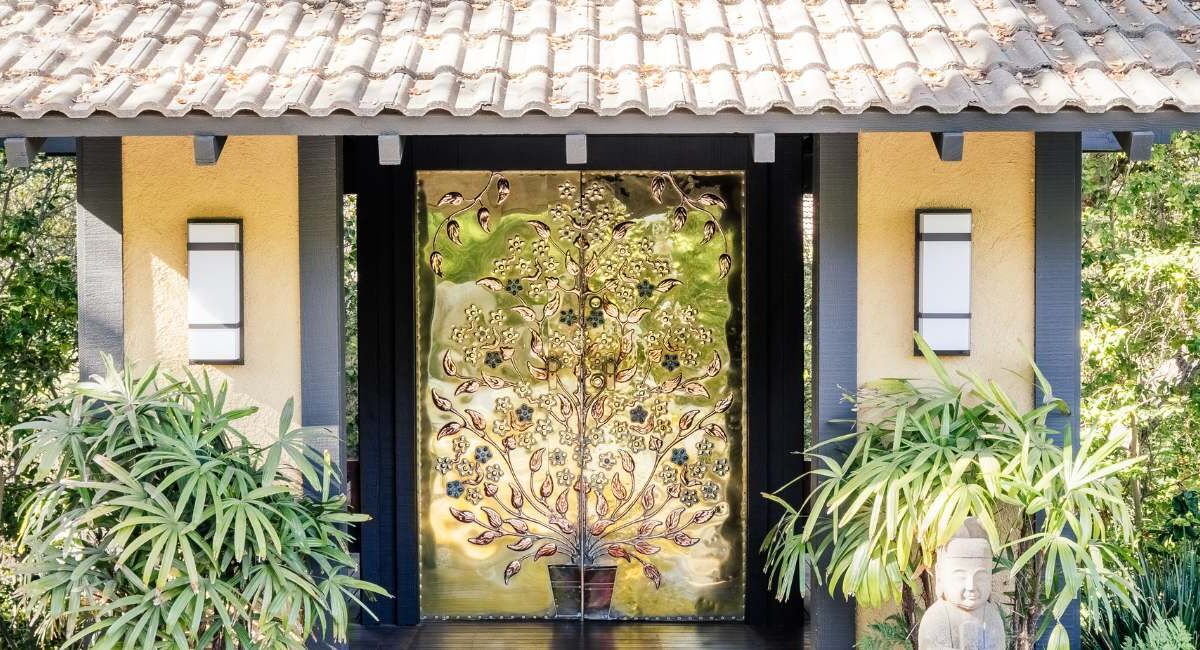
No longer bubble-gum pink, the now-minimalist hotel features just seven rooms (each named for a Kanpai wine label), ranging from my sweet tower Fuyo No Tsuki (which means “winter moon”) to Toki No Kawa (“river of time”) where a double-sized futon rests directly on the floor. There is no formal spa (although massages can be arranged in room) but there’s really no need for one — downtown Calistoga, famous for its mineral waters, volcanic ash, and peat muds, is an easy walk. The hotel instead features shoji screens and tatami tea area, a Japanese garden unfolding around a lily pond and wooden footbridge, shou sugi ban (charred wood) panels, and my personal favorite: in-room hinoki and cedar soaking tubs where I begin and end each day.
In Japanese culture — shaped by Shinto and Zen Buddhism — cleansing the body transcends hygiene. It is ritual. Meditation. Renewal. A daily act of restoring balance between the inner and outer worlds. One need only look to Japan’s ryokan culture — traditional inns where yukata-clad guests sleep on tatami mats and bathe in onsen (natural hot springs), or to the kimono-clad geisha of the Edo period, with their white-painted skin, red lips, dramatic kohl liner, and elaborate nihongami coiffures, to understand the significance bathing and beauty have played in Japanese culture.
Following, a few top-tier spas — from Japan to the United States — where spagoers can still immerse in authentic Japanese rituals and coveted beauty traditions.
In Japan
Aman Tokyo
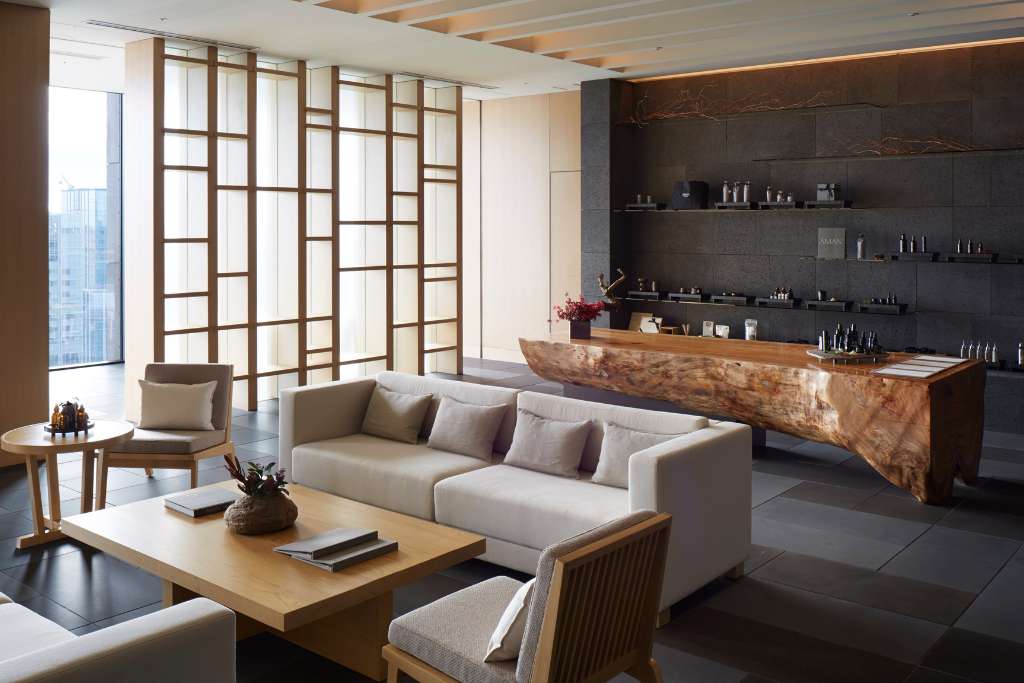
One of the most refined ways to experience Japanese wellness traditions is at Aman Spa Tokyo. The spa uses its own proprietary Aman Essential Skin line, developed in partnership with KOSÉ, featuring ingredients like antioxidant-rich rice bran, indigo extract (historically used by samurai for its healing properties), and camellia oil — cherished in Japan for over a millennium. Exclusive to Aman Spa Tokyo are the 120-minute Seasonal Journeys, helping spa guests tap into the energy of the changing seasons. The spring journey (March-May) features sakura (cherry blossom), nioikobushi (magnolia) and green tea; summer (June-August), hinoki and dokudami leaves, and Hakka (Japanese mint); autumn (September-November), chrysanthemum, sangho, and hinoki; and winter (December-February), pine, ginger, yuzu oil, sake kasu, and kuzuyu tea.
Aman Kyoto
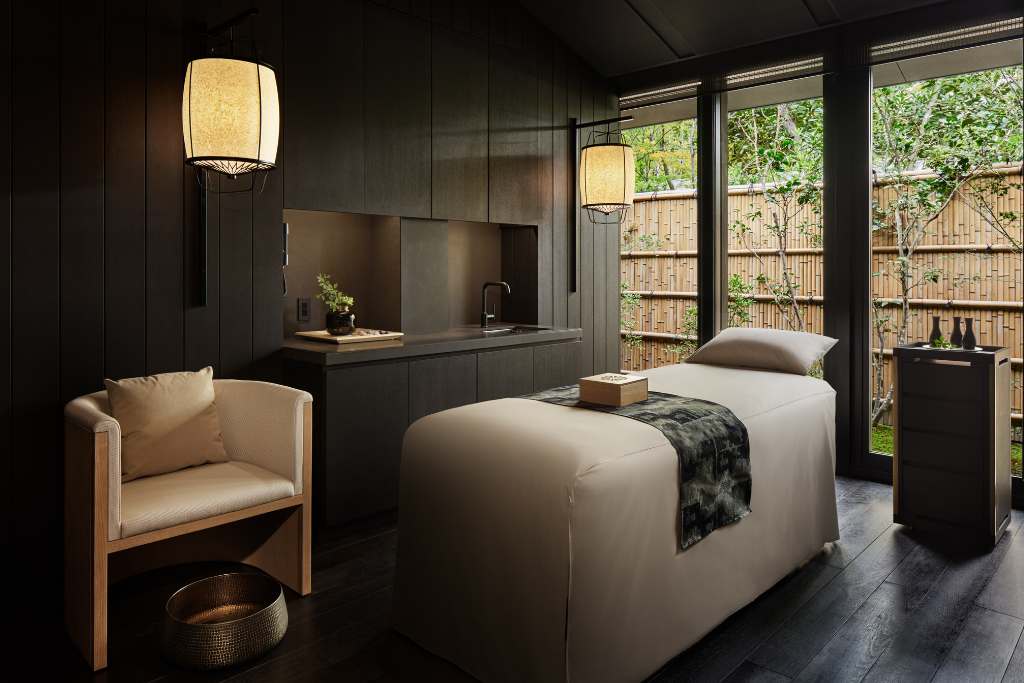
Set in Kyoto’s northern suburbs, minutes to the famed Golden Pavilion, Aman Kyoto is an intimate, secluded luxury resort and spa that feels worlds away from city life. There’s a tree-lined drive, moss-covered pathways, rushing streams, acres of forest, and natural hot springs flowing beneath to evoke a traditional onsen bathing experience. The light-filled rooms are divided among six black and timber-latticed pavilions with floor-to-ceiling windows overlooking the forest. Traditional ryokan elements add to the minimal vibe: tatami mats, sliding panels, wooden ofuro tubs, and a simple palette of blacks, grays, and yellows. Japanese-inspired therapies like the traditional onsen are followed by green tea or local sake. Also on the menu: Shinrin-yoku (aka forest bathing), an ancient Japanese healing technique that takes you deep into the forest to connect with nature and listen to the bird song.
The Ritz Carlton Tokyo Spa
In the heart of midtown Tokyo, the Ritz Carlton Tokyo weaves eastern and western elements through sleek lines, warm lighting, organic materials, and a chic understated color palette of light and dark gray. Rooms feature Frette linens and featherbeds, rain showers, and deep Japanese-style soaking tubs. Inside the tranquil spa, signature treatments include the Sakura massage which incorporates rose quartz crystals and essential oils, and Zenrenity, a deeply purifying body treatment that uses plant-based Japanese products and marine algae.
In the US
Shibui Spa, The Greenwich Hotel, New York City
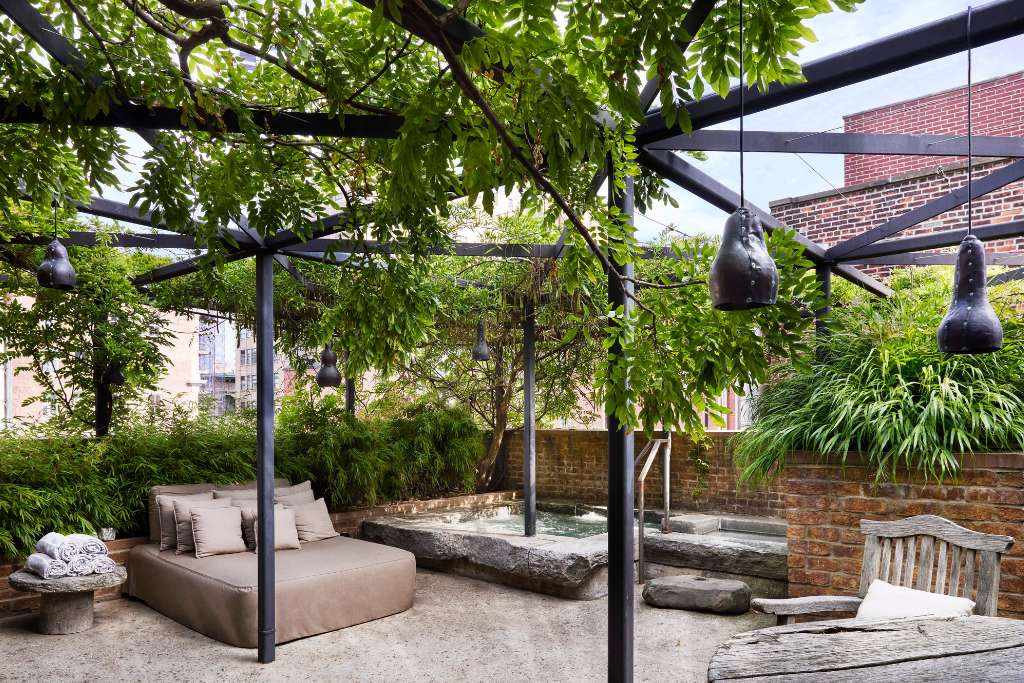
Housed beneath a 250-year-old Japanese barn painstakingly dismantled in Japan and reconstructed in Manhattan by Japanese craftsmen (considered “living national treasures”), Shibui Spa is a proverbial A-list favorite. The dimly lit space inside The Greenwich Hotel features a lantern-lit pool, steam and sauna, deep-soaking Japanese tubs, and Japanese-inspired treatments (along with Thai rituals and Chinese medicine offerings). Opt for the 120-minute Omakase Ritual combining a variety of modalities (hot stones, cupping, poultice, dry brushing). And for the ultimate stay, reserve the penthouse, designed by Axel Vervoordt with Japanese architect Tatsuro Mik using wabi-sabi principles — the acceptance of impermanence and imperfection — via reclaimed and aged materials (stone, steel, and wood) and handcrafted furnishings.
Shou Sugi Ban House, The Hamptons
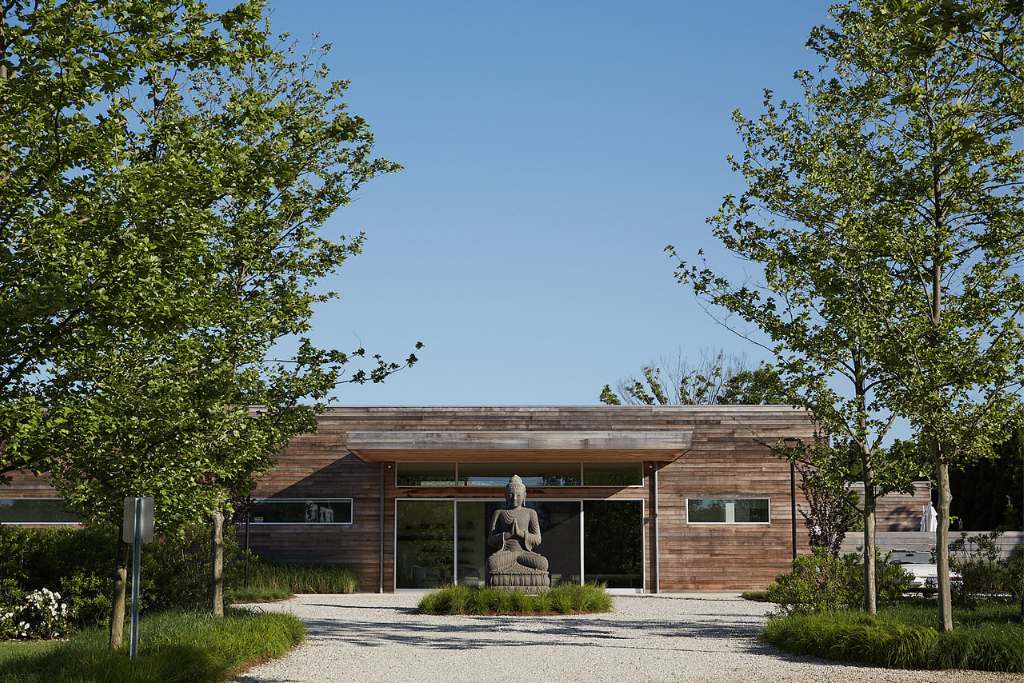
A luxe Japanese-inspired spa and wellness retreat, Shou Sugi Ban House also embodies the spirit and principles of wabi-sabi. The property features studios with gas fireplaces, traditional Japanese hinoki ofuro soaking tubs, garden patios, and organic bedding. Focused on integrated wellness, guests indulge in healing-arts practices, holistic treatments, spirituality, hydrotherapy, meditation, and traditional tea ceremonies.
Golden Door, San Marcos, California
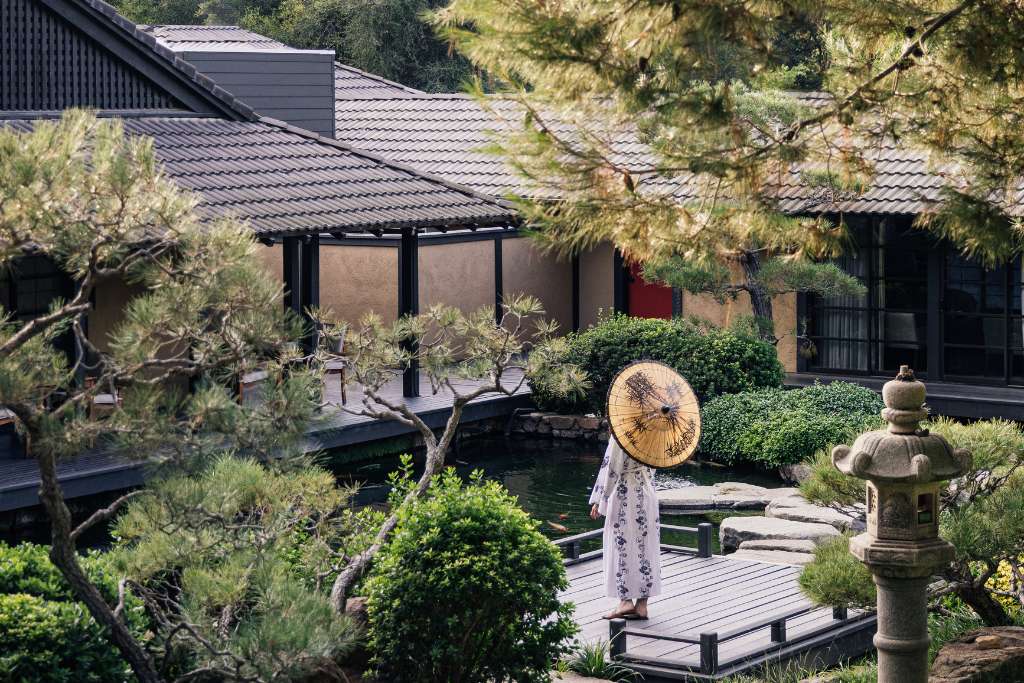
One of my personal favorites, this luxurious southern California destination spa is heavily modeled after a traditional Japanese ryokan. Think Japanese gardens, paper lanterns, shoji sliding doors, and yes, a koi pond. While Golden Door uses its own proprietary skincare (full-sized jars are available in-room), the line is deeply inspired by Japanese rituals and ingredients like yuzu (Japanese citrus) and hinoki (Japanese cypress). The resort’s simple clean aesthetic and wabi-sabi philosophy carries over to guests’ wardrobe (T shirts, shorts, jackets are provided) though most, like me, go to dinner sans make-up wearing the provided yukata and sandals.
Tomoko Spa, Beverly Hills, California
Famously discreet, Tomoko Spa is all about privacy (no signage, private suites, and appointment-only access). The luxurious day spa is a favorite among celebrities and studio executives who go pre-awards season and post high-profile film shoots. Founder and owner Tomoko Kurono was born and raised in Osaka, Japan, where her mother was a village healer. From an early age, Tomako developed an appreciation for traditional practices focusing on the body’s energy (chi). Ultimate treatment: the 120-minute Tomoko signature massage starting with Ashiyu (foot soak) and blending warm stones, subtle energy strokes, and sake into the massage.
Osmosis Day Spa Sanctuary, Sonoma, California
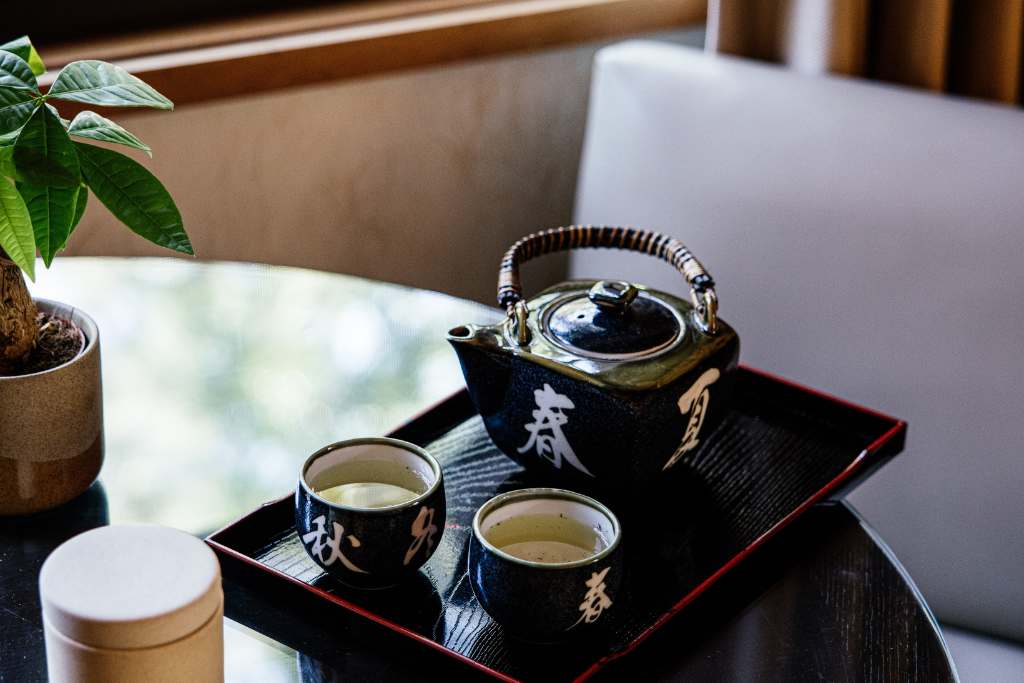
Cedar enzyme baths (often called fermentation baths) — though not part of the onsen culture — originated in Japan. And Osmosis Day Spa Sanctuary is one of the only places in North America to offer the treatment. Known as kōso-buro, the practice involves burying the body in a warm, naturally fermenting mixture of finely ground cedar or cypress, rice bran, and enzymes. The process generates natural heat (100–140°F), causing intense sweating and release of toxins.
Ten Thousand Waves Spa, Santa Fe, New Mexico
Inspired by his love of Japanese bathing culture and Japan’s great mountain onsens (hot springs), Ten Thousand Waves founder Duke Klauck opened this now-iconic, 20-acre retreat on the outskirts of Sante Fe in the ’80s. Everything about this intimate spa and wellness resort pays homage to Japanese culture and minimalism, from the architecture and design to the traditional outdoor bathing tubs, signature Japanese massages blending deep tissue and shiatsu massage to the upscale sake restaurant. The spa uses its own custom line of organic products in-room and in the bathhouse. The hinoki line is inspired by the piñon and juniper trees surrounding the spa, while the yuzu line features the traditional Japanese citrus scent.
More J-Beauty Products to Know
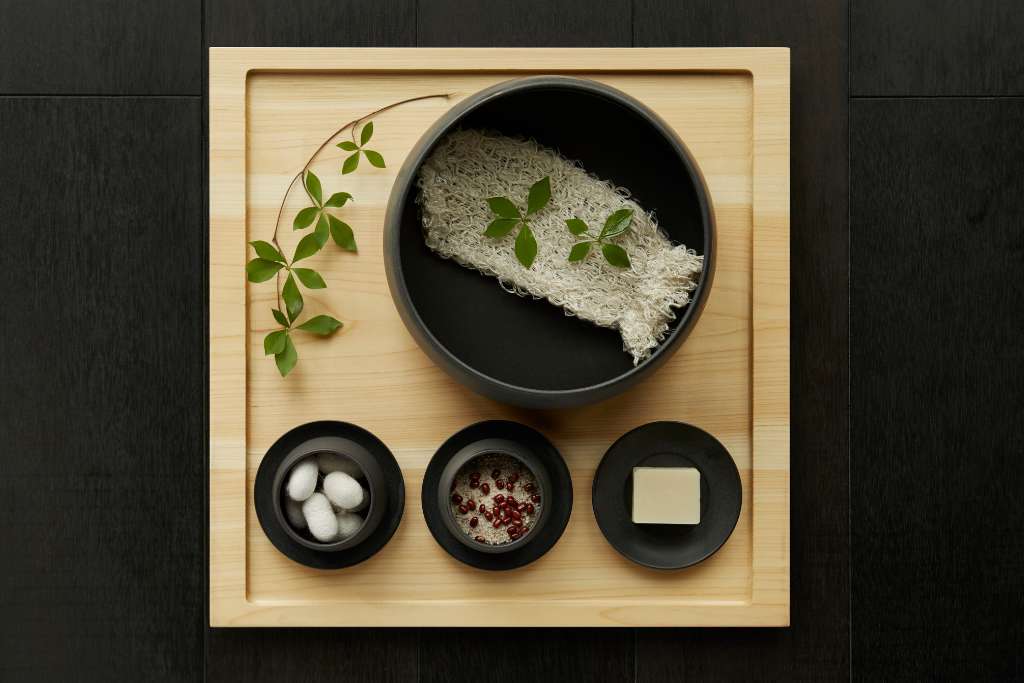
Once known for caked-on, white-powdered faces, Japanese beauty is, today, about applying multiple light layers – think mists, waters, lotions, and serums versus one heavy cream. The ethos is plump, hydrated, fresh skin that looks and feels healthy. A few of our favorite J-Beauty product lines to use at home or pack into your (Japanese designed) Proteca carry-on.
Tatcha The Dewy Skin Rich Cream
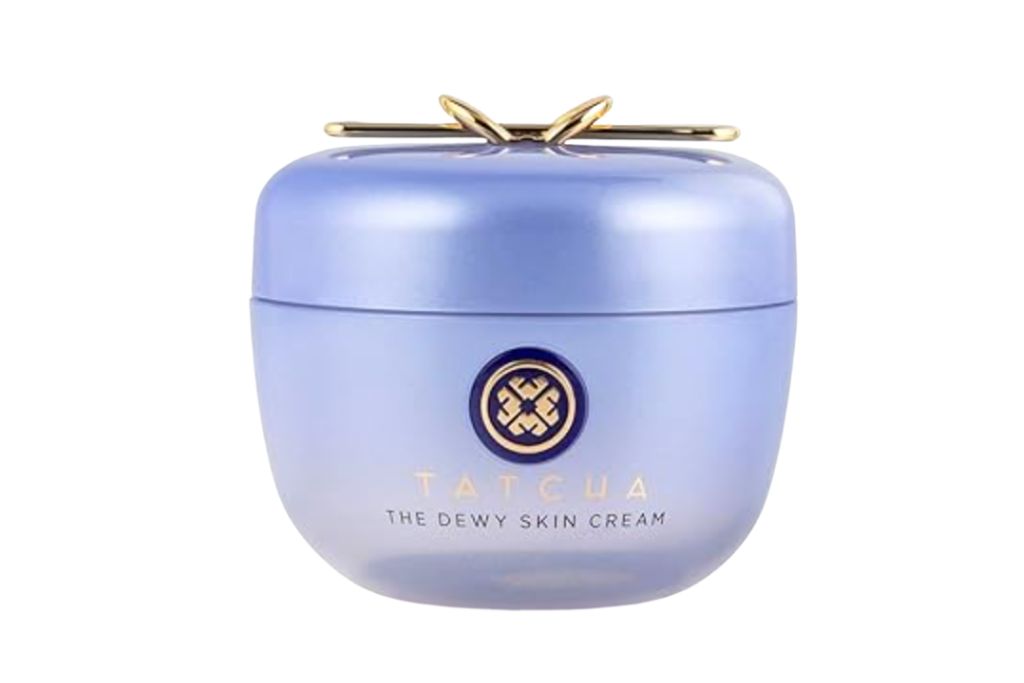
The Tatcha hype is real, especially around The Dewy Skin Rich Cream. A chance encounter with a geisha during a trip to Kyoto took founder Victoria Tsai on a journey deep into the world of Japanese beauty rituals. Drawn to the craftsmanship, heritage, and gentleness of Japanese formulas she launched Tatcha in consultation with the best scientists and a manuscript of beauty rituals written in 1813. What started as handmade blotting sheets infused with 24k-gold leaf, Tatcha is now a sought after Japanese beauty brand that combines modern technology and centuries-old geisha culture. Also on our must-pack list are Tatcha Luminous Dewy Skin Mist, and Tatcha Violet-C Radiance Mask.
To Buy: amazon.com, $72
red flower Japan Collection
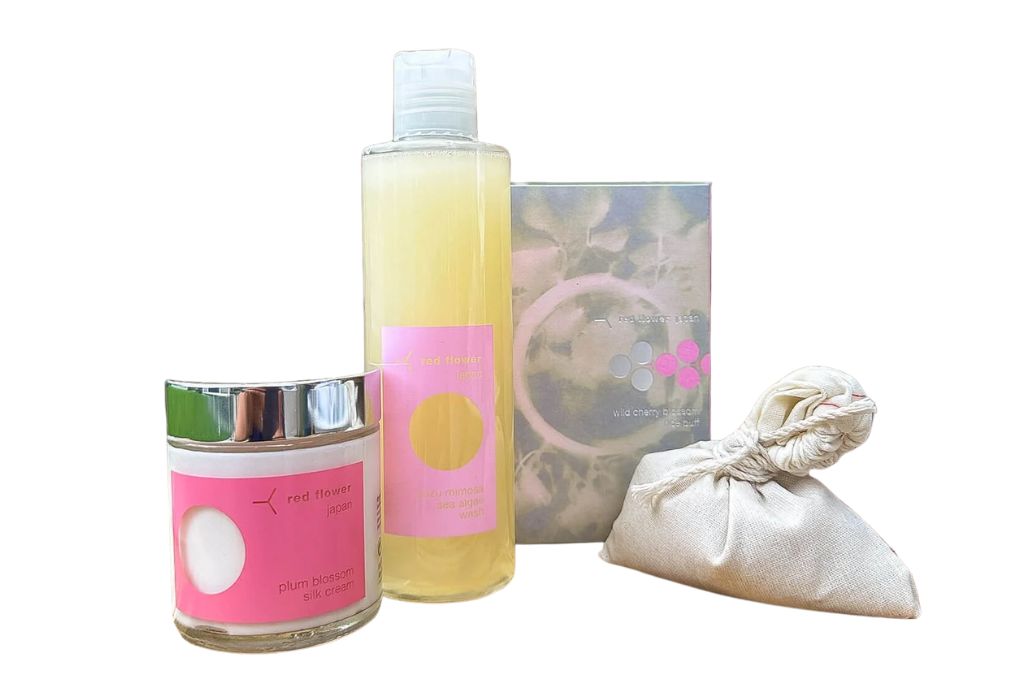
Although made in the U.S., red flower’s Japan Collection is inspired by traditional Japanese bathing. The seven-step bodycare ritual focuses on stimulating blood flow and layering ingredients, and includes dreamy products like the Wild Cherry Blossom Rice Buff, a delicate rice-based exfoliant; Japan Plum Blossom Silk Cream; Ohana Gingergrass Bamboo Scrub; and Kinmoxei Wild Lime Silk Oil for hydration.
To Buy: red flower, $36—$72
DAMDAM Nomad’s Cream Purifying Cleanser
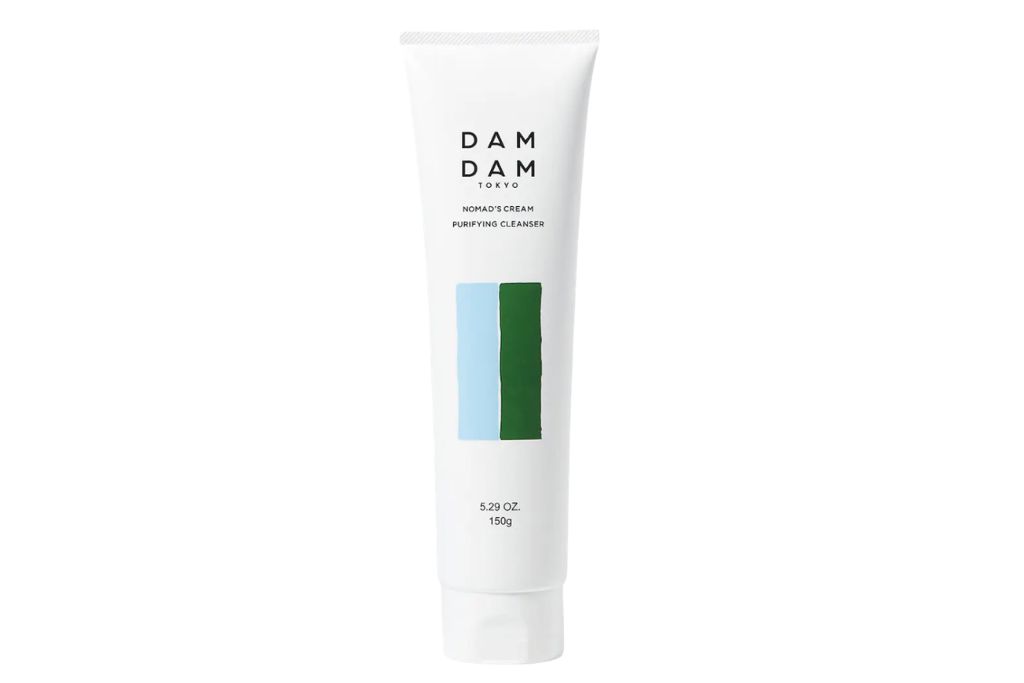
Rich in antioxidants and infused with the Japanese root crop, konnyaku, DAMDAM Nomad’s Cream Purifying Cleanser has a gentle exfoliating texture. Konnysku’s sponge-like absorbency gives it water-retaining properties, so it cleanses and purifies while providing deep hydration. Pair with DAMDAM komenuka-based Paradisi Mist Hydrating Essence with grapefruit oil and rose water (to improve circulation and even skin tone), and spicy cardamom (to keep skin clean and clear thanks to the antibacterial).
To Buy: sephora.com, $38
Kitao Matcha and Chia Cleansing Cream
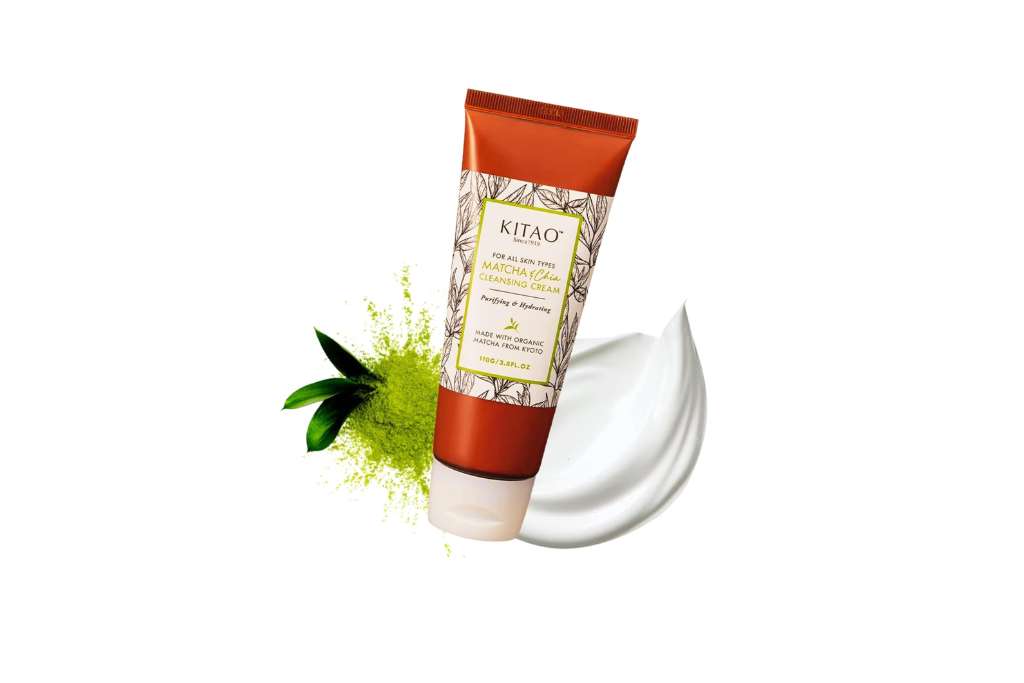
Japan is the land of matcha and beyond the drinks and desserts, this antioxidant-rich green powder has made its way into skincare. The luxe Kitao Matcha and Chia Cleansing Cream deeply cleans while nourishing your face with ceramides and chia seed oil.
To Buy: amazon.com, $19.99
SK-II Facial Treatment Essence
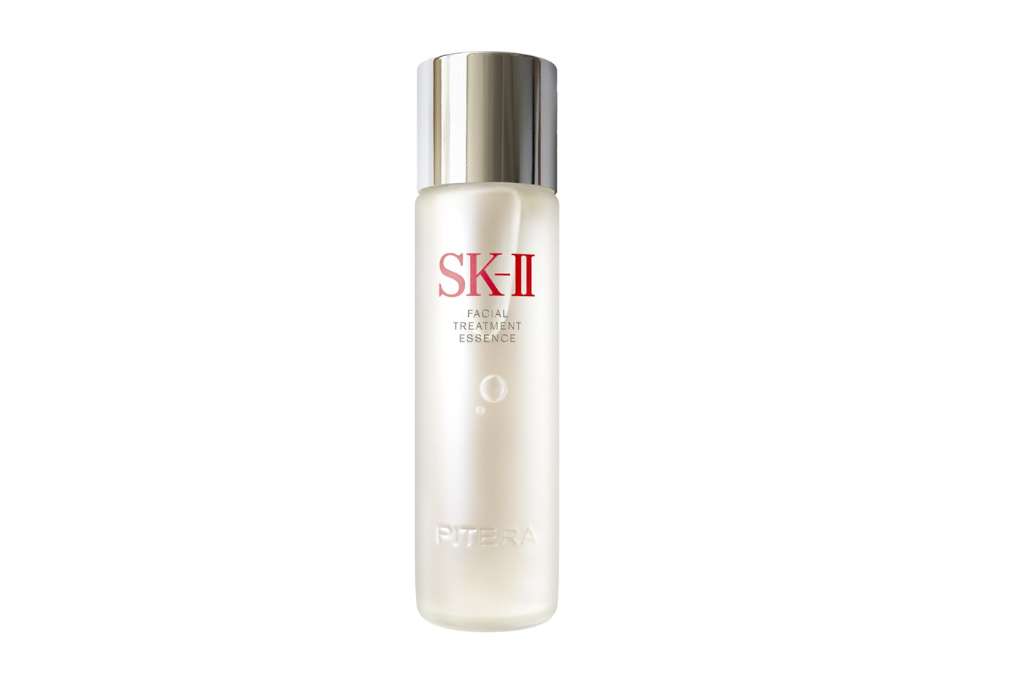
Apply the long-time Japanese beauty cult favorite SK-II Facial Treatment Essence mid-flight or whenever you need to bring back the dew. Deeply hydrating it contains the signature ingredient Pitera, derived from yeast, which when pressed gently onto the skin gives an instant and long-lasting glow.
To Buy: amazon.com, $99
Clé de Peau Beauté Eye Contour Cream
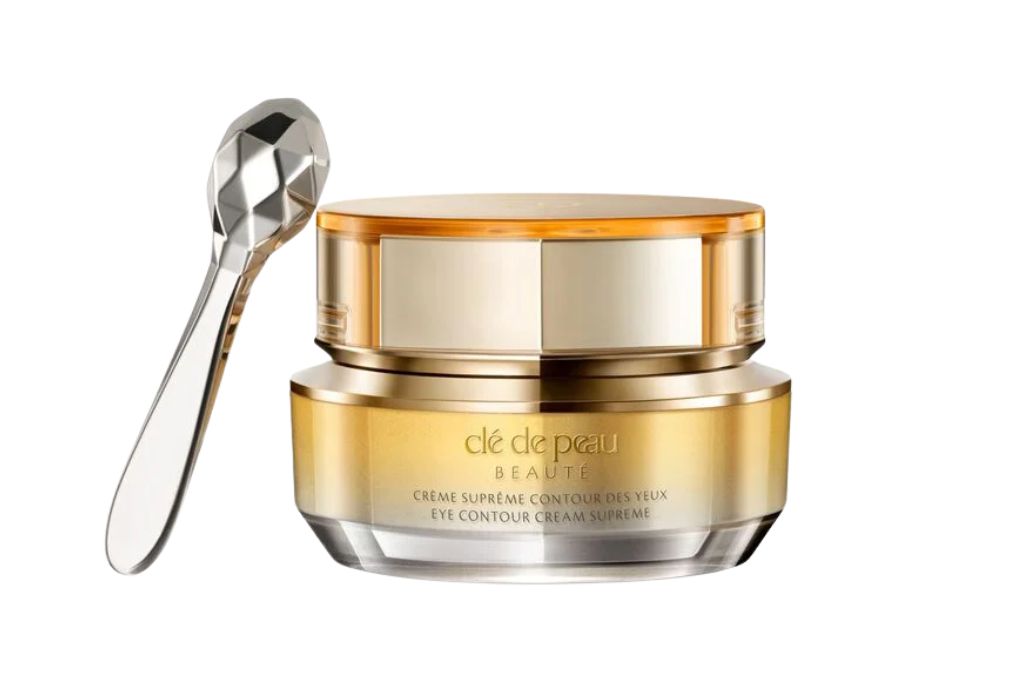
As a final skincare step, the Eye Contour Cream from one of Japan’s top luxury beauty brands, Clé de Peau Beauté, delivers a blend of retinol, botanical extracts, and an advanced restorative illuminator designed to defend against environmental stressors. Target dark circles and fine lines while shielding your skin from dehydrating cabin air or harsh weather conditions.
To Buy: cledepeaubeaute.com, $132
Feature image by Tanveer Badal, courtesy, Golden Door; Travel Curator may earn a commission from product or booking links on this page.