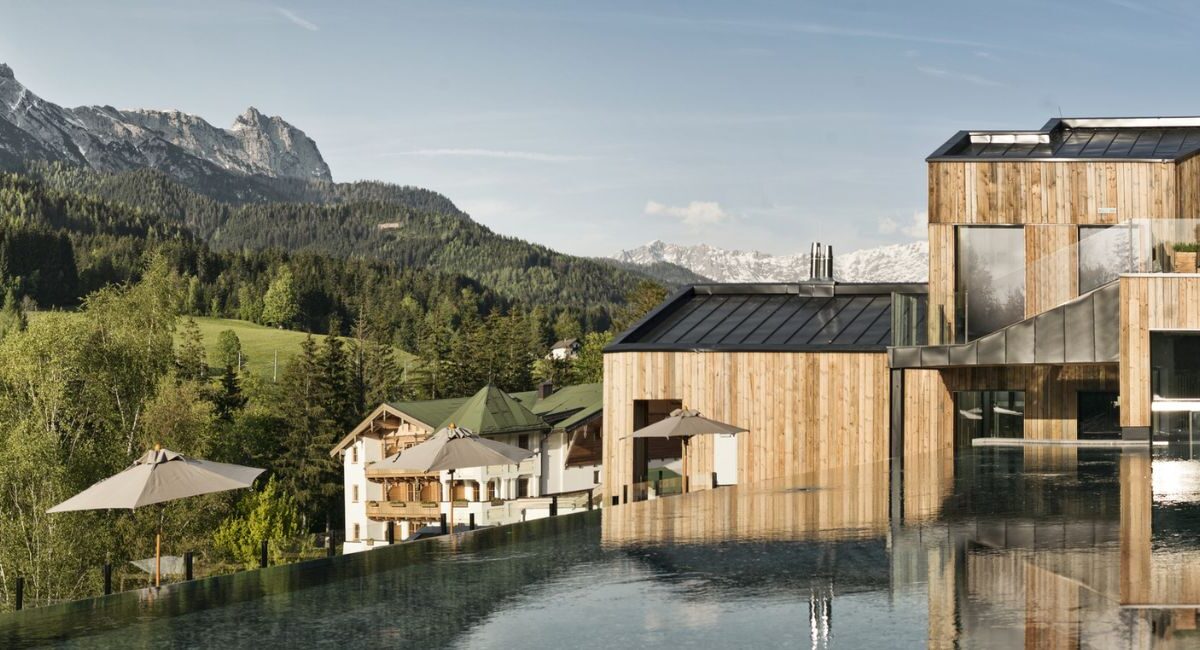
How centuries-old spa rituals evolved into one of Europe’s most distinctive wellness cultures.
Europe is no stranger to wellness. Or spa culture.
During the 19th century, Europe’s beau monde would converge on famous spa towns where for weeks — sometimes an entire season — they would partake in the Kur, a restorative ritual structured around thermal baths, long walks in nature, and the drinking of mineral waters (“Trinkkur”).
In Austria, women would emerge from their dramatic Belle Époque hotels — their long silk skirts brushing, parasols tilted just so against the alpine sun, and gloved hands resting lightly on the arms of their sisters and companions. With waists cinched tight and hats blooming with feathers and ribbons — a few wearing dark velvet despite the season — they would walk slowly, deliberately, along the colonnades as attendants in white jackets filled their porcelain cups from mineral fountains hissing with sulfur and iron. Sipping slowly, carefully, they would pause between tastes to offer commentary about the water’s bitterness, its temperature, and its supposed powers for nerves, lungs, melancholy, and digestion. The men, many industrialists from Vienna, paraded differently. Wearing tailored wool suits and reading newspapers beneath striped awnings, they stood rigidly next to the fountains, sipping their own restorative waters and watching passersby.
Later, in the privacy of the bathhouses — steam curling against tiled walls and stained glass — both men and women (in separate quarters) would lower themselves into deep thermal pools fed directly from the mountain springs, attendants timing treatments with near-clinical precision. There were inhalation chambers for the lungs, peat-mud wraps for circulation, hot mineral soaks for achy joints, and silent resting rooms. The ritual repeated each day with almost religious devotion: promenade, thermal bathing, lunch, rest, mountain walks, evening concerts, and Champagne.
While many of the Belle Époque grand hotels have given way to contemporary glass and stone, the theatricality remains. Austria today offers one of the world’s most distinctive wellness landscapes — from rooftop thermal pools suspended above pine forests, to medical longevity programs, forest bathing, cold plunges, yoga platforms facing glaciers, and elaborate “event sauna” ceremonies where towel-whipping sauna masters turn heat, steam, music, and essential oils into performance art. Yet despite their forward design and programming, the spas here — deeply rooted in tradition — preserve the core rituals of Austria’s 19th-century Kur.
Today, many of those traditions survive — albeit in modern form. Here’s where to experience them.
For Trinkkur: Drinking The Waters
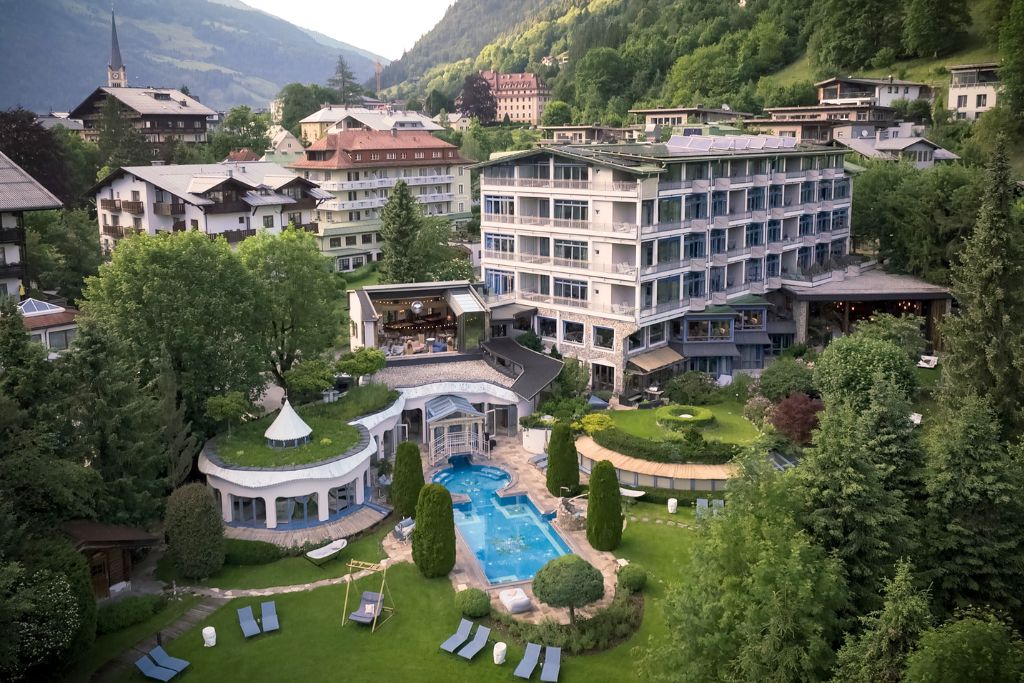
In several Austrian spa towns — and particularly in the Gastein Valley — visitors can still “take the waters,” though more subtly than in centuries past. Bad Hofgastein, just over an hour’s drive from Salzburg, maintains some of its public thermal springs and drinking fountains. Here, Hotel Sendlhofer sits within the thermal landscape, while promenades and gardens still invite leisurely circuits between treatments.Traditional Austrian dinners (typically four or five courses) are served and guests also slip into the sauna, complete with mountain view, to soothe muscles achy from skiing or hiking.
Thermal Bathing: The Heart of The Kur
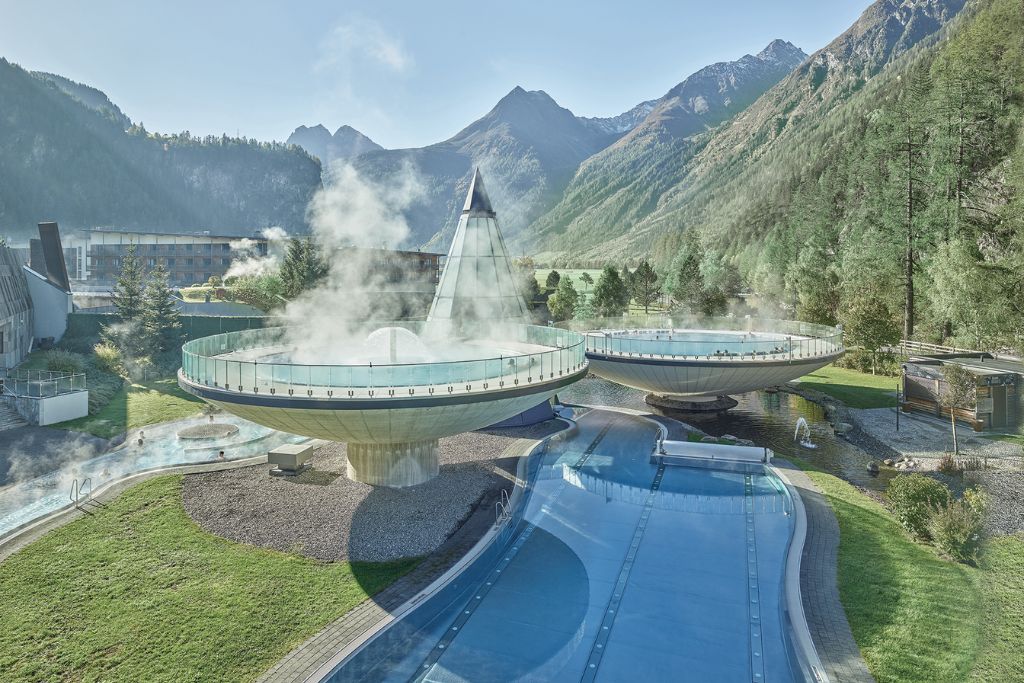
Bathing in mineral-rich thermal waters remains a hallmark of Austrian spa culture, although sleek, contemporary architecture has replaced the often dark, chamber-like, segregated bathhouses. Thermal soaks are now typically co-ed, with the surrounding landscape elevated to become part of the treatment itself.
At AQUA DOME in the Tirolean Alps, expect an almost space-age concept. Here, spagoers float in futuristically designed, levitating basins. Filled with mineral-rich thermal water drawn from deep underground sources, the baths offer stunning views of the Ötztal Valley’s dramatic peaks. By contrast, Das Ronacher is located in Bad Kleinkirchheim, Carinthia (Austria’s most southern province) — a working spa town — where thermal bathing, soaks in saltwater pools, and sauna circuits remain part of everyday life. While in Lech am Arlberg, Hotel Arlberg Lech offers a restorative water-therapy experience with its focus on water, steam, hydrotherapy, and soothing massages and Susanne Kaufmann Body Rituals.
Terrainkur: Walking For Health
In the 1800s, spa towns were structured around a strict wellness regimen that included physician-prescribed morning walks (or “Terrainkur”). The walks were timed and often supervised, and took place on carefully graded routes designated from easy (for those who were more physically fragile) to steep (for those in more robust health). The walks were prescribed to improve circulation, lungs, digestion, and nerves.
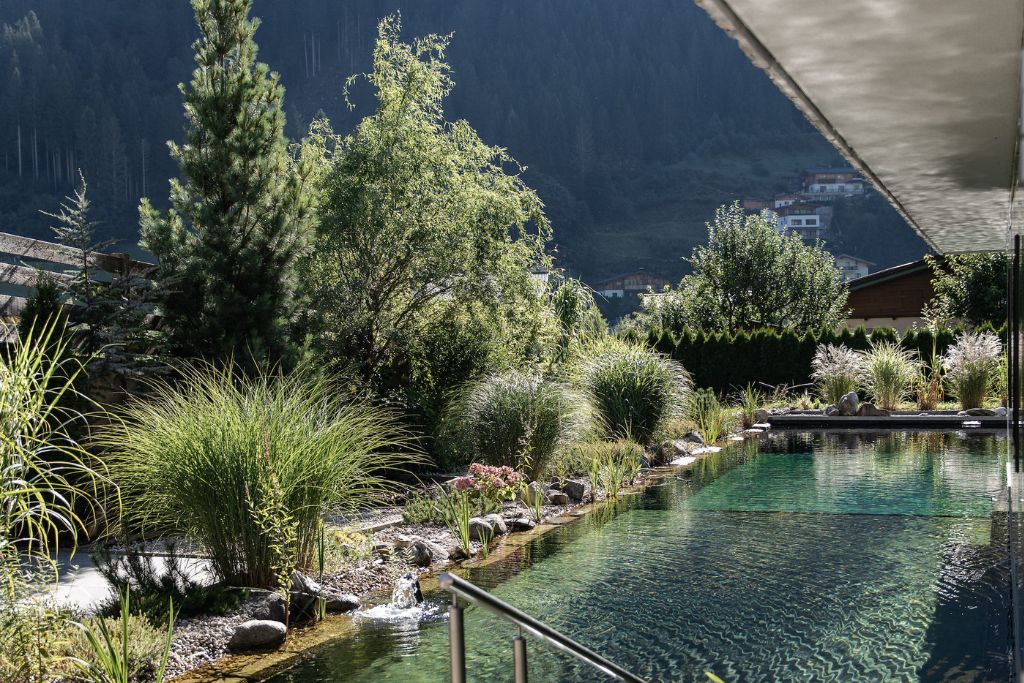
Reimagined today as forest bathing (as it’s known in Japan) or waldbaden (in Germany) — spas like Naturhotel Forsthofgut in Leogang are adapting the simple movement principle but removing its discipline. Instead of physician-prescribed 90-minute walks, guests are encouraged to meander the resort’s alpine meadows and forests at whim until their nervous systems feel settled. The reset comes easily as the entire property is embedded in nature; WaldSPA (forest spa) is literally set inside the forest. Slow-walking paths flanked by benches and water features replace over-zealous hiking trails; there are even areas specifically designed for barefoot walking. And silence. Other restorative spa treatments include lymphatic, hot stone and mountain crystal massages, old-wood sauna, herbal, and steam baths.
In the Grossarl valley, Hotel Nesslerhof extends the same principle, with walking routes that begin directly at the hotel and lead past alpine huts and flower-filled meadows before returning to the spa’s pools and saunas. Spa goers also revel in the saunas, living garden, and more than 100 beauty and wellness treatments by Balance Alpine 1000+, Ligne St Barth, and Comfort Zone.
From Spa Physician to Longevity Specialist
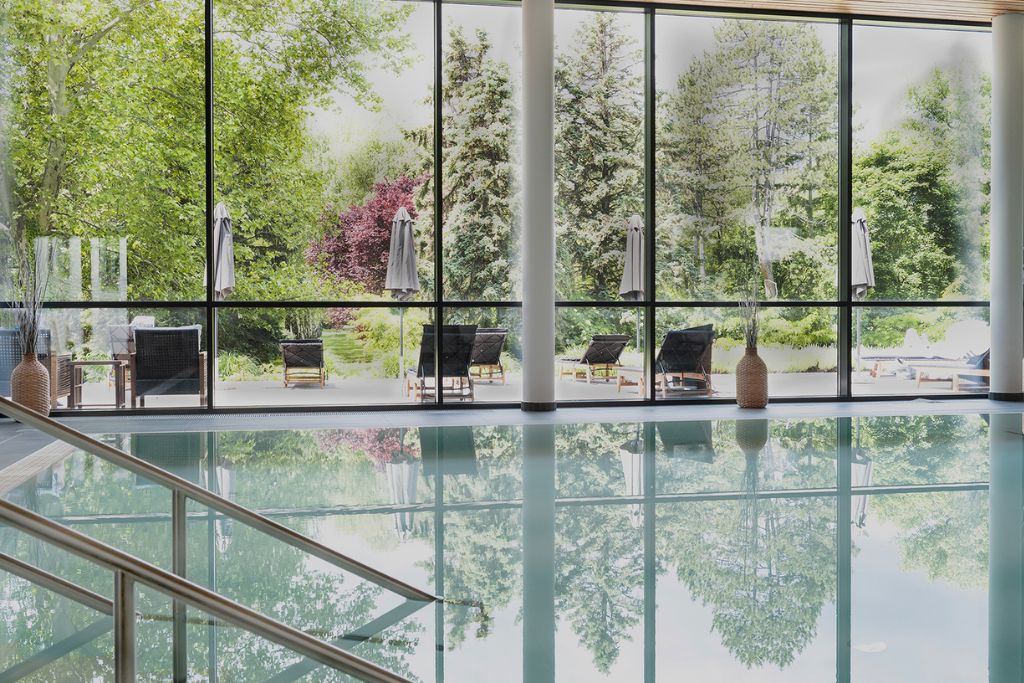
Of all the traditions associated with the Kur, none may be more central than the spa physician. In the 19th century, doctors prescribed everything from mineral baths and drinking cures to mountain walks and rest. Today, that role lives on at clinics such as Marienkron Retreat & Health Resort. Located in the Burgenland region near the Neusiedler See, the emphasis shifts away from diagnostic intensity toward fasting, gut health, and preventive medicine. Guests follow medically supervised programs that may include juice fasting, soup fasting, vegetable fasting, or intermittent fasting, alongside Kneipp treatments (alternating hot and cold water treatments), massage, and movement therapies.
For Sauna: Heat Becomes Performance
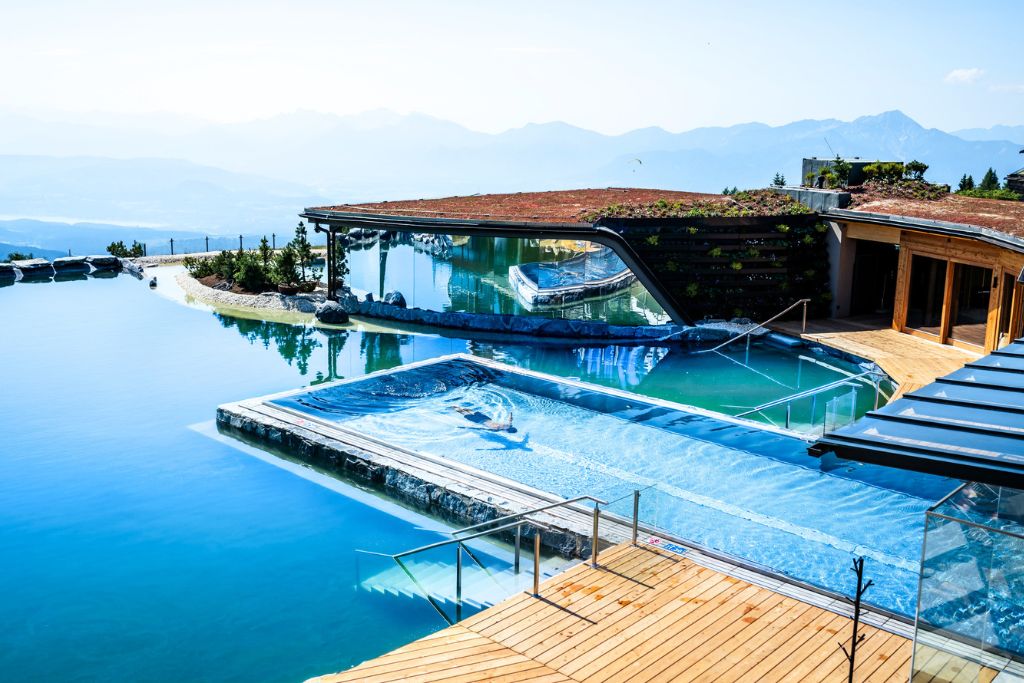
While sauna-like heat therapy existed in 19th-century European Kur towns, it was secondary to the prescribed mineral baths, drinking cures, and hot-cold-water immersions. But this once-quiet adjunct to bathing has become one of Austria’s most theatrical wellness rituals. At Falkensteiner Schlosshotel Velden, a member of Leading Hotels of the World, guests stay in a restored Belle Époque castle directly on the shores of Lake Wörthersee. Here, turquoise water and alpine peaks are visible from every corner of the spa, including the panoramic sauna. There are also Finnish saunas, steam baths, infrared cabins, and a gemstone steam room. But the showstopper is the Finnish sauna where a sauna master uses essential oils, music, steam, and rhythmic towel choreography to intensify the heat experience, called Aufguss.
Elsewhere, the sauna has become a vehicle for architectural expression. Mountain Resort Feuerberg in Carinthia also features a new infinity pool directly in the lake, new relaxation rooms, and a lakeside sauna with beautiful views across the water. In Leogang, the recently opened Atmosphere at five-star Hotel Krallerhof also transforms the sauna ritual into an immersive experience centered on water, light, and the surrounding alpine landscape. Considered one of Europe’s most iconic spa designs, the spa is home to a natural bathing lake and infinity pool, multiple saunas, an ice grotto, cold plunge, and 17 treatment rooms.
While Austria’s original Kur promised healing, it also offered spectacle, ritual, and the chance to see and be seen. Centuries later, the wellness culture here continues to evolve. The promenades have become forest paths, the bathhouses works of architecture, and the spa physicians longevity specialists. Yet the underlying philosophy remains unchanged: to step away from ordinary life, submit to a restorative rhythm of water, movement, fresh air, and rest, and return home renewed. Gone are the swishing gowns, plumed hats, and woolen suits. The ritual endures; only the stage has changed.
Feature image courtesy of Naturhotel Forsthofgut. In partnership with Austria Tourism Board.