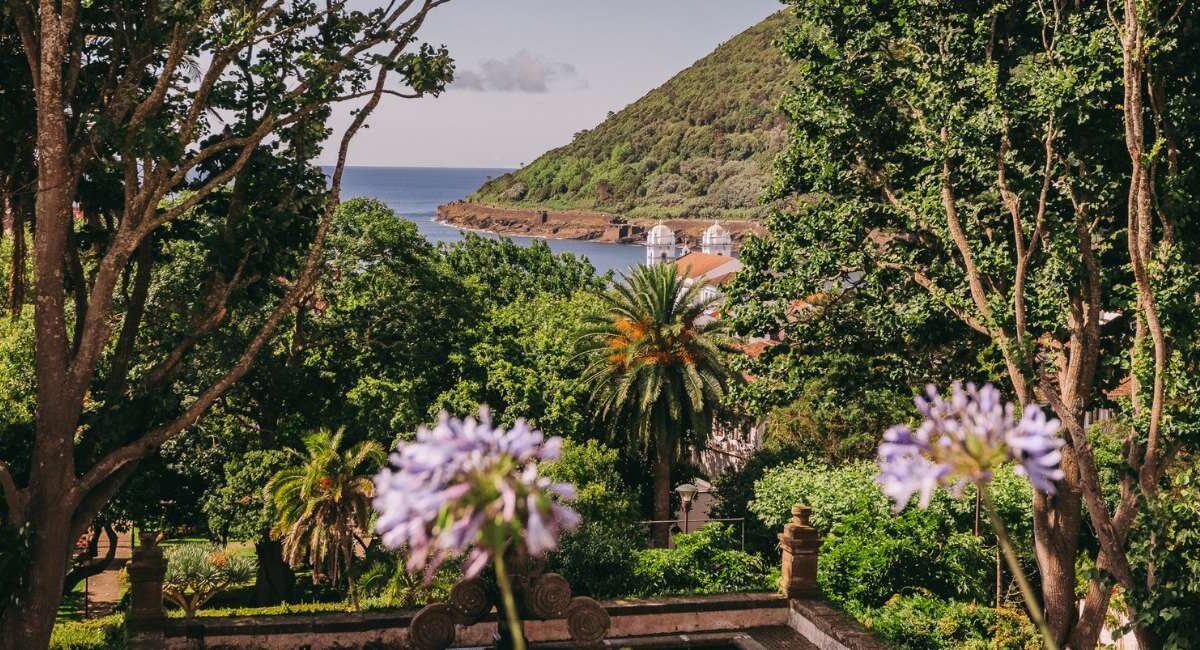
It’s hard to talk about the Azores without reaching for clichés. The islands — a semi-autonomous region of Portugal nearly 1,000 miles from the mainland — are Jurassic. Primordial. The Hawaii of the North Atlantic. And while all those things are true, even down to the black sand beaches, the islands deserve more than lazy comparisons. With their mix of natural beauty, volcanic drama, and European culture, the Azores are a place all their own. Most of the time, when people think of going to the Azores, they think about traveling to São Miguel, the most populous, most tourist-developed, and best-connected island in the archipelago. But São Miguel is just one of nine islands sprinkled across a large swath of ocean — with almost 400 miles separating the easternmost point of Santa Maria from the western edge of Flores — and the others are appealing for adventure travelers. (A word of caution here: Land doesn’t get that green without a lot of rain, and locals like to reach for the cliché of four seasons in one day. While there are beautiful days of brilliant sunshine, the Azores are not for sun lovers or beach floppers.)
The islands were formed during different geological eras, by wholly separate tectonic and volcanic events, meaning some are impossibly lush while others are mostly stark black lava. They’re varied culturally as well. The most remote are sparsely populated and lightly touristed, giving visitors a chance to have towering waterfalls and magnificent viewpoints all to themselves, while others are lively with festivals and parties. One of them makes absolutely knockout wines, while almost all of them produce excellent cheese — which is to be expected on these bucolic lands where the cows outnumber the people by a large margin.
São Miguel: The Green Island
The most populous island in the group and home to the regional capital of Ponta Delgada (and its airport, which receives flights from New York, Newark, and Boston), São Miguel is still the likely starting point for any trip to the Azores. Its nickname is the Green Island, thanks to its verdant vegetation, checkerboard squares of grazing pastures, and wild nature to explore. The island is home to some of the Azores’ most photographed natural wonders, including the volcanic lake of Lagoa da Fogo, the interconnected craters of Sete Cidades, whose edges are framed with lavender hydrangeas, and the waterways of Ribeira Grande, where various outfitters lead canyoning expeditions.
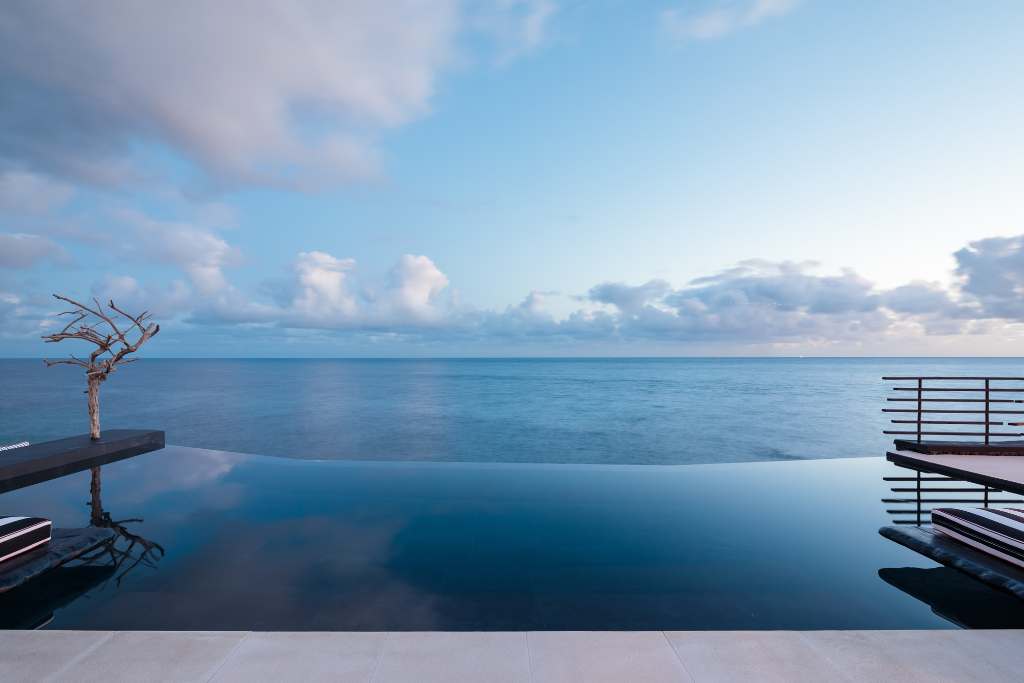
Where to Stay: São Miguel has the largest collection of boutique hotels in the islands, as well as outposts from Hilton and the Portuguese mini-chain Octant. A standout is White, one of the first true luxury properties on the island, whose nine suites and two villas are perched right above the Atlantic a short way away from Ponta Delgada. It also maintains the three-bedroom Casa da Rocha (“house on the rock”) nearby for larger groups, but with the same breezy, white-on-white seaside-chic vibe.
Where to Eat: An institution for nearly a decade, the Nikkei-style restaurant Õtaka was a pioneer in bringing upscale sushi to the islands. (Even now, nearly all of the premium tuna that’s fished here is shipped straight to the auctions in Japan.) Another solid choice for upscale dining in the capital is Michel, which serves international-style fare made with local ingredients like baked octopus with sweet potato, and duck rice with chorizo. And to taste the best grilled meat from the island’s many cows, it’s hard to beat the old-school Casa do Abel in Água de Pau.
What to Do: Beyond the many trails for hiking and tours for whale watching, the island has a variety of attractions for those who’ve had their fill of adrenaline. Gorreana is the oldest tea plantation (and still one of very few) in Europe; daily tours take visitors through the facilities. For those who’d rather sip something stronger, the Gin Library is home to the world’s largest collection of craft gins — more than 2,200 bottles and counting. If you show up with one that’s not already on the shelves, they’ll swap it for a bottle of the house gin, which is made locally with seaweed botanicals.
Terceira: History and Culture
There’s an old joke among Azoreans that the archipelago is made up of eight islands and an amusement park. That’s because the summer atmosphere on Terceira is a nearly nonstop party. There are festivals galore, in which people listen to music and eat a local beef stew called alcatra, which is slow cooked in a traditional clay pot. But for much of the year, the main event is the tourada à corda, a fairly soft bullfight in which the animals are held by ropes and paraded through town as they’re taunted and teased (but not harmed or killed). Apart from the events, Terceira is rich in history, particularly in its vibrant capital of Angra do Heroísmo — one of the first places in Portugal to be named a UNESCO World Heritage site — and its impressive Palácio dos Capitães Generais, as well as the colorful little chapels called impérios that dot the island.
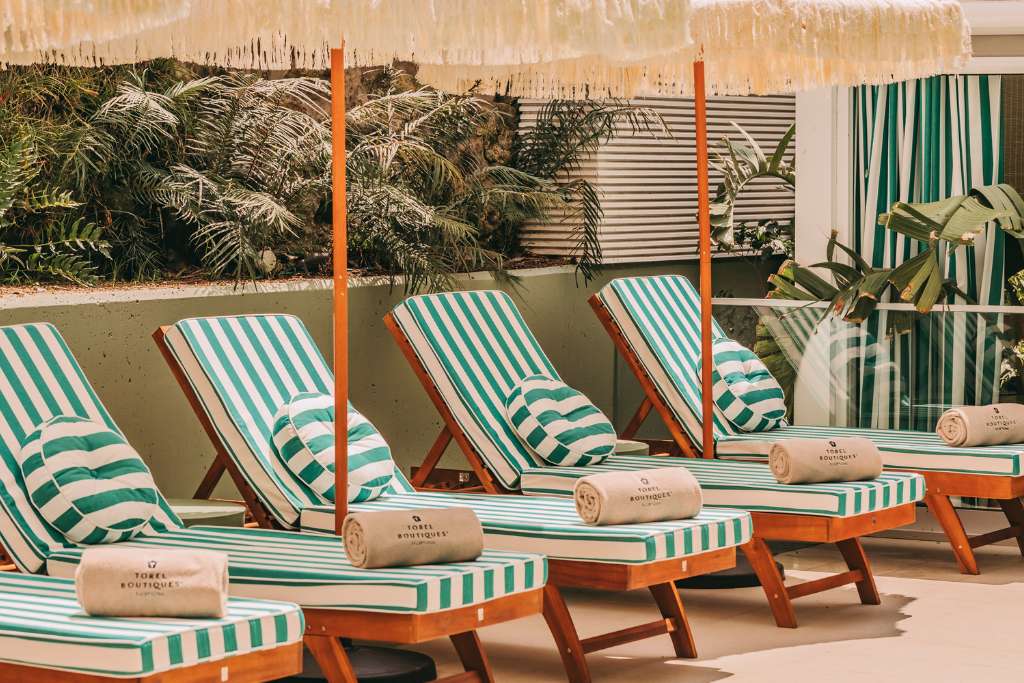
Where to Stay: Opened last year, the 44-room Torel Terra Brava is the first five-star boutique hotel on the island. Part of the Portuguese-owned Torel Boutiques collection (which also has stunning palace hotels in Lisbon and Porto), the hotel occupies historic buildings in the center of Angra do Heroísmo and it’s decorated around the theme of the four elements — earth, water, fire, and air. Its subterranean restaurant, Três Bistro, turns out elevated but unfussy shareable plates of island classics like citrus-salt-cured amberjack with green apple and fennel.
Where to Eat: Shareable plates and Portuguese wines are also the focus at Taberna do Teatro, a casual, tapas-style eatery beside the gorgeous pink 19th-century Teatro Angrense in the center of Angra do Heroísmo. The fish and meat are tasty, but a standout dish is the butternut squash risotto that’s finished with grated cheese from nearby Graciosa island. Or for something completely different, the Texan Bar — owned by an American who fell in love with the island when he served at the enormous US Air Force base in the 1990s — serves Chipotle-style mix-and-match bowls for lunch and big Tex-Mex plates in the evening, when it also transforms into a karaoke bar.
What to Do: Along with exploring Angra do Heroísmo (the car rental agency Way2Azores also offers good walking tours), there’s plenty of nature worth seeing. The volcanoes that formed Terceira left behind some impressive caves and lava tubes, including Algar do Carvão, Furnas do Enxofre (sulfur pits), and Gruta do Natal, the last of which is scheduled to reopen this summer after extensive renovations to its tourist infrastructure. And for a quirky hit of m caffeine, Coffee Cabana pours specialty brews in a hand-hewn cabin in the center of a small plantation.
Pico: A Volcano and Wine
Pico takes its name from the Portuguese word for “peak,” and that’s exactly what it is. The youngest island in the group, Pico is dominated by the nearly perfectly conical volcano of the same name — at just over 7,700 feet, it’s the highest point in Portugal. Elsewhere, the landscape is largely rugged black lava fields, sometimes dotted with black-and-white l houses with striking red windows and doors. The island is also home to some of the most extraordinary wines produced in Portugal, especially volcanic whites that are notable for their crispness and salinity.
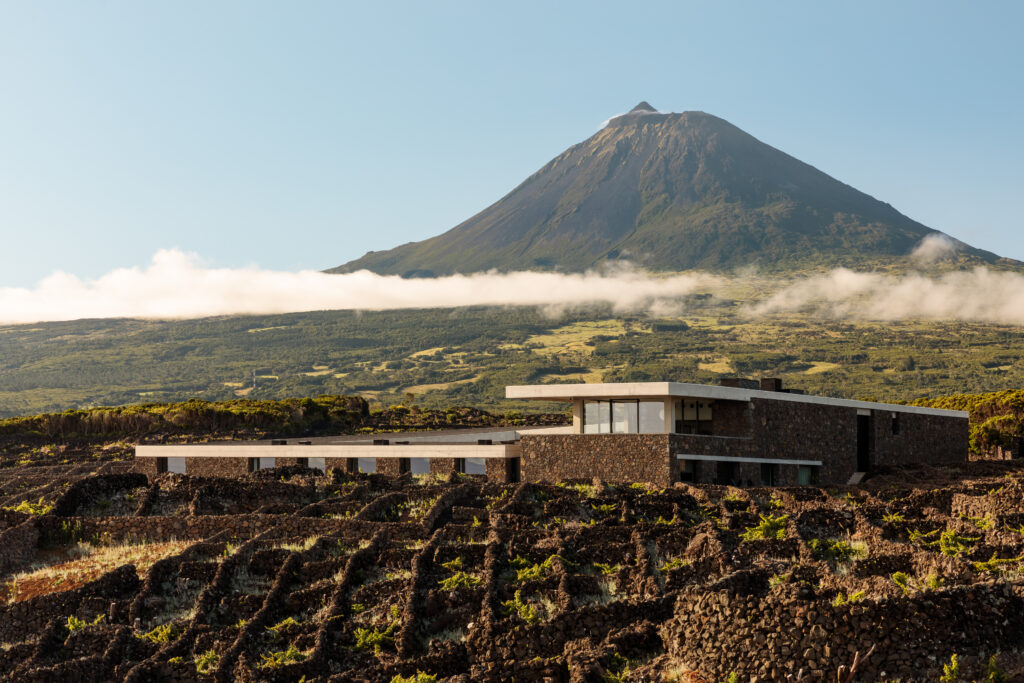
Where to Stay: Lava Homes is a collection of 14 freestanding houses, all with locally handcrafted furnishings and stunning views of the Atlantic. Elsewhere, wine lovers have access to five handsomely decorated guest rooms and one larger apartment at the Azores Wine Company, a project of rockstar winemaker António Maçanita, who was largely responsible for putting Pico on the oenophile’s map.
Where to Eat: Both Lava Homes and Azores Wine Company have outstanding restaurants, but for something more ambitious, there’s the new Bioma. There, a local Azorean chef — who spent time in a Michelin-star kitchen in Bilbao — has joined forces with an Argentine to offer tasting menus (including a 12-course chef’s table experience) inspired by island ingredients.
What to Do: Climb the volcano, of course. Going up and down in a (long) day is challenging but doable, or there’s the option of sleeping in the crater at the top and climbing up to the very tip of Piquinho (“little peak”) at sunrise. Lots of operators guide climbs, but the standout is Tripix, whose Italian-Portuguese founder and CEO, Matteo Carosi, has climbed the mountain nearly 1,000 times.
Flores and Corvo: The Back of Beyond
The most remote islands in the group, Flores and Corvo, are almost as close to Canada as they are to the European continent. But in fact, they’re far from everything, and that’s what makes them appealing. Flores means “flowers” in Portuguese, and the island is covered in them, as well as thick green forests and dramatic waterfalls. A short speedboat away, Corvo is home to only about 400 residents and the UNESCO-listed Caldeirão (“big crater”), which is almost perfectly round, nearly 1,000 feet deep, 1.4 miles wide, and about 430,000 years old.
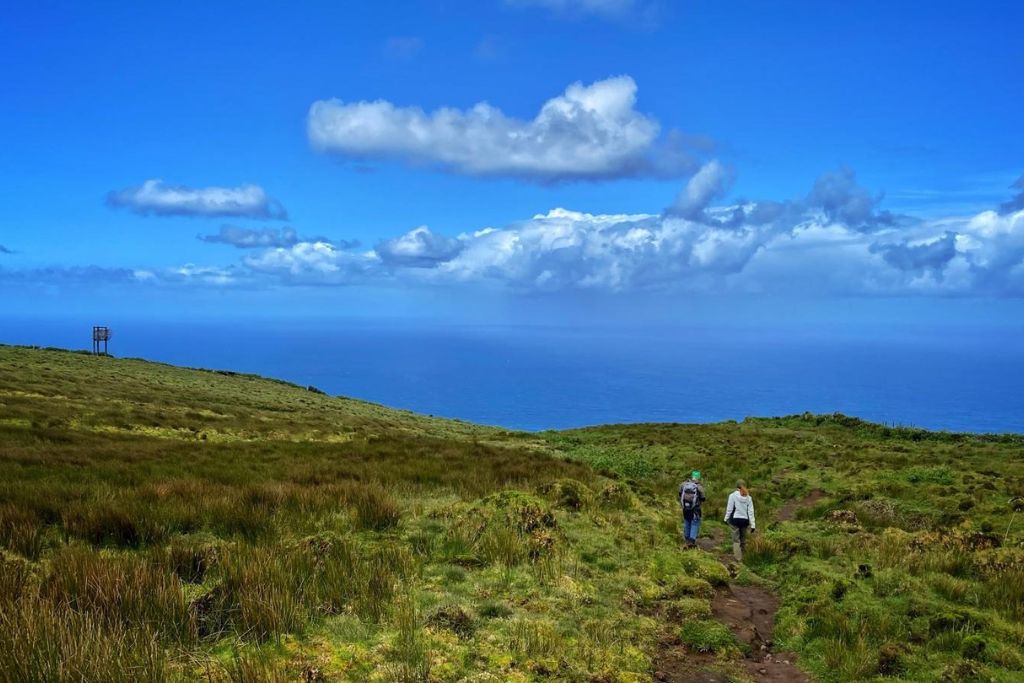
Where to Stay: Flores’s Aldeia da Cuada is like an Azorean version of an Italian albergo diffuso. A local family has painstakingly acquired and restored 16 houses in a formerly abandoned village and turned them into a slow-tourism haven with a good restaurant and black lava stone swimming pool.
What to Do: Plan a day trip to make the short hike around the Caldeirão of Corvo. Flores native Carlos Mendes, who has been a dive master and underwater photographer for decades, also brought the first semi-rigid boat to the islands. His company, Extremo Ocidente, organizes day trips to Corvo that combine the crater hike with coastal sightseeing and occasional dolphin spotting.
Feature image by Luis Ferraz, courtesy of Torel Terra Brava.