From Beijing and the Great Wall, to Shanghai and the culinary wonders of Chengdu, enjoy a luxurious take on travel to mainland China, with the best insider tips to make the most of each stop.
Whether safely guarded behind the Great Wall in centuries past or the “great firewall” of today, China remains shrouded in a bit of mystery for many would-be travelers from the U.S. in comparison to some of its neighbors. It seems like every aspect of Japan has been discussed with a great deal of flourish over the past several years; South Korea’s culture, spearheaded by K-pop superstars, is perma-trending; and southeast Asia remains a percolating hot spot for everyone from the backpacking to the jetsetting demographics.
Consider this your sign to flip the script and say nǐ hǎo to mainland China. There’s an incredible array of destinations to visit, from literal world wonders in and around Beijing to the staggering futuristic skyline of Shanghai, and the spicy culinary temple that is Chengdu, one of the planet’s foremost destinations for food lovers.
China has also made it easier for many to enjoy visa-free access, offering a simpler logistical experience depending on where in the country you’re going and how long you’re spending. Whether you plan one mega trip spanning several weeks, or you divide and conquer across several outings — Beijing, Xi’an, and Shanghai is a common, cultural-centric introductory tour of China, while pairing Chengdu with the Jiuzhai Valley makes for a worthy follow-up — there are swanky stays and spectacular sites at every stop.
Beijing
Beijing offers an abundance to explore, including the opportunity to visit a pair of world-renowned sites in the form of the Great Wall of China and the Forbidden City. Not to mention Tiananmen Square, the Temple of Heaven, the Summer Palace, and scores of other sites including modern marvels that Olympics viewers are familiar with such as the Bird’s Nest or Beijing National Stadium, and the Water Cube or National Aquatics Center.
There are a handful of access points to the Great Wall from Beijing, with Juyong Pass and Badaling being the two closest. They’re also the most crowded. Skip them, and visit Mutianyu, which is about a 90-minute car transfer, though traffic often tacks time onto that. Split the Great Wall and Beijing’s other major stops into two separate days of touring to not overload yourself.
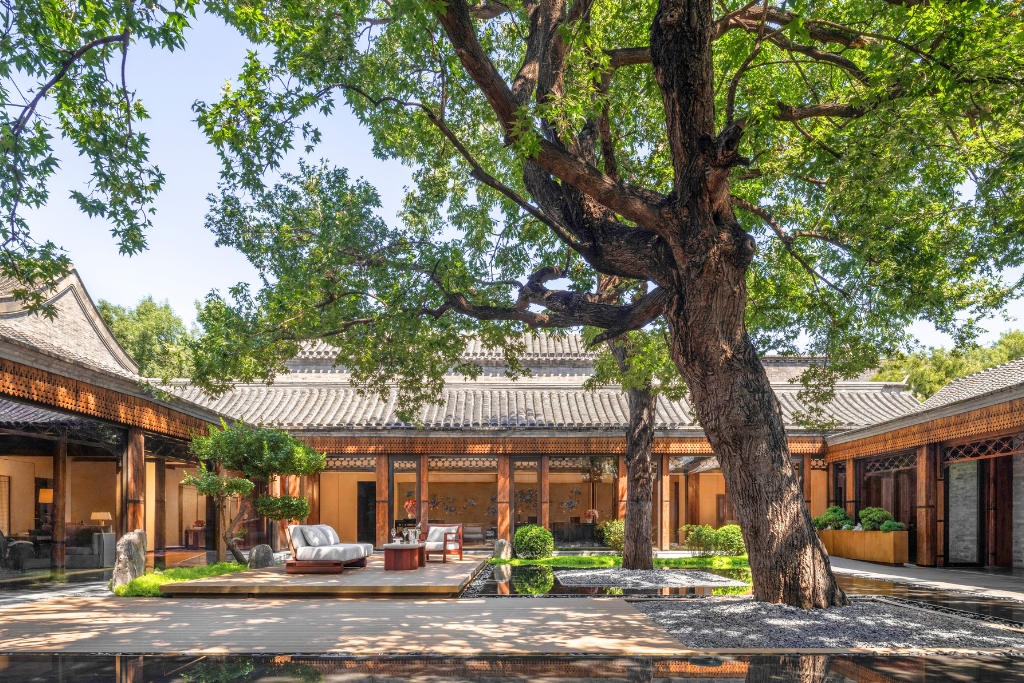
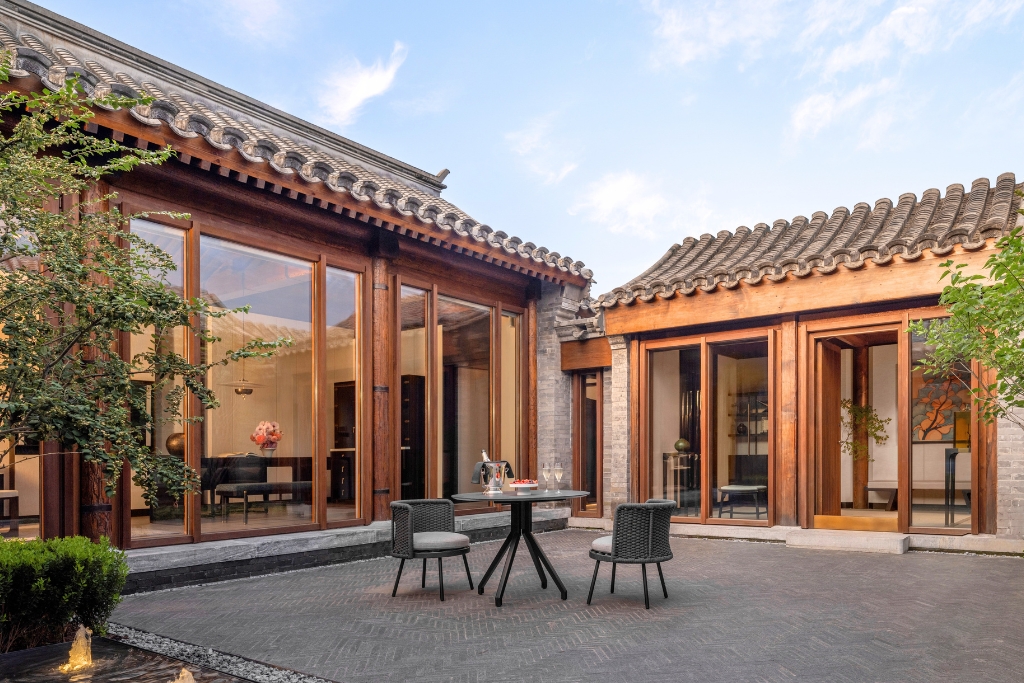
Rest your head at the Mandarin Oriental Qianmen, an immersive, one-of-one luxury stay located within a still-used hutong, or traditional alleyway neighborhood. Each of the 42 guestrooms is a home incorporating a central courtyard and multiple rooms including a tea ceremony space, serene bedroom and lavish bathroom, and art-filled living and dining area, all of which reside within a walled enclosure. These courtyard houses are spread across eight alleys, making guests truly feel a part of the local neighborhood surrounding it.
A second Mandarin Oriental, Wangfujing, puts guests into the middle of the city’s modern shopping district, with other top hotels in Beijing including the Bvlgari and Four Seasons. If you have time for only one booked meal, make it the Peking duck at Siji Minfu or Peking Chamber. Elsewhere, keep in mind that while in southern China rice is predominant, in northern China, including Beijing, it’s wheat. Feast upon dumplings, noodles, savory pancakes, and steamed buns.
Xi’an
With the help of China’s high-speed trains, reaching Xi’an from Beijing no longer requires an arduous road journey nor a trip to the airport. Many visitors only spend an evening or two in the city, with a singular goal in mind: seeing the Terracotta Army at emperor Qin Shi Huang’s mausoleum.
The founder of the Qin dynasty and first emperor of China left quite the legacy behind, and there’s plenty more history on offer across Xi’an. The former capital city also served as the eastern starting/ending point for the Silk Road. The site of the Terracotta Army is about an hour outside of the city center. Top choices for accommodations back in the city include the Sofitel Xi’an, Angsana Xi’an Lingtong, and Ritz-Carlton Xi’an.
Shanghai
If Beijing is steeped in the powerful presence of its history, Shanghai is catapulting itself toward the next generation. Crane your neck up at the riverfront skyline including the Oriental Pearl TV Tower, Shanghai Tower, Jinmao Tower, and Shanghai World Financial Center. Ironically these behemoths are looming across the river from The Bund, a protected historical district on the opposite riverbank.
Make time to meander around the quieter, tree-lined streets of the former French Concession. In addition to luxury residences and plenty of boutiques and galleries, this area is home to many of Shanghai’s trendiest cafes, restaurants, and bars. For the latter, be sure to stop into Union Trading Company, Speak Low, and The Odd Couple, among others.
Book a room at the Grand Hyatt Shanghai. It’s right within the upper portion of the Jinmao Tower, and the hotel is therefore among the world’s tallest (it was the tallest when it debuted a quarter century ago). Soak up the scene from its 87th floor Cloud Bar, but also be sure to appreciate a different view, looking down from atop its 85th-floor atrium, extending hundreds of feet or about 33 stories below. If you’d rather put some distance between yourself and Shanghai’s hustle and bustle you could also take the opposite approach, and escape the mega city for a relaxing retreat at Amanyangyun. The property mimics a country estate set within 345 acres, with accommodations including a mix of suites, pavilions, and antique villas.
Chengdu
Imagine a destination with some of the spiciest, most face-melting food in the world, combined with access to some of its most cuddly, cutest, online-trending animals. Welcome to Chengdu, which remains known for its two chief draws as both the epicenter of Sichuan cuisine — loved and feared for its numbing peppercorns and red chili peppers — and as the home of pandas, with the equally loved but definitely not feared Panda Breeding Center. The research facility, located just outside the city, is a favorite attraction for visitors and the panda is celebrated with statues, artwork, and gifts galore around town.
When it comes time to chow down, be brave, friends, as you boldly bound into steaming bowls of hot pot, beef noodle soup, and chili oil dumplings. These specialties can be found everywhere from Michelin-grade restaurants to street stalls and food markets, such as Jinli Ancient Street and Kuanzhai Alley, and local hubs such as the Fuqin Night Market.
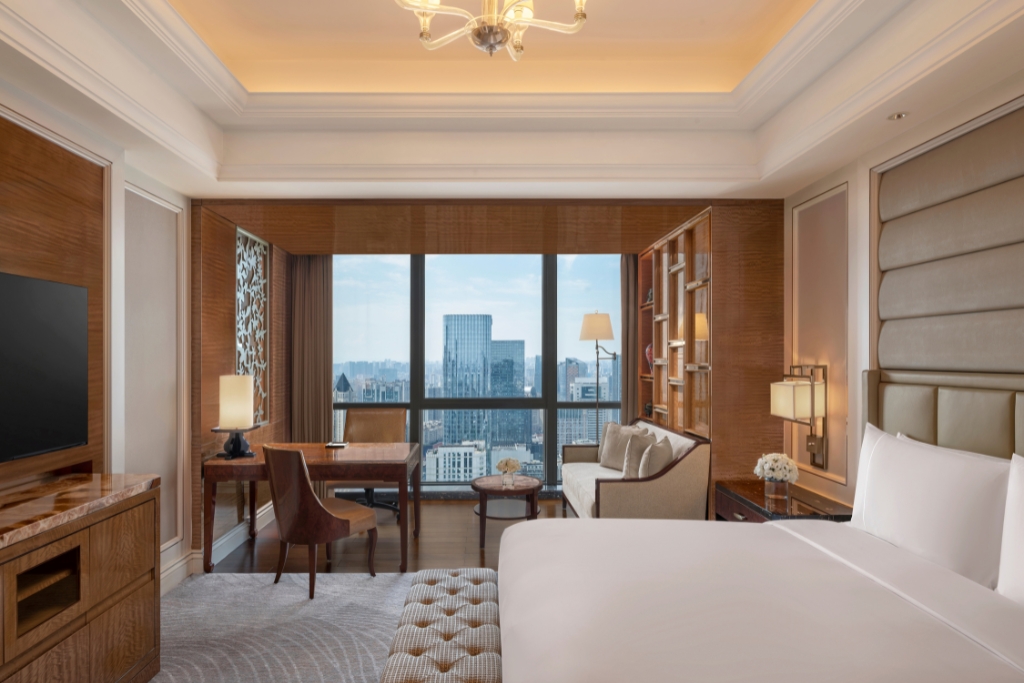
Stay at the Ritz-Carlton Chengdu. You can detox from your spicy adventures at the spa and during afternoon tea, or you can keep them going with fine-dining riffs on capsaicin classics including mapo tofu and Dan Dan noodles at signature restaurant Li Xuan.
Jiuzhai Valley National Park (Jiuzhaigou)
Hop back on the high-speed train and head out into the less-explored countryside. Your destination is Jiuzhaigou, or Jiuzhai Valley National Park, a 180,000-acre nature reserve (for perspective, that’s equivalent to the size of Virginia’s Shenandoah National Park) that will transport you into a different state of mind and feels like it should be more than two hours away from the sprawl of China’s fourth largest city.
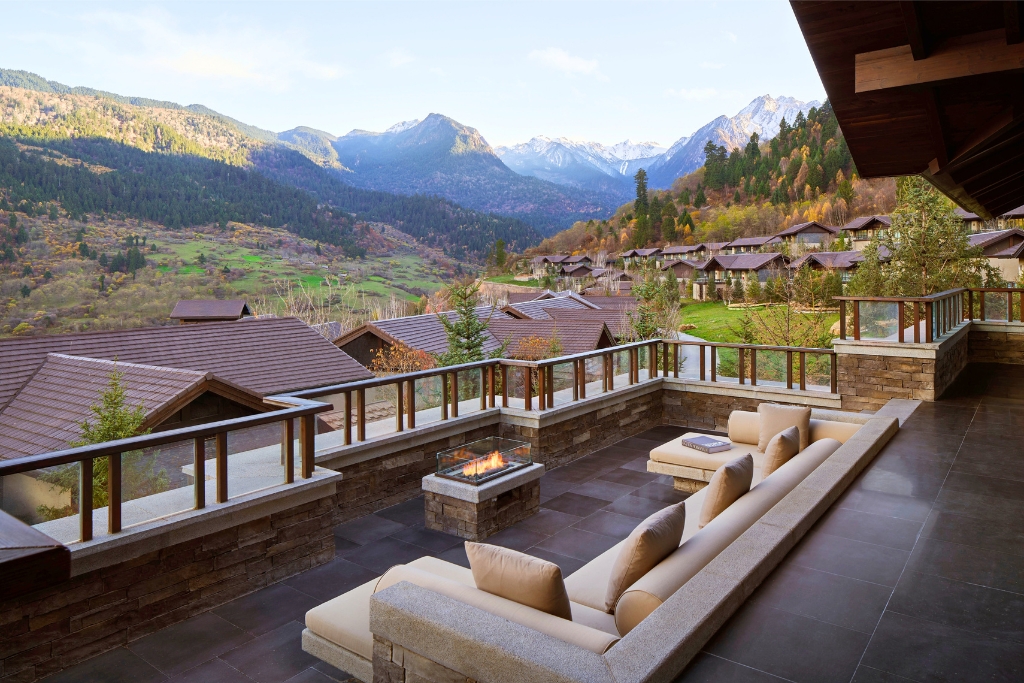
The area is within the Tibetan Plateau, with its distinct cultural and culinary contributions. Note that if you plan on visiting the region, you’ll be unable to use a visa-tree exemption and will instead need to go through the standard visa process prior to traveling via the nearest embassy or consulate to your home.
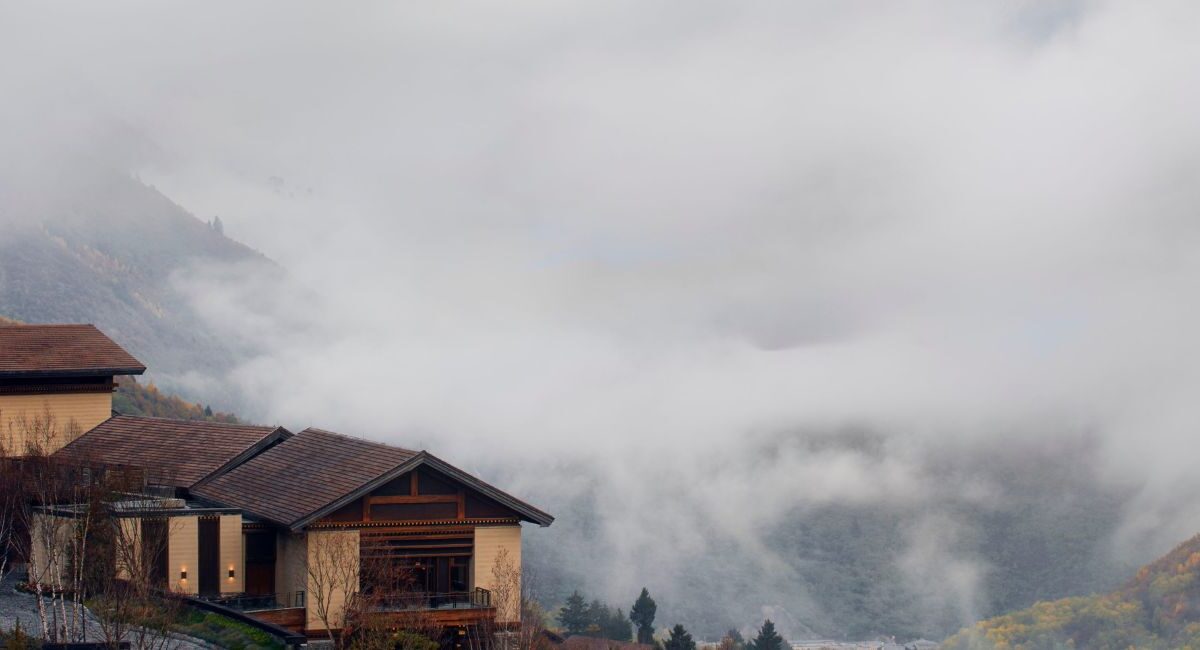
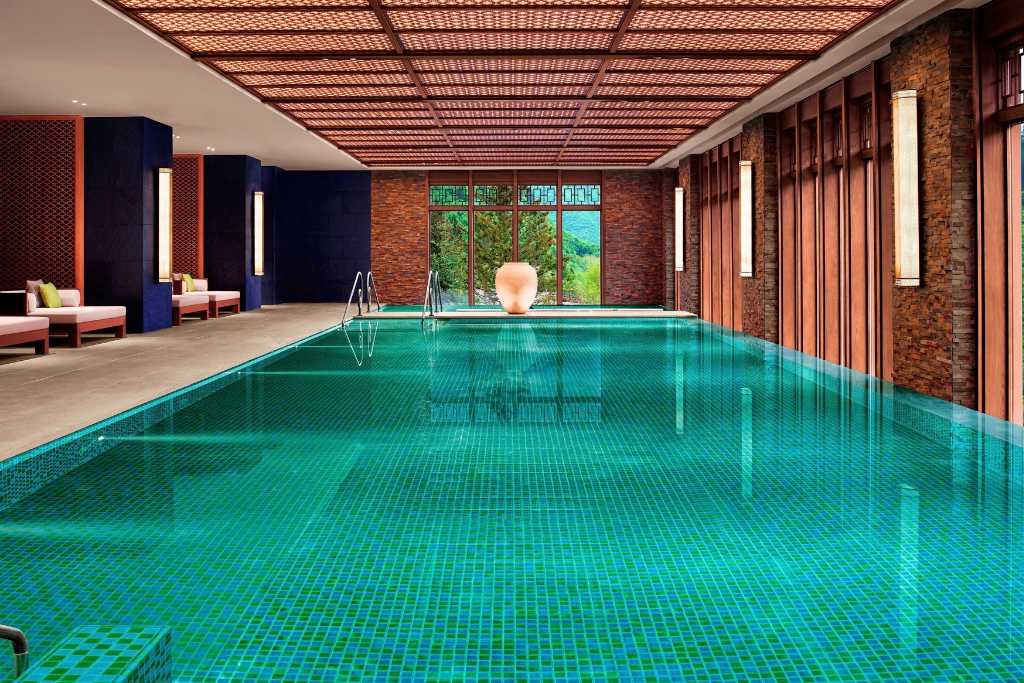
The must-stay in the region is Rissai Valley, a Ritz-Carlton Reserve, and one of just nine in the global portfolio. Villas here have award-worthy bathrooms and bathtubs, and the property showcases Tibetan-style décor, welcome rituals and activities, and even culinary influence. Yes, sweat it out once more over an enormous dinner spread incorporating Tibetan hot pot.
Five major stops. More bowls of noodles than you can count. Pandas and parks, a Great Wall and a Forbidden City and a Terracotta Army for good measure, skyscrapers and hutongs and everything in between, all in a luxurious, once-in-a-lifetime trip to mainland China.
Featured image courtesy of Rissai Valley, a Ritz-Carlton Reserve. Travel Curator may earn a commission from booking links on this page.