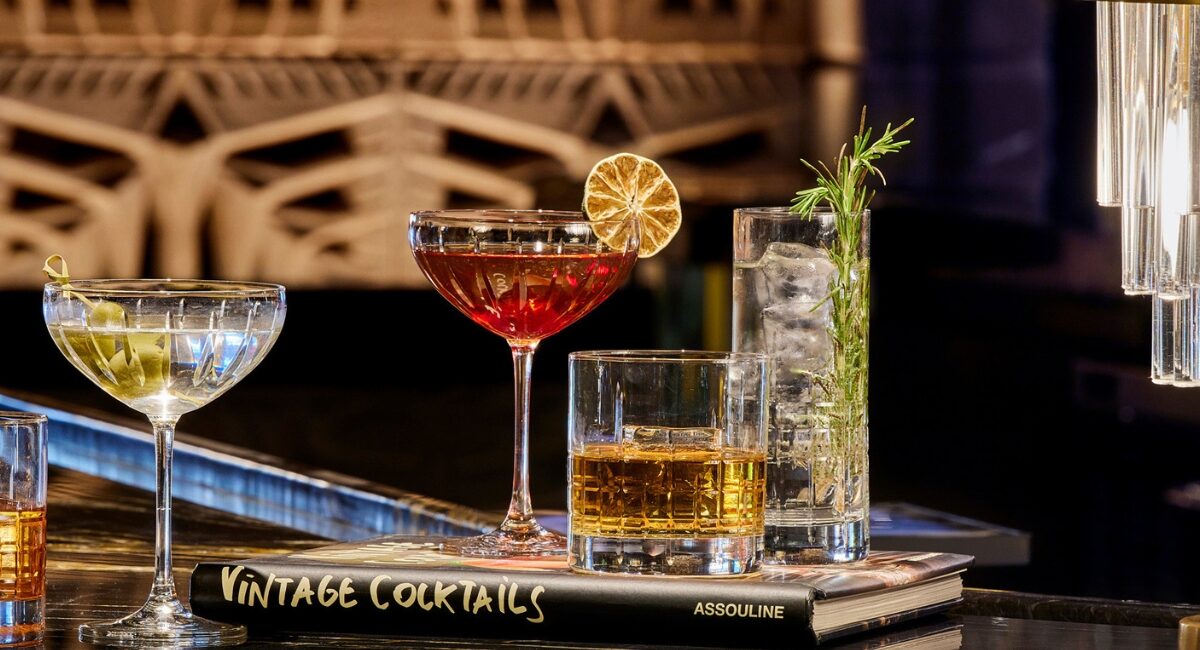
In the original heyday of cocktails, hotel bars were the world’s most well known imbibing institutions. It’s perhaps no surprise, then, that many of the most famous cocktails were created at them. Or in some cases, so the story goes.
Cocktail history has plenty of partial truths and sort ofs and maybes, which is fitting enough for a bunch of drinking tales, isn’t it? Think about how that story from that one epic night out you and your friends had back in college has morphed in its myriad retellings over the years. Sometimes myths turn into truisms, and sometimes origin stories are viewed with a wink and a nudge. Sometimes we all agree to not ask any questions in favor of preserving a preferred anecdote, while in other instances, the very best drinking detectives out there have given their stamp of approval to a libation’s legend after tracing a weaving web of newspaper clippings and cocktail books from a century ago or longer.
Whether they’ve emerged from tall tales, semi-reputable rumors, or provable provenances misses the point. They’re all worth sampling, and even better is to head to the site of their cited creations and to try them right then and there. From tropical drinks to perfect martinis and everything in between, these renowned cocktails invented in hotels are well worth a sip or two.
Piña Colada: Caribe Hilton
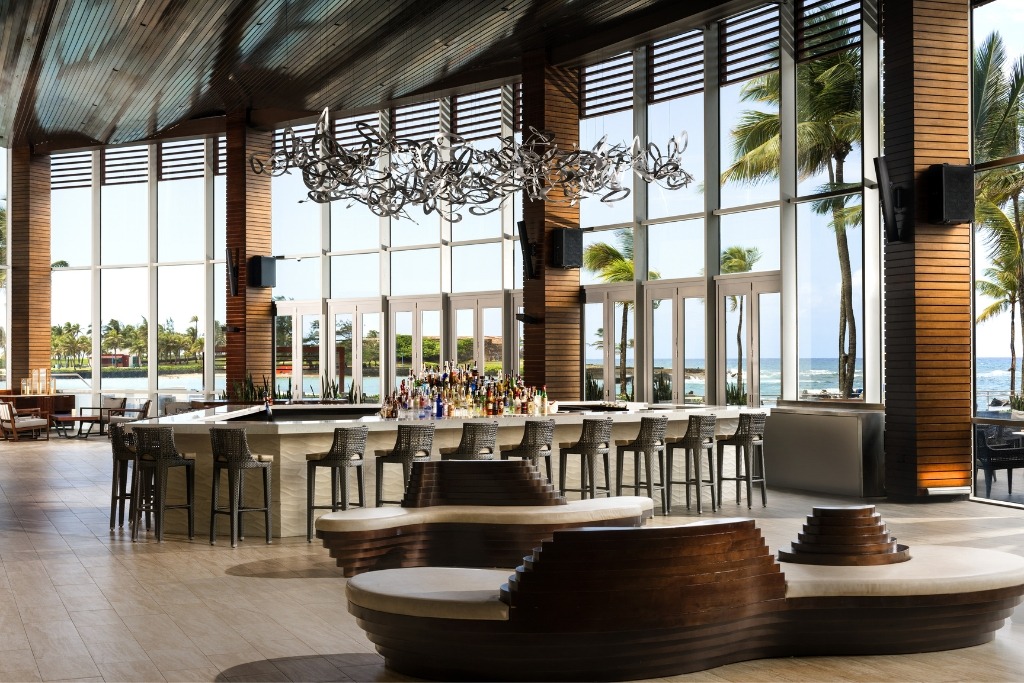
Bartender Ramón “Monchito” Marrero came up with the piña colada in 1954 at the Caribe Hilton‘s Beachcomber Bar in San Juan, Puerto Rico. The drink, which means “strained pineapple,” was concocted for a competition and soon became an island-wide sensation. There are others who claim ownership of the drink, but Marrero is the rightful inventor, and the Caribe Hilton is the real deal. The hotel says it sells about 5,000 per month, and still uses the original recipe featuring white rum, coconut cream, heavy cream, and pineapple juice. Blend it up with crushed ice and serve it with pineapple wedge and maraschino cherry.
Sidecar: Ritz Paris
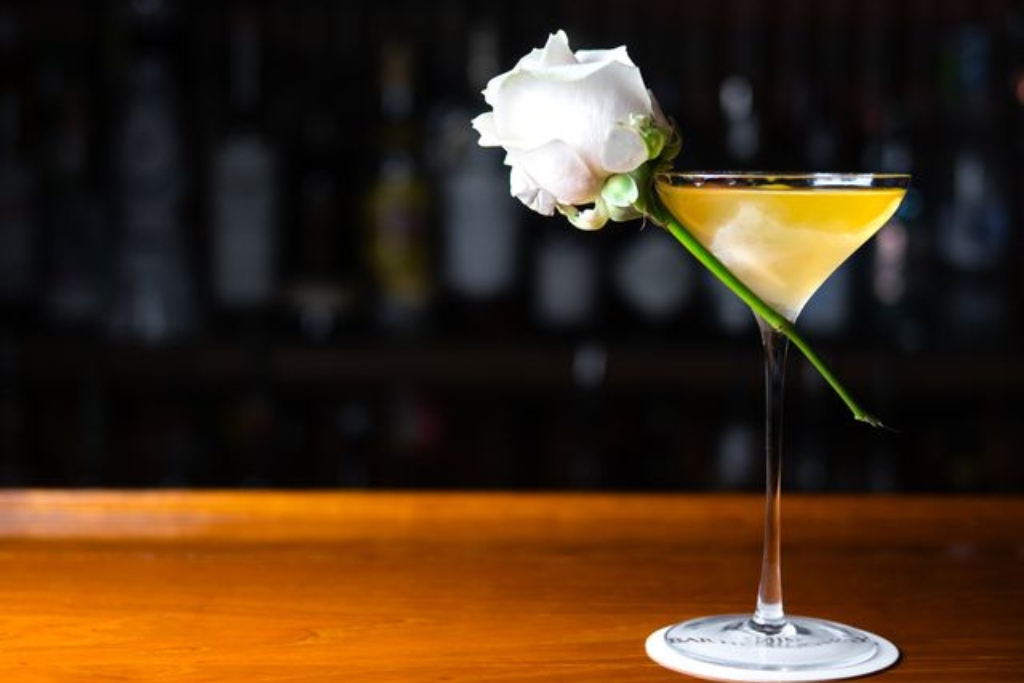
The Ritz Paris lays claim to the Sidecar, a descendant of the Brandy Crusta that is made with Cognac, Cointreau, and lemon juice, served with a sugar rim and either an orange or lemon twist. The hotel’s Le Petit Bar — known as Bar Hemingway, today — opened in 1921, and the story goes that the drink was an early creation of bartender Frank Meier a few years later, in 1923.
There’s a nice background tale that an American World War I soldier and frequent bar visitor would arrive at the establishment via chauffeur, in the sidecar of a motorcycle, and Meier mixed him up a Cognac cocktail that was fitting for the morning. You know, because the one ounce of juice that it includes.
In any event, The Buck’s Club in London also claims the drink, and also cites the same story. Meanwhile, two cocktail book authors from the early 1920s showcase the same recipe and the same story as well. Evidence is inconclusive, but we’ll side with the Ritz, if for no other reason than their menu today offers a version of the drink for €3,000, made with an 1834 Cognac. I’ll take two, bartender.
Bloody Mary: St. Regis New York
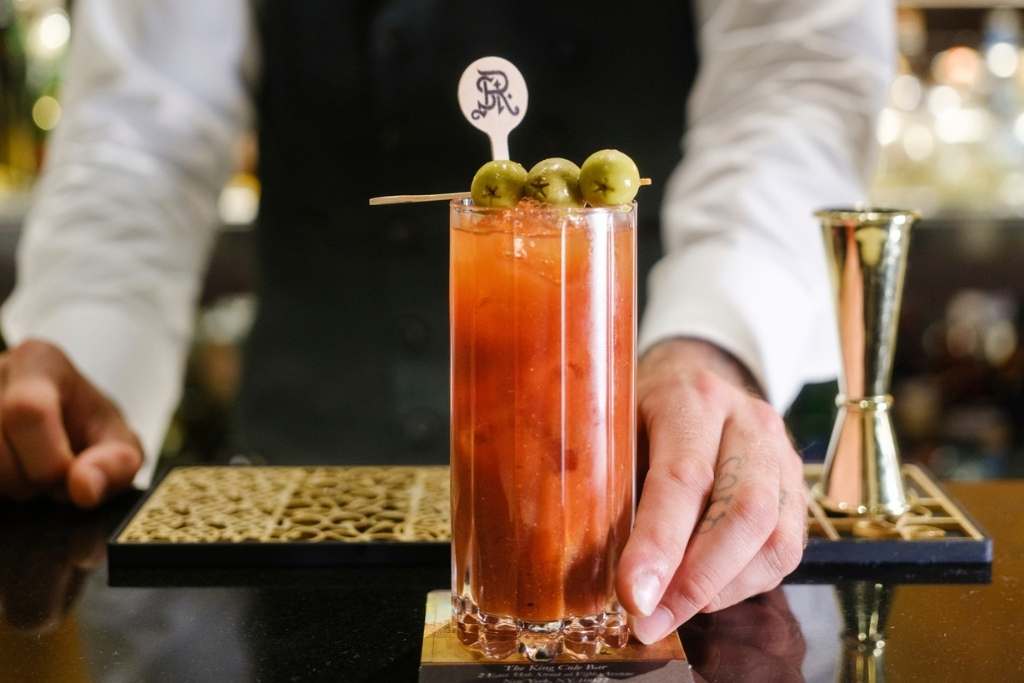
Legendary bartender Fernand Petiot ruled over The St. Regis New York‘s King Cole Bar for three decades. In 1934, he debuted a drink known as The Red Snapper, which would go on to become the Bloody Mary. It was such a staple of the St. Regis that it remains a pillar of the brand’s signature rituals all around the world.
Harry’s New York Bar in Paris says that Petiot invented the drink there in 1920 (owner Harry MacElhone is also one of the authors mentioned above), and then brought it with him to New York. However, the bar today cites the text of a 1967 Newsweek story that dubiously refers to the barman as Ferdinand. Even if true, the drink was then in nascent, fledgling form, consisting of only equal parts of tomato juice and vodka. The crucial additions of cayenne or Tabasco, salt and pepper, lemon, and Worcestershire, not to mention tweaking those measurements, came later. It’s enough of an evolution to consider the 1934 rendition a new drink indeed.
Dry Martini: The Knickerbocker Hotel
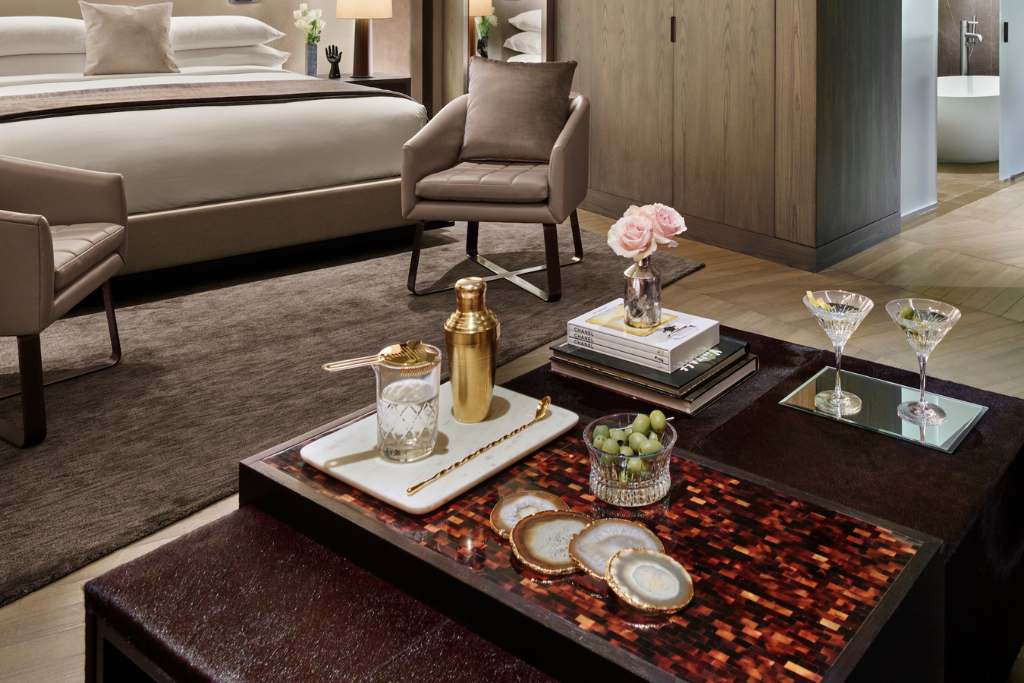
The Knickerbocker Hotel proudly touts its creation of the Dry Martini, saying that the recipe was made for John D. Rockefeller by bartender Martini di Arma di Taggia one night in 1907. Or 1911. Or 1912. Like many good stories, theirs appears to be flirting with the truth, as Dry Martini recipes stretch back a decade or two prior. What is distinct is the bar’s use of orange bitters, and the popularization of the drier ratio of gin:vermouth, an evolution from the then more standard 50:50 ratio.
The property had drinks historian David Wondrich write a book on the subject, Stirring Up Tradition: The Knickerbocker’s Martini Legacy, published in 2024. And what does hold up, as Wondrich writes, is that: “From its opening in 1906 to its closing in 1920, there was no finer place in the world to drink a Dry Martini than the bar at The Hotel Knickerbocker. Taking into account its ambiance, hospitality, clientele and mixology, it was the city’s finest.”
Since reopening in 2015, The Knickerbocker now has a dedicated Martini Lounge, where it offers a Daily Martini Minute at 5pm to delve into some of that history. At any time, though, you can order the original Dry Martini and have it prepared via tableside martini trolley, paired with a roasted chorizo croquette topped with Osetra caviar.
Blue Hawaii: Hilton Hawaiian Village Waikiki
Bartender Harry Yee created the Blue Hawaii at the hotel known today as the Hilton Hawaiian Village Waikiki Beach Resort. There’s no guessing, debating, or mythologizing here, they have this pinned down to the day: January 3, 1957.
The drink was one of many creations that Yee offered the cocktail world over this three-decade stint at the property. In fact, he’s even said to be the first person to ever deploy a paper cocktail umbrella in a drink, in 1959. For the Blue Hawaii, he wanted to capture the island’s waters in a glass, and did so by using blue Curaçao in a cocktail including both rum and vodka, as well as pineapple juice, and a combination of lemon juice and simple syrup, a.k.a. sour mix. Yee, who passed in 2022, was honored by the hotel with a 100th birthday party in 2018.
Tequila Sunrise: Arizona Biltmore
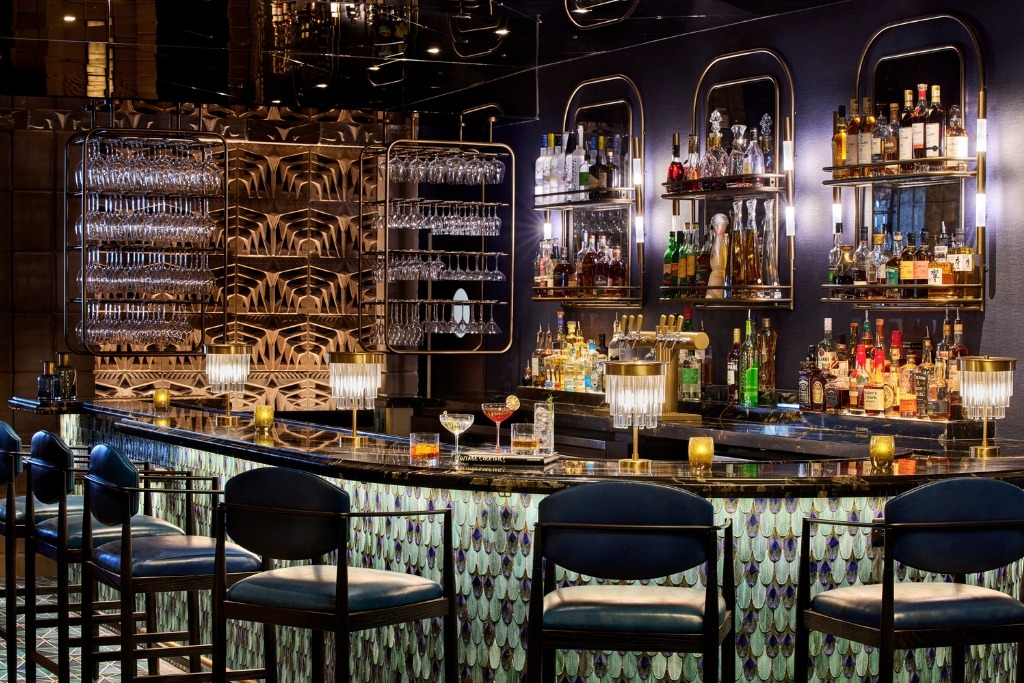
The Arizona Biltmore hotel, now a member of the LXR portfolio, opened in 1929. It didn’t take long to find its place in the annals of cocktail history, as Filipino barman Gene Sulit, of the hotel’s Wright Bar, crafted the drink sometime in the mid-to-late 1930s.
That overly sweet concoction with orange juice and sugary grenadine? That’s not what Sulit served. His original recipe was clean and refreshing, made with blanco tequila, lime juice, creme de cassis, and club soda. This is a Tequila Sunrise you’ll actually want to sip, whether lounging by one of the resort’s pools, or perhaps enjoyed from within their club lounge, where staffers are ready to jump into action and whip one up from a cocktail station.
Hanky Panky: The Savoy London
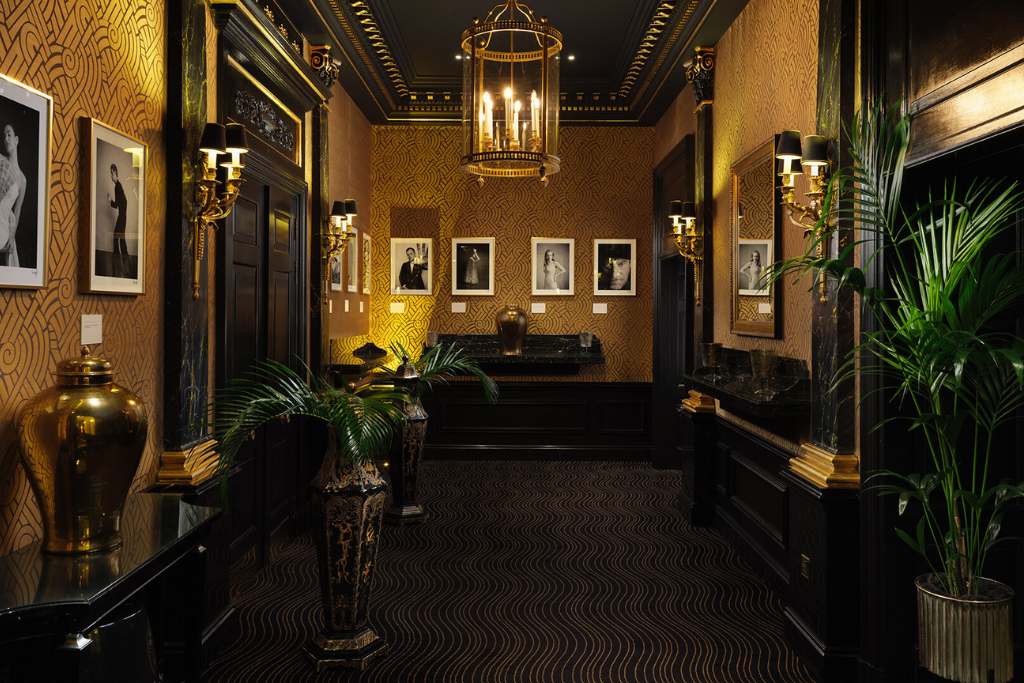
The Savoy London‘s American Bar remains one of the world’s preeminent hotel bars more than 125 years after debuting. That’s thanks in no small part to former head bartender Ada Coleman, a trailblazing barwoman who lorded over the establishment from 1903 until 1926.
In perhaps her first year on the job, she came up with a combination of gin, sweet vermouth, and Fernet at the request of actor Sir Charles Hawtrey, who wanted something new with some “punch in it.” His response to trying the drink was purportedly, “By Jove! That is the real hanky-panky!” But it was the 1930 release of The Savoy Cocktail Book by Harry Craddock that immortalized the libation and elevated it into the cocktail canon. The hotel is responsible for a number of other surviving cocktail success stories, such as The Corpse Reviver #2 and the White Lady.
Seelbach: The Seelbach Hotel
Louisville has long been the heartland of bourbon, and a modern discovery by bartender Adam Seger of The Seelbach Hilton helped showcase the city’s cocktail bonafides. In 1995, Seger came upon a pre-Prohibition recipe for a namesake, signature serve in the form of the Seelbach, a combination of bourbon, Champagne, and Cointreau, with hefty doses of Angostura and Peychaud’s bitters, garnished with an orange twist.
Story goes that a Manhattan and Champagne cocktail were spilled into one another, and viola, the beginnings of a new smash hit. Except it was all totally fake. Seger fessed up to fabricating the history of the drink, coming clean about two decades later. But the drink is indeed his, and does indeed hail from the hotel. It’s just 83 years newer than Seger claimed.
Vieux Carré: The Monteleone
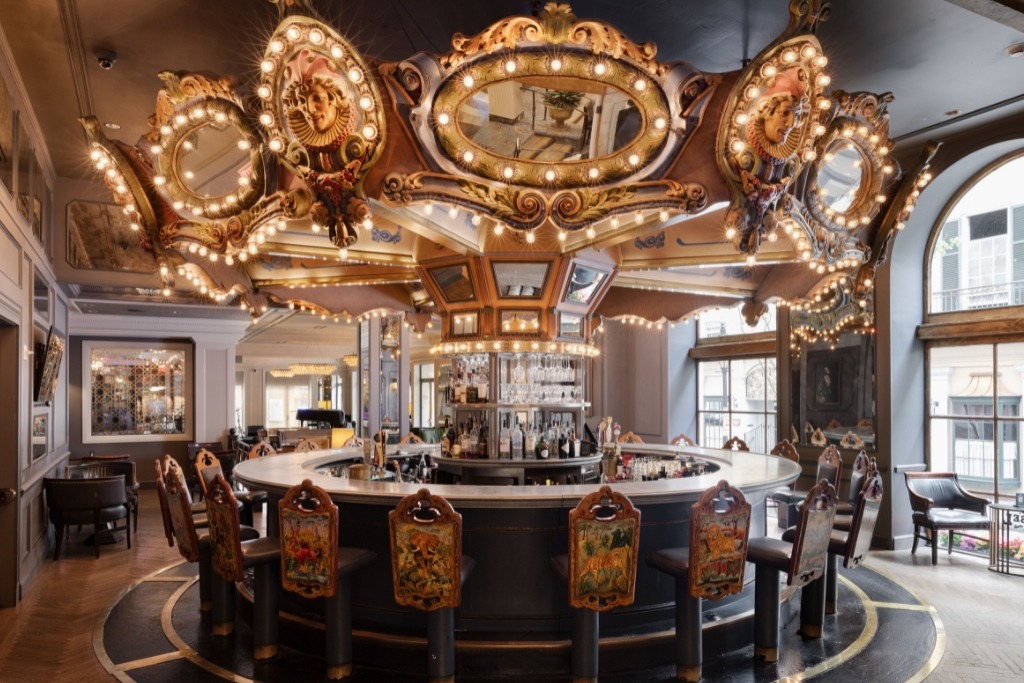
The Monteleone in New Orleans is a famed cocktail destination, thanks largely to its Carousel Bar. You just gotta take a spin on it. The rotating bar was installed in 1949, and about a decade after the invention of a now classic cocktail called the Vieux Carré, in 1938.
Head bartender Walter Bergeron came up with the drink, which translates to “old square,” to represent the district’s distinctive cultural mix. American whiskey is mixed with Italian sweet vermouth, French Cognac and Bénédictine, and a dash of Caribbean bitters. It’s garnished with a lemon twist, which might not mean anything, but does a stand up job brightening the potent cocktail.
Feature image, courtesy of Arizona Biltmore; Travel Curator may earn a commission from booking links on this page.