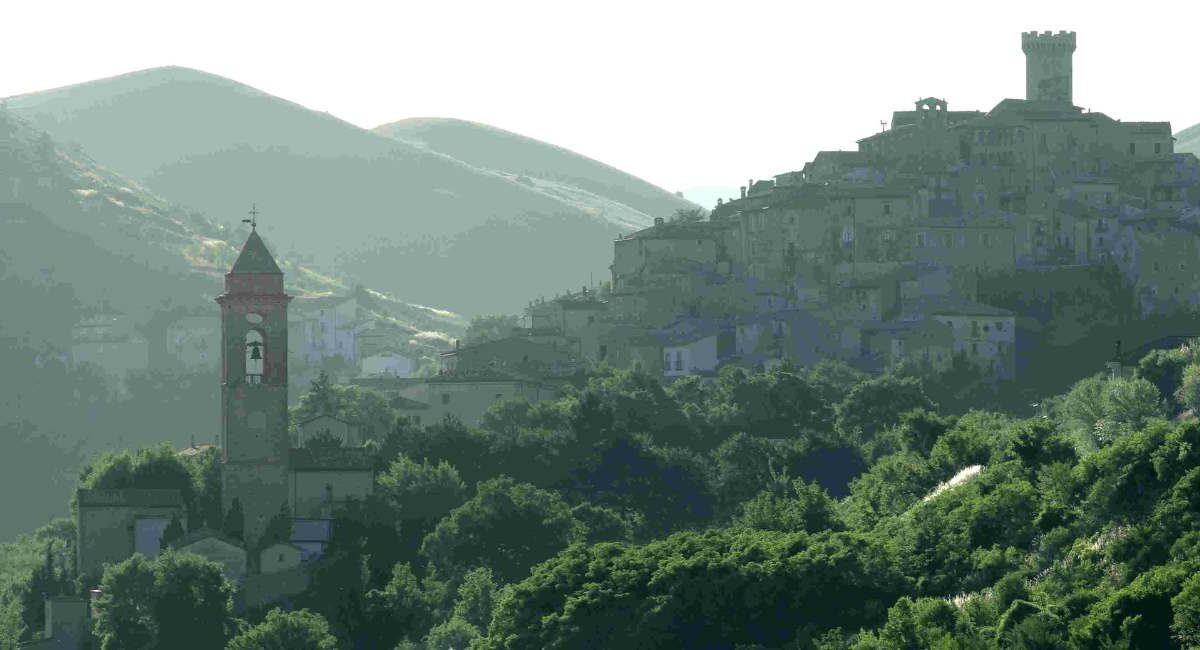
“The idea is to preserve villages as if they were heritage given to the future generation,” says Daniele Kihlgren, who founded one of Italy’s most revolutionary tourism offerings, Sextantio Santo Stefano di Sassanio, 20 years ago. Others were turning their palaces into five-star hotels. He set out to lavish the same love on a humble village that was all but abandoned, turning its ruined houses into tourist accommodations that maintain their feeling of history and community.
Although he dislikes the term albergo diffuso, it’s a good way to describe the immersive hospitality that he and like-minded hoteliers are creating. “The very essential thing is the pleasure of preservation of the small historical heritage with the landscape around it.”
Now the trend has grown legs so long that Italy has a national organization dedicated to promoting alberghi diffusi (literally “scattered hotels”). The idea is spreading around southern Europe, even if the proprietors sometimes ended up with their projects almost by accident.
That was the case with Cerdeira, a schist village in central Portugal that was reborn as an artistic retreat. “It was a shame to see it year after year. All the houses were falling apart when the rain would come, and animals would also destroy it,” says Catarina Serra, who spent her childhood summers here as her parents helped develop the tourism product and is now the general manager of Cerdeira – Home for Creativity. Now this place — and others like it — that was almost forgotten is a regenerative tourism success story.
Sextantio Santo Stefano di Sassanio, Abruzzo, Italy
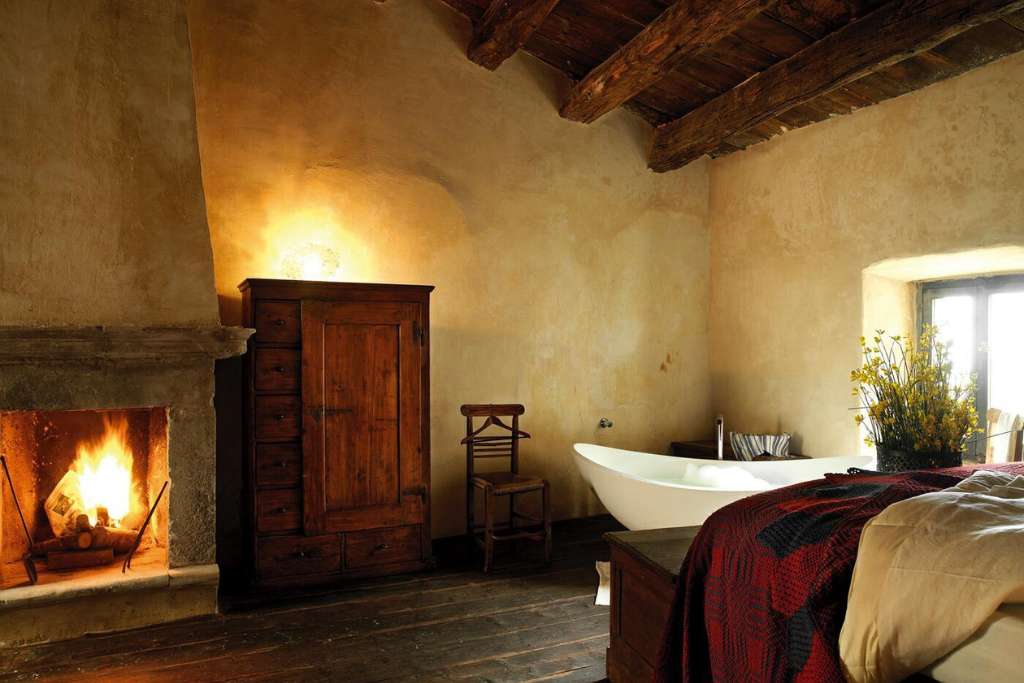
Unlike many developers, Sextantio’s Daniele Kihlgren took historical preservation as a central premise rather than an obstacle to building a hospitality project. In 1999, he came across a nearly abandoned village, negotiated with all the owners to buy their crumbling property, and spent years restoring them into a diffuse hotel with 28 rooms, an ancient cellar, a restaurant, a meeting hall, and a reception area within barns, stables, cellars, and peasant dwellings. Nothing is polished; everything feels homespun. Several years later, buoyed by the first development’s success, he took that same philosophy to the ancient Sassi of Matera, the cave dwellings that were once the “shame of Italy” and are recognized by UNESCO as a heritage worth preserving. His Sextantio Le Grotte della Civita played a big role in that transformation.
Torre del Nera, Umbria, Italy
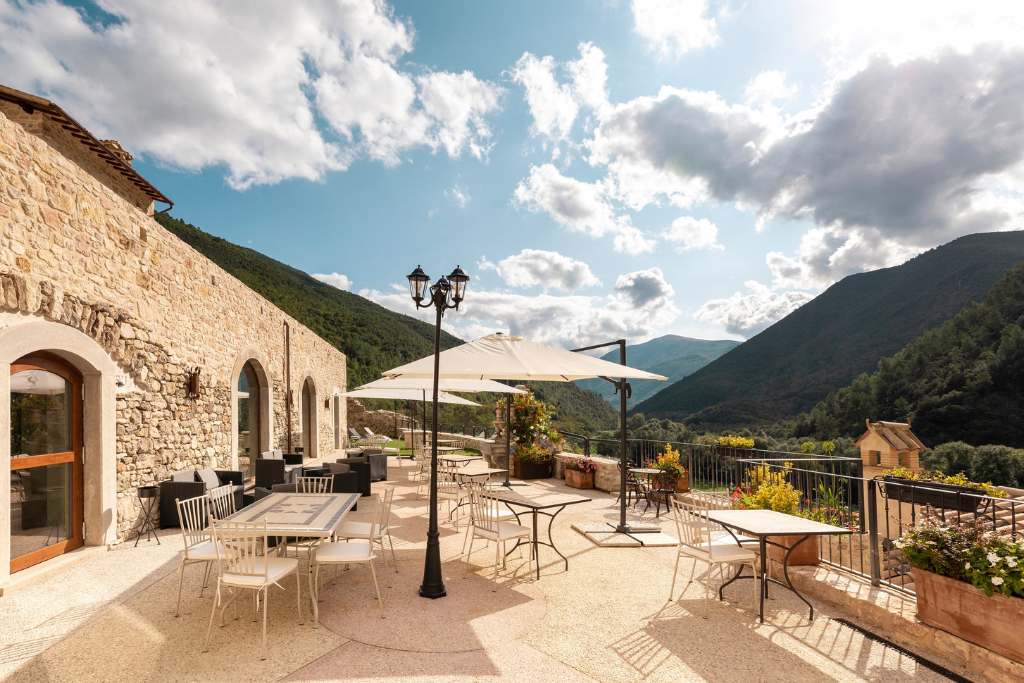
In the enchanting medieval village of Scheggino, in the province of Perúgia, Torre del Nera is a collection of 12 cozy rooms and 16 larger apartment suites within centuries-old stone houses that line cobblestone alleys. The project began about 20 years ago, when owner Gabriele Giannattasio stumbled across a “crazy and fantastic natural scenario, a village and a destroyed and depressed territory” that was waiting for him to bring it back to life. Now his children run the place and a central building contains luxury hotel niceties — a spa and locavore restaurant that emphasizes Umbria’s culinary wonders, such as black truffles, cured meats, and the precious lentils of Castelluccio — but the car-free hamlet itself feels delightfully untouched by the passage of time.
Borgo San Felice, Tuscany, Italy
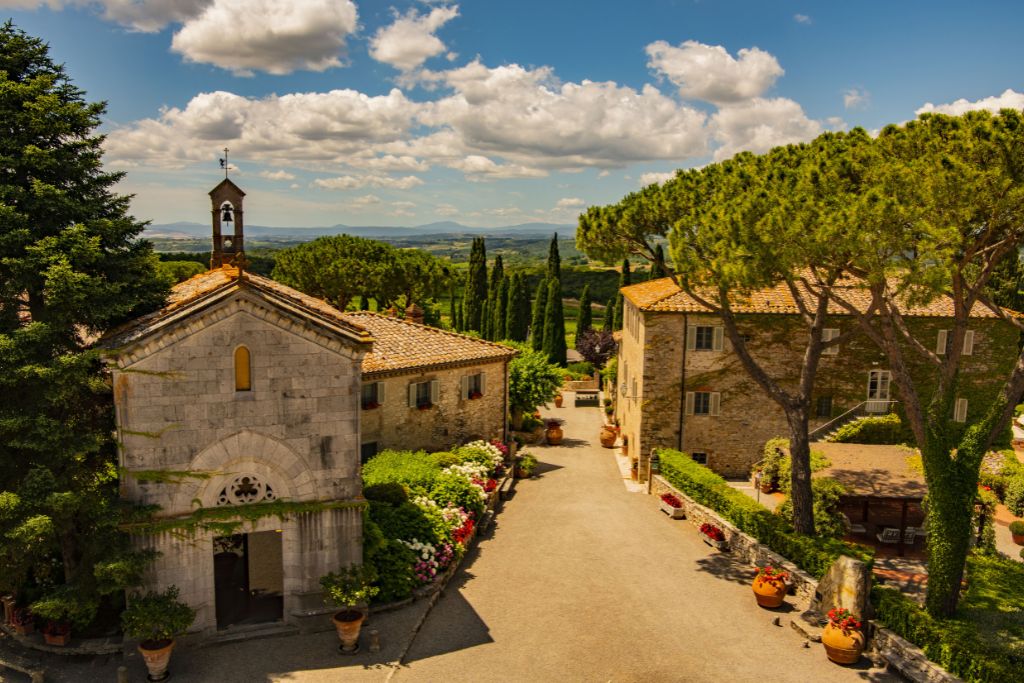
Borgo San Felice, a historic hamlet–turned–Relais & Châteaux hotel, is a trove of elegant history but also a place where guests feel at home. Now it seems purpose-built for pursuits that are both bucolic and luxe — wine tasting, truffle hunting — but its history encompasses centuries of messiness. Artifacts on the grounds date from the Etruscan era. Eighth-century documents describe bitter land disputes between the bishops of Abruzzo and Siena. In the 18th century, a noble family turned the estate into their private residence, and in the 20th, an international financial services group turned it into a five-star hotel. An elegant 1899 palazzo stands opposite a neo-Gothic chapel on the medieval village square. Along the cobblestone lanes that unwind from that square, 40 rooms and 23 suites occupy ancient houses that are filled with remnants of village life — tabernacles, loggias, an old well from 1792, vintage telephone signs. The village bakery is now the hotel reception, and part of the olive mill houses the spa.
Castel Garrone, Piedmont, Italy
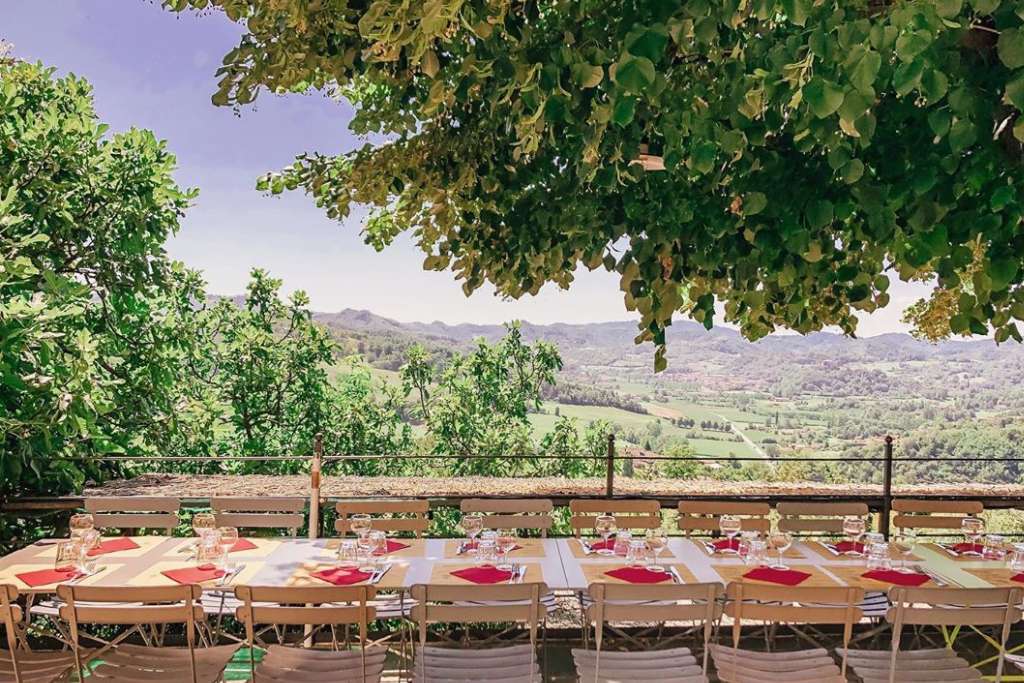
Although this historic castle and restored village host their fair share of fairy tale weddings and events — there’s room for 200 people — it also hosts individual travelers in search of an authentic Italian immersion. Castel Garrone’s hilltop compound has magnificent views of Po Hills and is just a short drive from Turin, a rising star of northern Italy. The onsite restaurant, Trattoria della Villa, is exactly what the name implies, a village tavern that focuses on local products, including Piedmont’s famous truffles and regional wines like Barolo and Barbaresco. Its 78 bedrooms are decorated in the local style, with heavy wood-beamed ceilings and terra-cotta floors. Moreno Moretti, whose boutique travel agency, Italy Charme, serves as a rental broker, says he loves it because it’s “even more antique and less known” than some of the others and “out of the luxury radar.”
Cerdeira – Home for Creativity, Serra da Lousã, Portugal
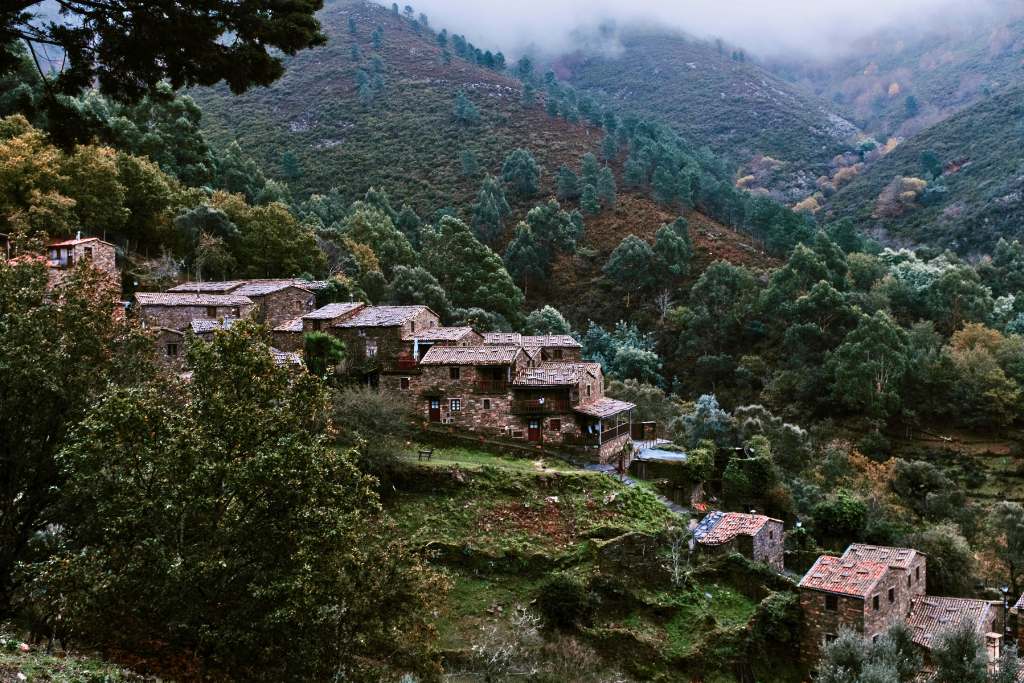
A number of the old schist villages of central Portugal have been reincarnated as tourist destinations — with theme-park-style taverns selling mead, weekend parking challenges, and hit-or-miss Airbnbs. A far more coherent alternative is Cerdeira, where 10 of the 300-year-old stone houses have been hand-restored by local craftsmen and turned into the accommodations for a retreat village. That coherence belies its accidental origins, some three decades ago, when a German artist simply wanted a rural place to create and some of her entrepreneurial Portuguese friends saw an opportunity for the project to slowly grow. Now those houses, as well as a larger central house with shared bedrooms, are the lodging for art workshops led by world-renowned ceramicists and woodworkers, or for individual travelers who simply wanted to connect with nature when there’s not a masterclass week.
Corippo, Ticino, Switzerland
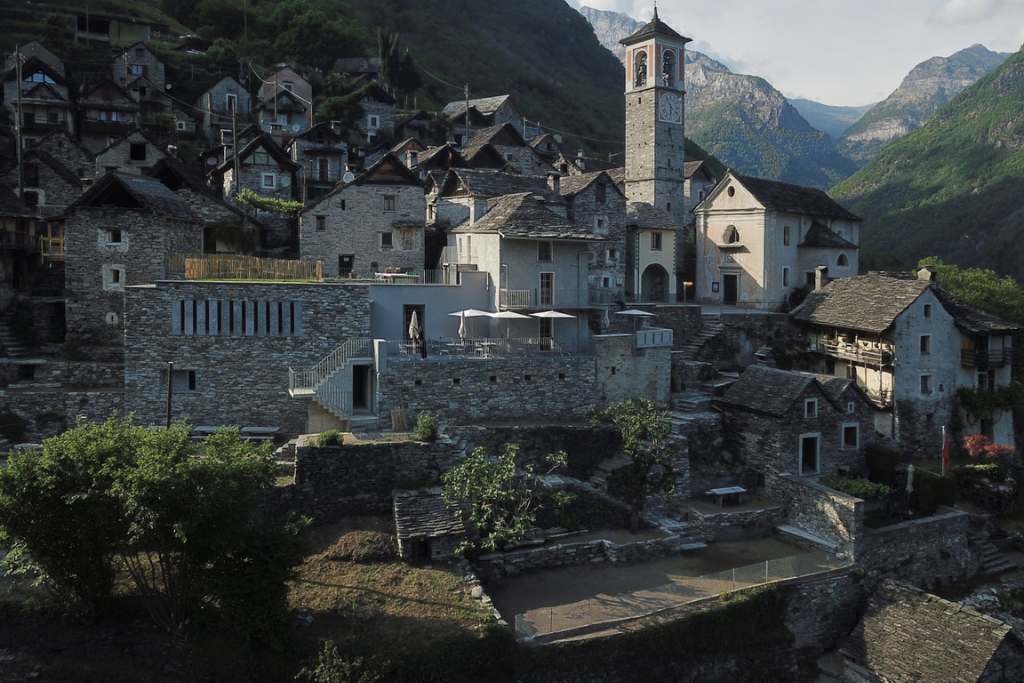
It is, perhaps, a stretch to call Corippo an albergo diffuso outside of Italy, as it lies in the Versazca Valley of Italian-speaking Ticino, a region that has much in common with its neighbors to the south. At the same time, it’s still thoroughly Swiss, as seen in the minimalist architecture and trappings of village life. Its 10 accommodations occupy restored houses within a community of local residents, allowing guests to have a genuine cultural immersion while enjoying hotel-style services. Not least of those are the high-quality hospitality and excellent dining, a reflection of the owners’ backgrounds. The Franco-Swiss couple came through hotel school and Michelin-starred restaurants around Switzerland, Europe, and South America before landing in this timeless Alpine canton, and they bring a doting approach to caring for their guests, especially in their osteria, which is a showcase for local food producers.
Château & Village Castigno, Occitanie, France
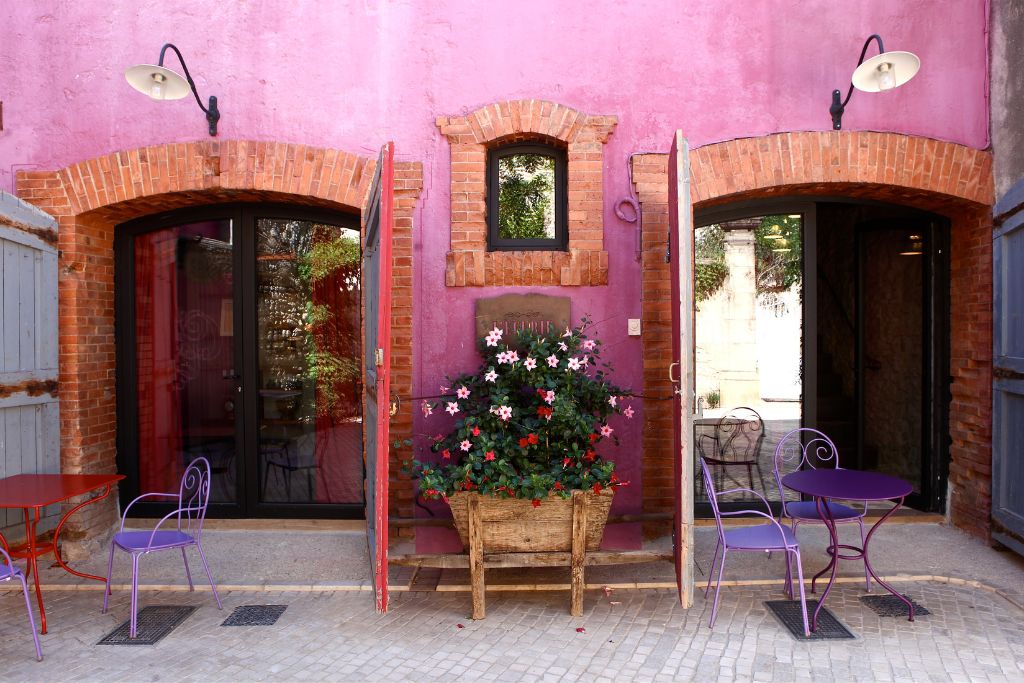
All the way south in the South of France, Castigno bills itself as an epicurean and Zen destination. The accommodations are spread around a picturesque village, in houses with pink, purple, and red facades. The colors are a nod to one of the primary enticements here, an organic winery within a terroir that’s known for great whites. Beyond the wine and its various tasting opportunities, the property encompasses 21 design-forward rooms scattered among the full-time residences of a living village (guests might even run into the mayor), three restaurants that range from French fine dining to Thai, and a microbrewery for those afternoons when you’ve had your fill of wine.
Feature image courtesy of Sextantio Santo Stefano di Sassanio. Travel Curator may earn a commission from product or booking links on this page.