Scandi style is definitely a thing. The Nordic countries have a living aesthetic all their own — one that’s all clean lines, yearning vistas, and a minimalism that somehow feels warming rather than cold. It’s hygge on a homestead, even as the designs also win architectural prizes.
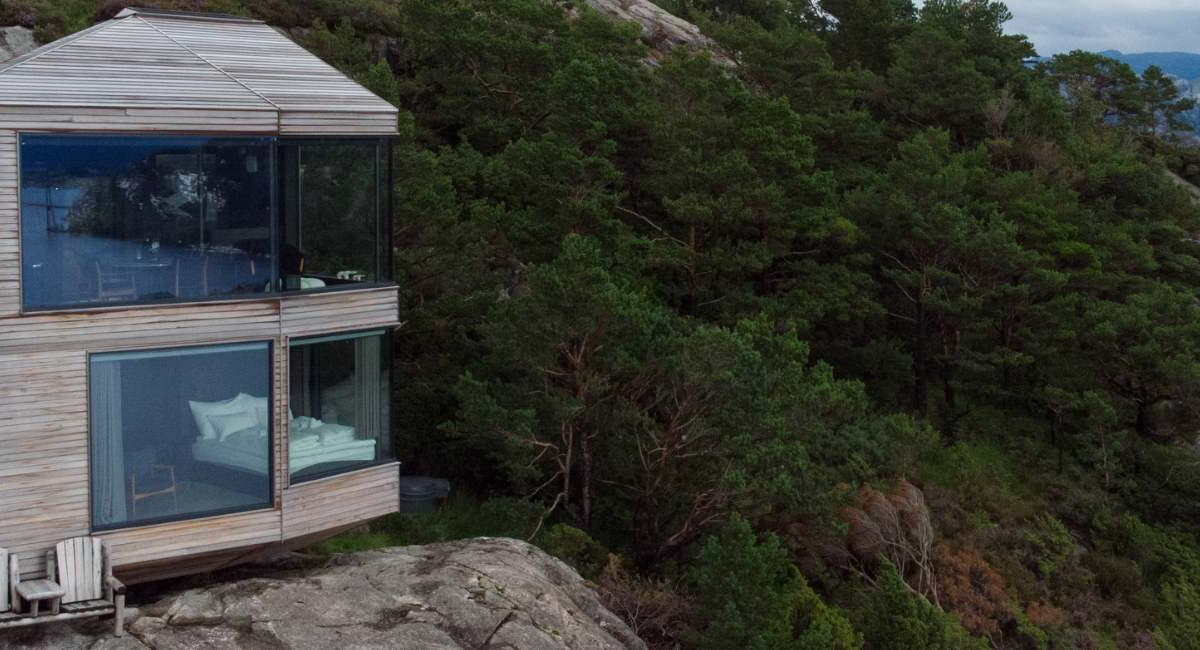
The hospitality purveyors of Norway, Sweden, and Finland also have a distinctive version of luxury, one that’s less about the five stars of a traditional opulent hotel and more about the endless stars of a night sky that’s free of light pollution. And perhaps because of their short but intense summer, they’ve put a premium on the outdoors. That means both being outdoors and simply feeling outdoors, as in cabins with large facades of glass, the better to blur the line between inside and out. (To be sure, some of the best of these, such as the Bolder’s glass-and-wood cubes above a fjord outside Stavanger, Norway, operate all year, and they take on a special beauty in the slanted winter light.)
While they feel far from everything, they’re still well connected to modern comforts. There’s no roughing it where electricity, plumbing, or temperature are concerned. And while sometimes there’s no mobile signal or wifi, it turns out that that’s very much by design.
The Bolder, Lysefjorden, Norway
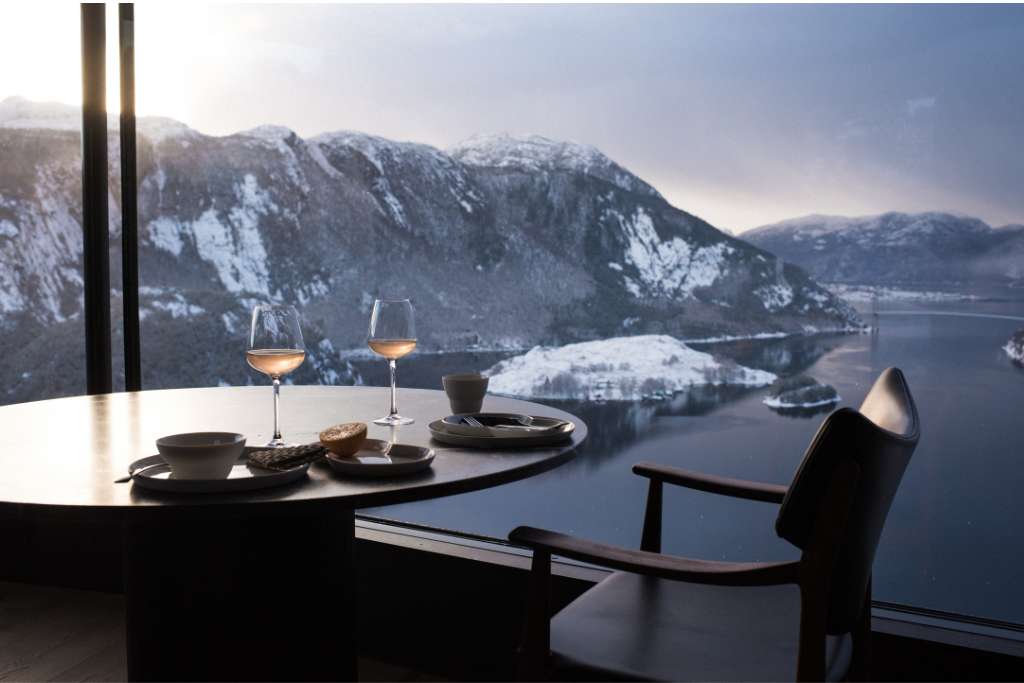
Waking up in one of the glass-walled bedrooms at The Bolder feels like coming to life inside a warm cloud. Even though the city of Stavanger is fairly close by, the only things you can see are the open sky and the shimmering blue of one of Norway’s most spectacular fjords below. The six architecturally stunning cabins are raised from the terrain and have a mirrored design, in which the ceilings reflect the light coming in from below and give the whole thing a weightless effect. Each one has a kitchenette for self-catering stays, but guests can also order breakfasts or tapas-style dinners made with products from the region’s best artisanal purveyors. The management also maintains a partnership with Stavanger’s extraordinary Michelin three-star, Re-Naa, for buyouts. Then the restaurant team lays out a gourmet breakfast in the shareable main lodge and can also prepare simple, family-style dinners of creamy fish soup, roasted game, and other Norwegian classics.
Ytri, Træna, Norway
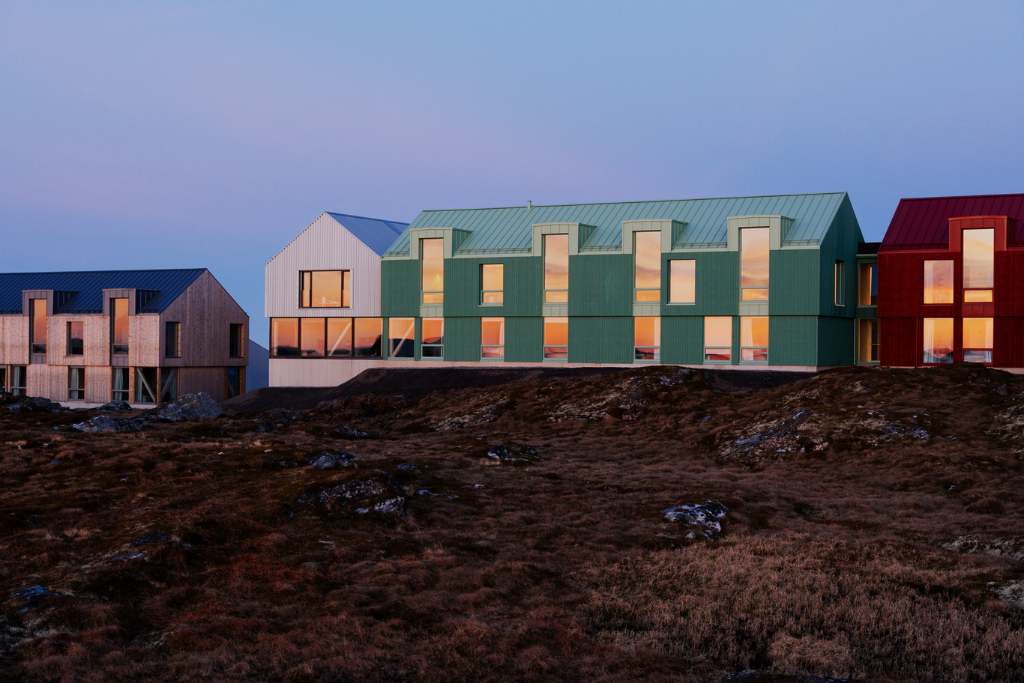
Although it’s not, strictly speaking, a cabin project, this year’s buzziest Nordic opening has a cabin-like spaciousness, elemental aesthetic, and close integration with nature. The super-remote luxury hotel occupies an island some 30 miles from the Norwegian mainland’s coast, right at the Arctic Circle. (The name, Ytri, comes from the Old Norse for “the outer one.”) Its 38 rooms and suites follow an architectural vision that was shaped by the sea, the wind, and the history of fishing villages along the rugged coast. Windows carefully frame the windswept views, the natural materials resonate with their surroundings, and everything adds up to a feeling that’s minimalist yet warm. Although it’s designed for nature immersion and reflection, it has a lounge, bar, seafood restaurant, sauna, a yoga and wellness area, a boathouse, guest harbor, and a sandy beach that beckon when it’s time to leave the quiet bubble of your room.
Trekronå, Ogna, Norway
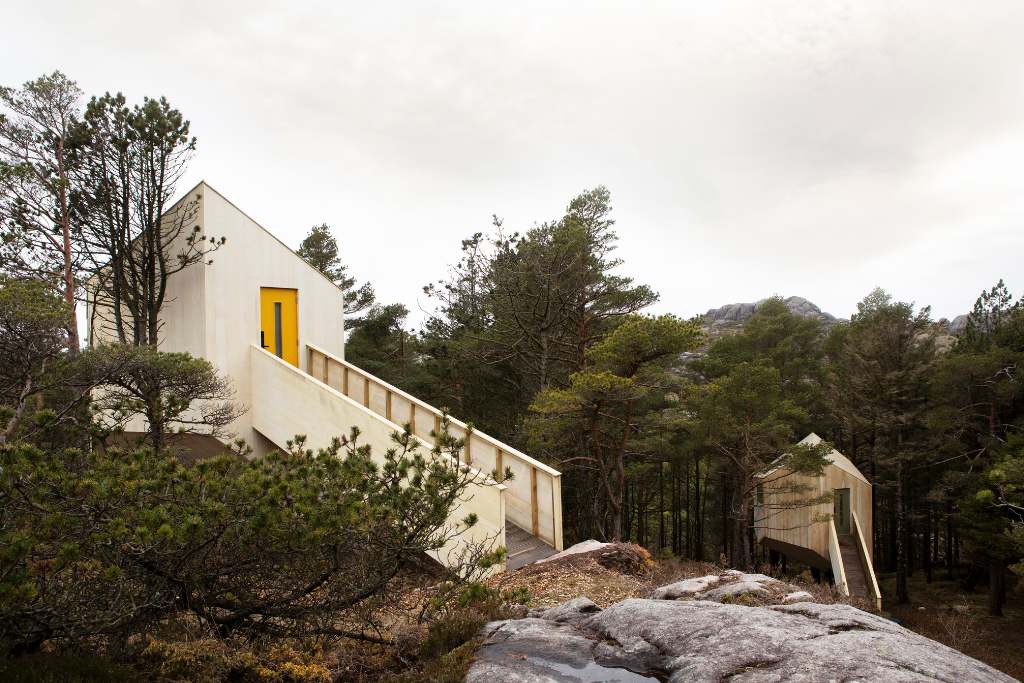
A Norwegian carpenter and contemporary architect paired up to bring their childhood treehouse dreams to stylish life at Trekronå, an intimate retreat in the southwestern Jæren region of Norway. They mixed comfort with nostalgia and closeness to nature to create two futuristic wooden cabins high in the pine forest, where all you can see are the stars of the night sky and all you can hear is the chirping of birds and trickle of a stream. They have large windows on all sides (including the ceiling) to let in the sunlight or moonlight, as well as the forest views. Each one sleeps three people (or five, they say, if you know each other well) and has a kitchenette, sitting area, and small balcony.
Northern Lights Ranch, Köngäs, Finland
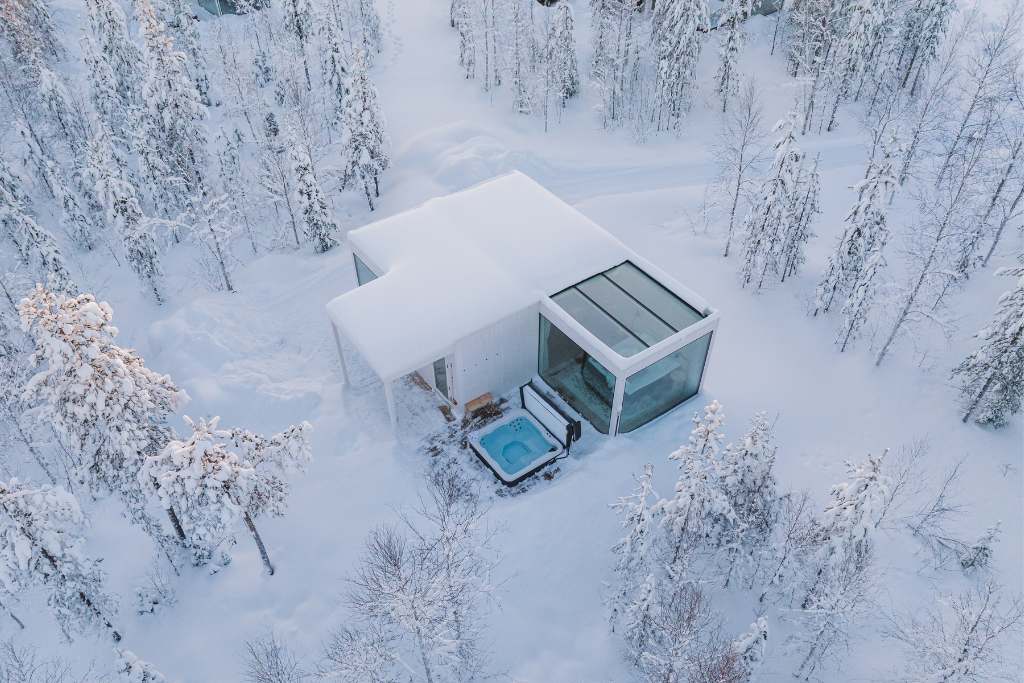
Unlike many of the Nordic cabins here, the Northern Lights Ranch in Finnish Lapland comes to life in winter, the better to live up to the promise in its name. It bills itself as an igloo-style boutique hotel that’s meant to be a cozy contrast to the snow-covered landscape outside. Each of the 28 Sky View Cabins has at least one bedroom with two full walls and a ceiling made almost entirely of glass, designed for watching the aurora borealis dance while lounging in bed. They combine the warmth (literal and aesthetic) of a traditional cabin with the visual possibilities of a glass igloo, and most of them also have private outdoor hot tubs. There’s also a gastronomic restaurant that leans heavily on local products like Arctic berries, mushrooms, and herbs that are harvested in summer. The dining room, with its traditional, Lappish design, overlooks the illuminated reindeer enclosure, adding nicely to the sense of place.
Landet Stay, Trosa, Sweden
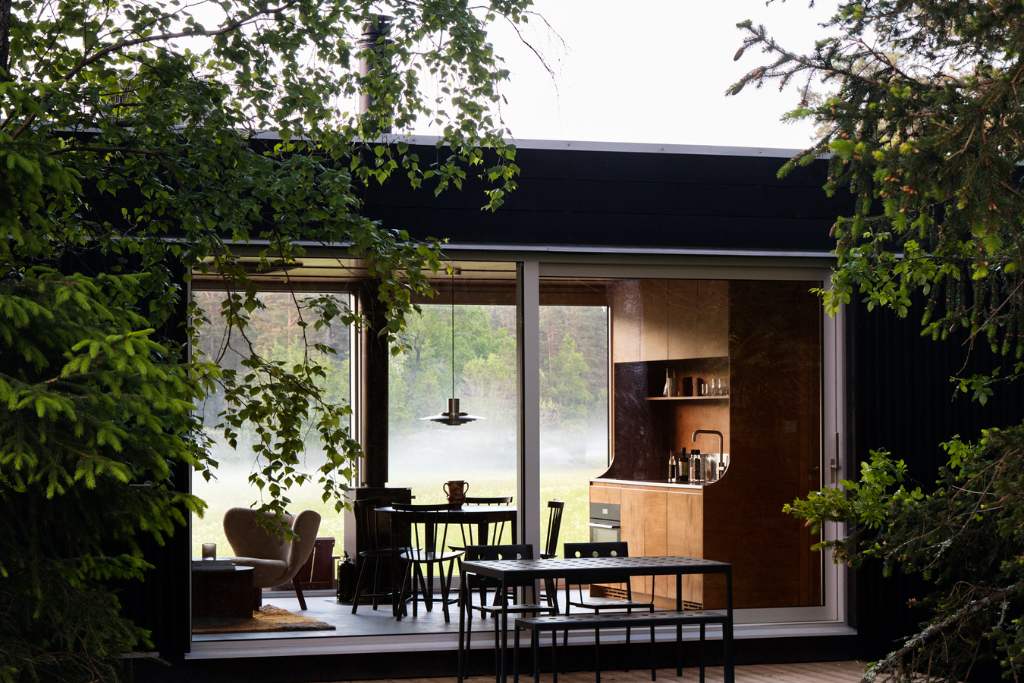
Less than an hour from Stockholm, and 15 minutes from the charming archipelago town of Trosa, Landet Stay is a collection of forest cabins that mix contemporary aesthetics with nature immersion. A noted Stockholm architect — his clientele includes Swedish elites — and a British interior designer worked on the project, crafting an assemblage of glass walls, blond wood, and soft textures. There’s just enough technology to make the experience frictionless (think digital check-in through the booking system), but the feeling is still decidedly lo-fi. Each cabin is about 400 square feet with a king-size bedroom, a kitchen, a living space, and two outdoor areas. There’s a wood-fired sauna on a floating platform in the lake, and they can arrange yoga sessions under a century-old oak tree, as well as ready-to-eat meals from Trosa’s popular Fina Fisken restaurant or a chef-on-demand service for more lavish dinners.
Hyssna Forest Resort, Hyssna, Sweden
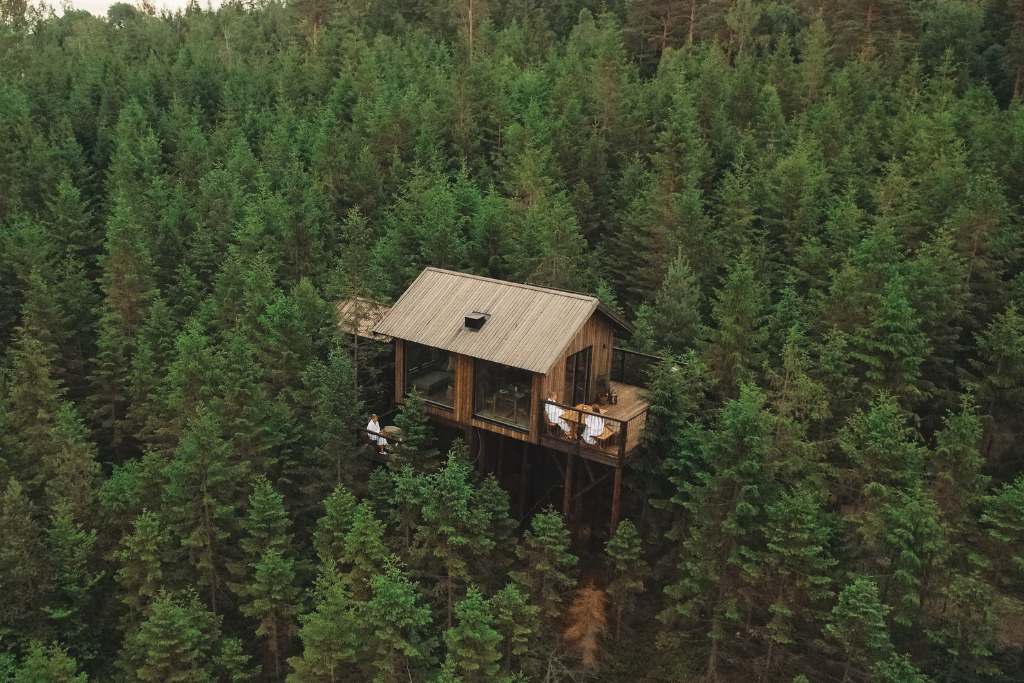
There’s an elemental simplicity to the five wooden cabins of western Sweden’s Hyssna Forest Resort: weathered wood that’s almost one with the standing pines outside, soft fabrics in neutral colors, panels of glass that are impressively large when you think about the effort of getting them up here. The coziest is the A-frame Creek Cabin, whose double bed is reached via a ladder up to the loft and has views over a mountain stream (it can be rented with additional, smaller cabins for larger groups), and the most impressive is the Ranger’s Cabin, which is designed like a lookout tower with windows all around and terraces on all sides. One of those terraces has a hot tub, fireplace, and barbecue area, all set up to make you feel like one with the forest. The rates always include breakfast, while dinner and activities can be arranged on request.
Juvet, Valldal, Norway
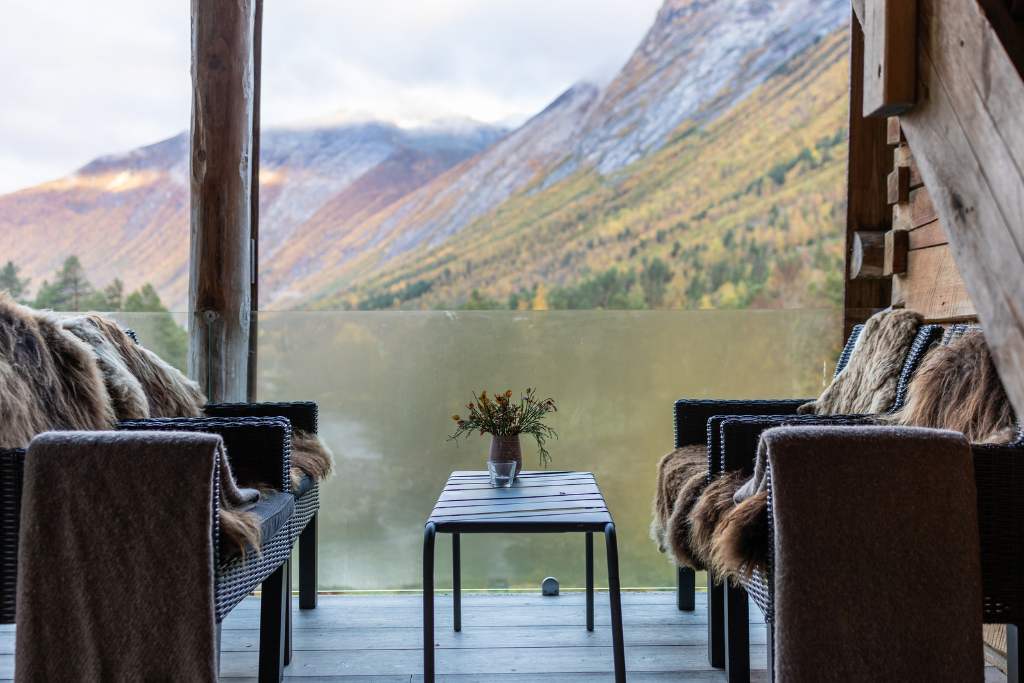
Succession fans might recognize Juvet as the place where the Roy family negotiated with the Swede, and it clearly telegraphs the sort of stealth wealth that the show made famous. The 10 mostly detached, glass-fronted rooms are architecturally striking enough that they’ve featured prominently in other films as well, such as 2014’s Ex Machina. The modernist, minimalist design is fully integrated with the surrounding nature, with a dark color palette meant to do away with reflections and distractions. The seven Landscape rooms occupy spacious glass cubes in stilts, while the cozy two Birdhouses are tiny house–style exercises in showing us how little we need (about 86 square feet, as it turns out). The two-bedroom Writer’s Lodge is well suited to creative retreats. They all share a serene spa built into the landscape with a 50-foot-long glass wall facing the river in front of the sauna and relaxation area, and a rustic barn that serves as a dining room for the communal meals served every evening.
The Haven Islands, Ytterturingen, Sweden
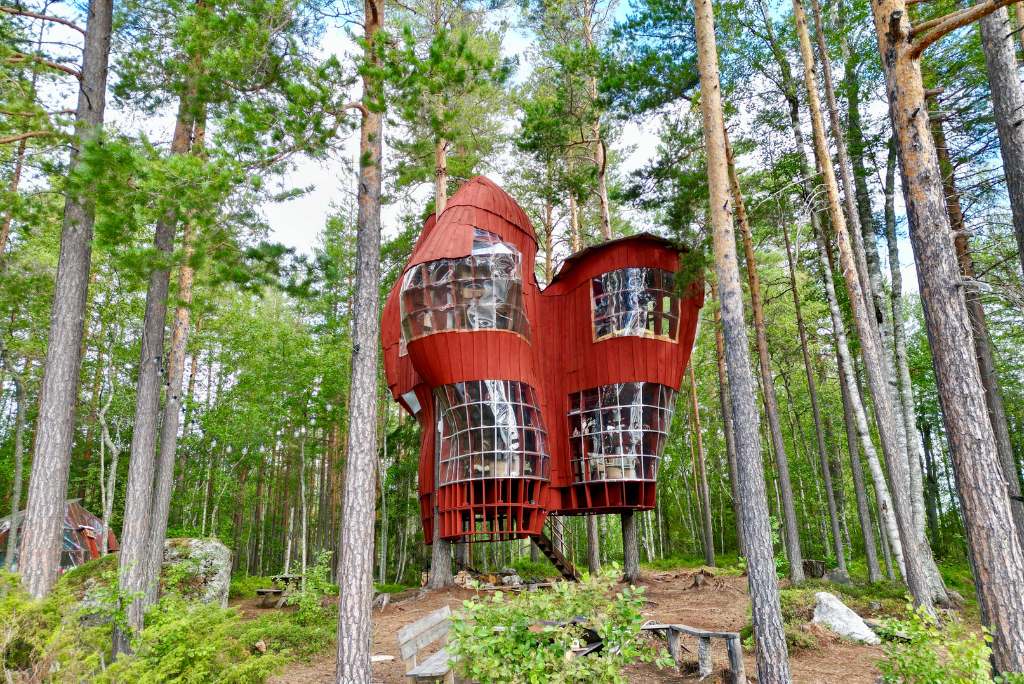
The remote lakes of central Sweden are home to The Haven Islands, a pair of tiny private islands, each one with a cabin for secluded, castaway-style stays. There are no neighbors, no staff, and no restaurant, and that’s precisely the point. But while the experience requires some planning ahead, it’s not exactly roughing it. The cabins are architecturally designed and as comfortable as can be. The more conventional of the two, the Wolf House, is made of weathered local wood in traditional Swedish style, which is both elegant and rustic, with comfortable new furniture and hammocks on the terrace. But the showstopper is the Bear House, a freeform, two-story treehouse designed by an architect from adventurer-owner Anthony Verlaine’s native France. From the outside, it calls to mind Prague’s famous Dancing House, while inside it’s all luminous and lovely.
Surflogiet, Gotland, Sweden
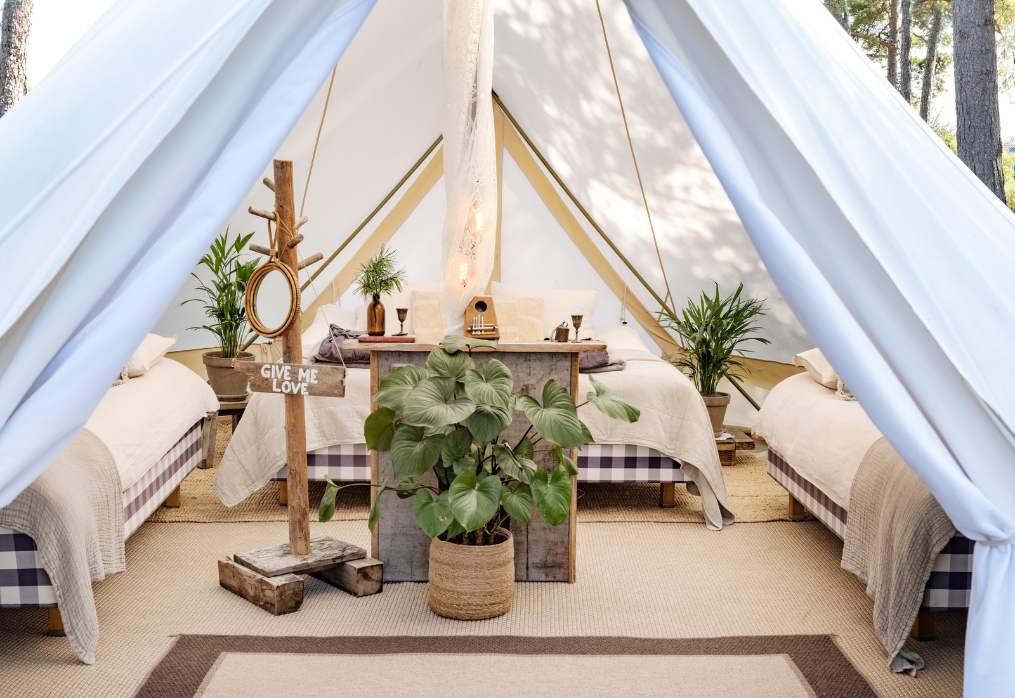
Also not strictly a cabin project, Surflogiet is a uniquely Nordic glamping destination on Sweden’s idyllic Gotland island — a midsummer destination for Stockholm creatives that’s increasingly gaining international notice for its farm-to-table restaurants, Viking-era main town, and stylish accommodations. The property has 11 safari-style tents outfitted in bohemian luxury: Oriental rugs, residential-style wood furniture, and (this being Sweden) plush Hästens beds, all made up right on the sand. It’s a slow-living haven for the wind- and kite-surfers who are drawn to the island’s west coast, as well as anyone who appreciates good design, good food, and just the right amount of roughing it.
Manshausen, Leinesfjord, Norway
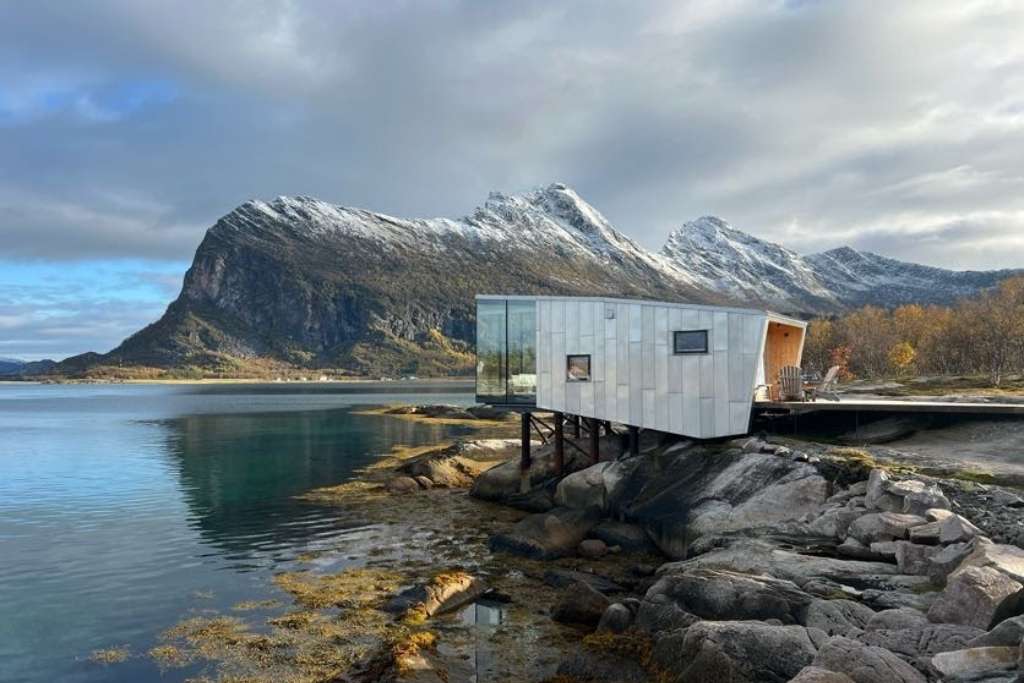
Norwegian explorer Børge Ousland calls his Manshausen lodge the country’s “most unique experience for adventurers and philosophers, families and friends, and conferences for creative minds.” He knows what he’s talking about: For more than 30 years, he accomplished many Arctic and Antarctic expeditions and pioneered treks that pushed the boundaries of what was thought possible. But his remote Manhausen is designed (with an award-winning architect) to keep guests thoroughly inside their comfort zone. It started with a handful of Sea Cabins, perched partially on stilts above the fjord to bring them as close as possible to the surrounding nature, sea, and light. A few years ago, two Tower Cabins joined them, each with two floors to separate the living and sleeping areas, and fully glass roofs (with shades, of course) that let guests enjoy the northern lights or midnight sun from their beds. The restaurant in the main house serves three locally inspired meals a day, as well as coffee and drinks in between.
The Raven at No Connection, Lake Navardalen, Dalarna, Sweden
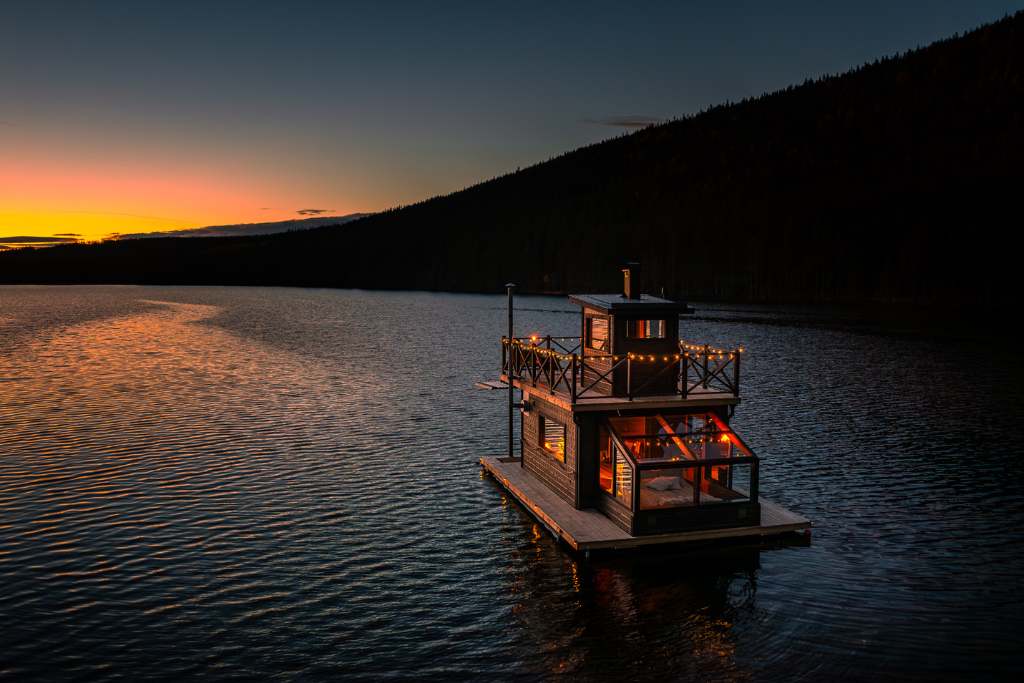
A decade ago, the “digital detox” felt like a form of vaguely unpleasant self-care to get through in the service of a greater good. But now, getting away from the constant digital noise is a straight-up luxury. That’s what Dalarna native Lina Karlsson had in mind when she launched the phone-free No Connection in 2019 in the Swedish wilderness, about five hours by car from Stockholm. It’s a place where visitors can lose the distractions and reconnect with themselves, with their loved ones, and with the living forest. The wilderness retreat’s standout accommodation is The Raven, a houseboat-style floating lodge in the middle of the lake. The artfully designed sanctuary has a glass-enclosed bedroom, a wood-burning stove, a small outdoor kitchen, a rowboat, and a private rooftop sauna with panoramic views of the lake and the landscape beyond.
Featured image courtesy, The Bolder & Elin E. Travel Curator may earn commission from the booking links on this page.