Samuel Johnson said it best in 1777, “When a man is tired of London, he is tired of life.” Nearly 250 years later, the city gives you no reason to argue. What it does give you is a problem of scale. London is not one city but a series of neighborhoods pressed together, each with its own personality, its own pace, and its own reasons to return. Most guides breeze over this. This one doesn’t.
The good news is that London is fairly easy to navigate. The tube is world class, the bus network is extensive, taxis are legendary, and you can even travel by boat along the Thames. The iconic red double-decker buses are not to be missed — a ride on the top deck gives you an elevated perspective on the parks, the landmarks, and the skyline. For first-time visitors wanting a quick overview of the major sights, Big Bus Tours offers a practical hop-on, hop-off introduction before you explore on foot.
Which neighborhood you choose to base yourself in depends entirely on what matters most to you: the iconic hotels, bougie shopping and dining of Mayfair and Knightsbridge; the village ease of Marylebone and Notting Hill; the cultural weight of Bloomsbury and the South Bank; the creative energy of Shoreditch and Fitzrovia; the historic sweep of Whitehall and the City; or the theaters, the nightlife, and the beating heart of the city that is Soho and Covent Garden, aka the West End. London has also shed its old, stodgy reputation for food — it is now one of the great culinary capitals of the world, and this guide reflects that.
Here you will travel through 12 neighborhoods, with recommendations on where to stay, eat, drink, and shop — curated, opinionated, and designed to help you spend less time researching and more time enjoying the city. Londoners are unfailingly polite and will queue for anything and everything. If you see a line forming on the pavement, make sure to ask what it is before joining.
And don’t forget to download our Google Map pins at the bottom of this guide. You’ll have everywhere we recommend right in your app.
Mayfair
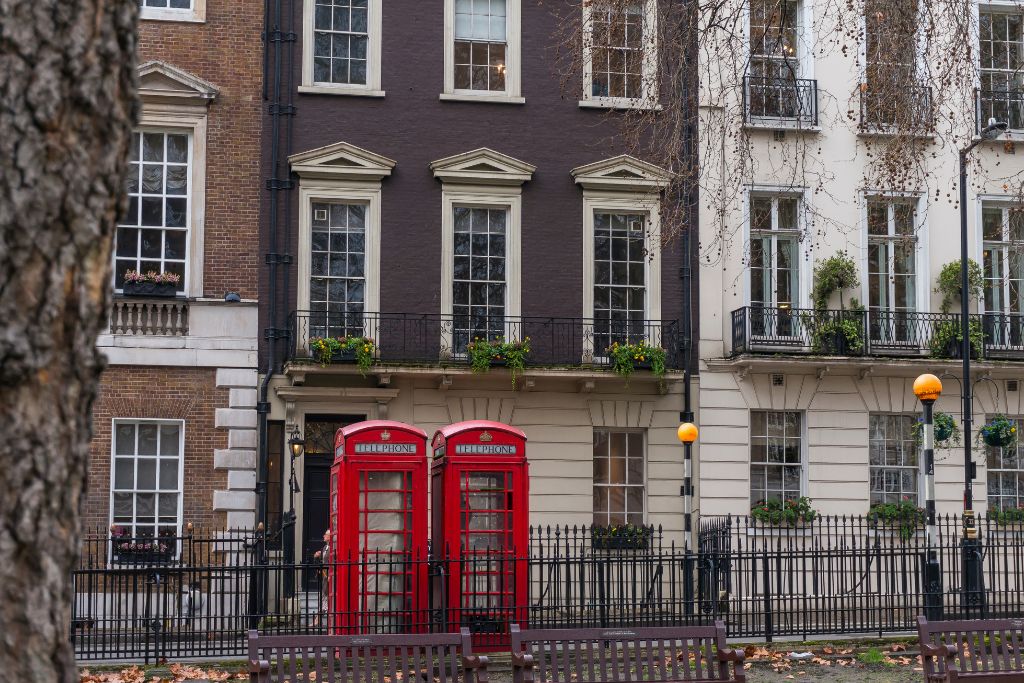
As far as London neighborhoods go, there is none more admired and quietly maligned than Mayfair. Too grand, too expensive, too obvious — and yet to skip it would be to miss some of London’s most delightful experiences. Between Hyde Park and Piccadilly, Oxford Street and Park Lane, lies a compact rectangle of Georgian townhouses, private garden squares, exquisite galleries, and some of the finest hotels, restaurants, and shops in Europe. Bond Street for jewelry and fashion, Mount Street for design and dining, Savile Row for bespoke tailoring, Berkeley Square for a quiet moment — every street has a reason to linger. And right now, Mayfair is mid reinvention, with more luxury hotels opening or planned than at any point since the Second World War. Best for travelers who want London at its most polished — and who want to be present for the most exciting chapter in the neighborhood’s recent history.
Places to Stay
Maybourne operates two London icons: stunning Art Deco Claridge’s, the choice for royalty, heads of state, and celebrities, while The Connaught is quieter and more intimate, with one of London’s most celebrated bars. The Park Lane corridor — The Dorchester, Four Seasons Hotel London at Park Lane, InterContinental London Park Lane, and COMO Metropolitan London — lines the western edge of the neighborhood overlooking Hyde Park, can’t be beat for calming treetop views.
- The Ritz — On Piccadilly and amid a $400 million transformation, still drawing a classic old-guard London crowd for sumptuous guestrooms overlooking Green Park.
- The Athenaeum — Overlooking Green Park on Piccadilly, family-run and quietly beloved by guests who value warmth over spectacle; the Townhouse Residences are particularly well suited to families with bunk beds and kitchens.
- Brown’s Hotel, A Rocco Forte Hotel — Tucked into Albemarle Street, London’s oldest hotel attracts a loyal, well-traveled crowd. Worth splurging on one of the 33 suites, especially the one by designer Paul Smith with mid-century vibes and iconic stripes.
- The Beaumont — On Brown Hart Gardens just off Grosvenor Square, freshly expanded to 101 rooms, Art Deco vibes, subterranean spa, and a masculine energy that pulls the private equity crowd from nearby offices.
- The Twenty Two — Just 31 rooms on Grosvenor Square with maximalist interiors by Natalia Miyar and a private members’ club that attracts a beautiful, well-connected fashion and creative crowd.
- The Chancery Rosewood — On Grosvenor Square in the former U.S. Embassy, restored by Sir David Chipperfield; home to Carbone’s first European outpost among eight restaurants and bars including the Eagle rooftop bar with unobstructed views across London.
Places to Eat & Drink
- Hélène Darroze at The Connaught — Three Michelin stars and one of the great dining rooms in Europe. Book well ahead.
- Gymkhana — One of only a handful of Indian restaurants in the world with two Michelin stars; the intimate 42 Bar is the neighborhood’s best-kept secret.
- Ambassadors Clubhouse — New high-end Punjabi awarded its first Michelin star in 2026. A coveted reservation.
- Arlington — Famed restaurateur Jeremy King’s return to the Le Caprice site; Art Deco interiors, David Bailey portraits, British and European classics, catering to the “It” crowd at surprisingly reasonable prices.
- Scott’s —A London favorite since 1851, the fresh, locally sourced seafood lives up to the hype.
- The Audley Public House — A magnificently restored Victorian pub, one of the great rooms in Mayfair for a proper pint.
- Mount St Restaurant — Exceptional British cooking with $67 million of fine art on the walls; order the lobster pie.
- The Connaught Bar — Regularly named among the world’s finest bars; order the martini and clear your evening.
- Duke’s Bar — A London institution and an absolute must for martini lovers. Expect a line (sometimes a long one), so arrive early or be prepared to wait. The signature martinis are famously generous, expertly mixed tableside, and strong enough that one is almost certainly all you’ll need. Promise.
Places to Shop
- Bond Street — Old Bond Street for art galleries and jewelers; New Bond Street for the global flagships: Chanel, Dior, Hermès, Louis Vuitton, Cartier, Tiffany, and so on.
- Mount Street — The Row, Toteme, and Goyard alongside Jessica McCormack’s diamond townhouse, Creed perfumes, James Purdey & Sons, and some of the city’s best bridal boutiques.
- Burlington Arcade — Built in 1819 and patroled by beadles who form the world’s smallest and oldest private police force; Manolo Blahnik, Globe-Trotter, Roja Parfums, J&M Davidson, and serious independent jewelers.
- Grays Antiques — A labyrinthine market just off Bond Street with over 200 dealers selling everything from ancient coins to Georgian silverware.
Marylebone
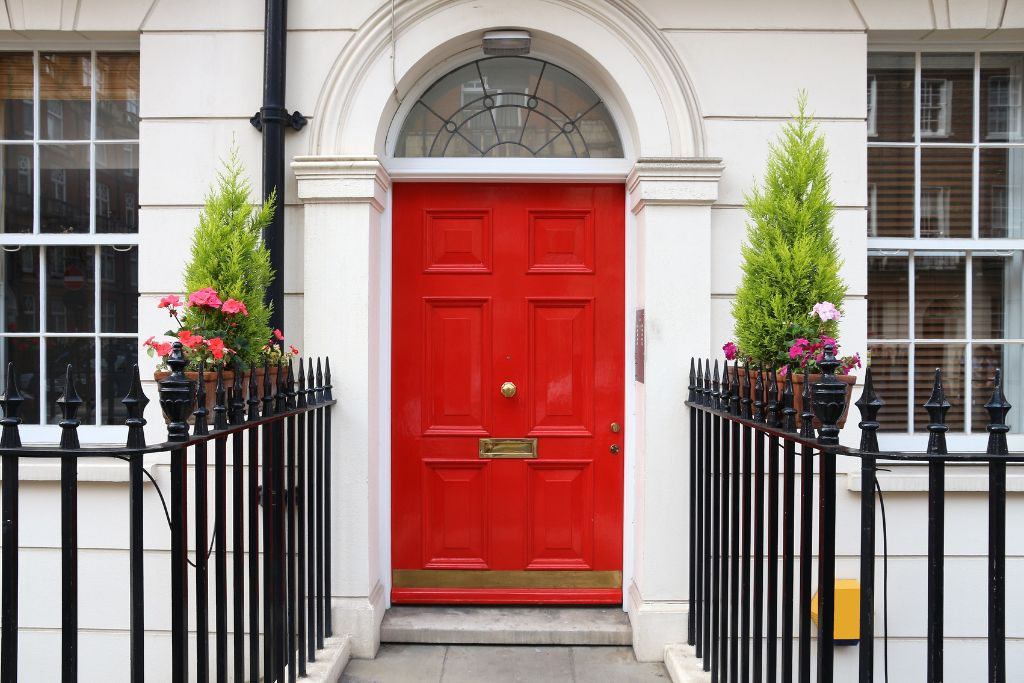
One of London’s most fashionable addresses since the 17th century, Marylebone has counted Lord Byron, The Beatles, Jimi Hendrix, and Madonna among its residents, as well as English literature’s most famous detective — Sherlock Holmes, whose Baker Street address remains one of the most visited in the city. Today it is London’s most central village neighborhood: Georgian streets, independent shopping on Marylebone High Street, the Wallace Collection for art without the crowds, and a Sunday farmers’ market that draws locals who take their cheese seriously. The Chiltern Firehouse — which suffered a severe fire and is due to reopen in 2027 — made the neighborhood a byword for A-list cool, and the Monocle café and bookshop on Chiltern Street has long set the tone for the area’s design-conscious, globe-trotting crowd. Best for travelers who want a central location with village vibes and enough panache for exciting nights.
Places to Stay
- The Langham — London’s original grand hotel on Portland Place, opened 1865; the Palm Court afternoon tea remains one of the city’s great rituals.
- The Marylebone, A Doyle Collection Hotel — A quietly confident five-star in the heart of Marylebone Village with complimentary access to Third Space, one of London’s best health clubs.
- The BoTree — A design-forward newcomer on Marylebone Lane with a conscious luxury ethos and buzzy Italian import LAVO from TAO group.
Places to Eat & Drink
- KOL — The only Michelin-starred Mexican restaurant in the UK and ranked in the World’s 50 Best, Chef Santiago Lastra combines Mexican tradition with British seasonal ingredients. The downstairs mezcal bar is the best reason to linger.
- Trishna — An intimate one Michelin-star spot featuring coastal Indian cuisine; don’t miss the Dorset brown crab and Hariyali bream from the tandoor oven.
- Fischer’s — A slice of old-world Vienna on Marylebone High Street, complete with schnitzels, kaiserschmarrn, and strudel mit schlag.
- Roketsu — A 10-seat kaiseki counter serving immersive Kyoto-inspired seasonal menus. Minimalist by design, extraordinary in practice. Book weeks ahead.
- Les 110 de Taillevent — The London outpost of the Michelin-starred Paris original, the entire point may be the 110 wines available by the glass, but the food is some of the best French in London.
- The Monocle Café — The intimate, design-conscious café from the editors of Monocle magazine. Strong coffee, strong opinions, very Marylebone.
Places to Shop
- Marylebone High Street — One of the best independent shopping streets in central London, with boutiques, the Sunday farmers’ market, and La Fromagerie for cheese, provisions, and one of the neighborhood’s best casual lunches.
- Chiltern Street — The neighborhood’s quieter, more curated shopping stretch; Bella Freud for upscale clothing and lifestyle, Suzannah for British couture favoured by the Princess of Wales, and a string of independent boutiques that reward an hour’s wandering.
- Daunt Books — The most beautiful bookshop in London, housed in a 1910 Edwardian building with oak galleries, skylights, and stained glass.
- Selfridges — Just beyond the neighborhood’s southern edge on Oxford Street, Harrods without as much hustle, ongoing fashion pop-ups, plus a fun food hall and excellent cafes and restaurants.
Bloomsbury
London’s most learned quarter, shaped by the British Museum and the University of London, and long associated with Virginia Woolf, T.S. Eliot, and Charles Dickens. The pretty Georgian squares sit well within central London but Bloomsbury feels collegial, drawing young creatives, academics, and anyone who champions liberal self-expression through art, literature, and fashion. One of the most underrated neighborhoods in the city.
Places to Stay
- Kimpton Fitzroy London — A Bloomsbury landmark since 1900, occupying an entire block on Russell Square steps from the British Museum. Designed by Charles Fitzroy Doll, the architect of the Titanic’s dining room, with Pyrenean marble floors, cathedral ceilings, and the gloriously decadent Fitz’s Bar.
- Rosewood London — A grand 1914 Edwardian pile with a calm courtyard entry off busy High Holborn, serving London’s best pies at Holborn Dining Room, and has the only hotel suite in the world with its own zipcode — basically a private five-bedroom house within the hotel.
- The Bloomsbury, A Doyle Collection Hotel — Sir Edwin Lutyens’ 1928 red brick on Great Russell Street, refreshed by Martin Brudnizki; don’t miss cocktails at the peachy-pink Coral Room bar.
- L’Oscar — 39 rooms in a former Baptist Church on Southampton Row, with Jacques Garcia Baroque interiors, carved fireplaces, and a restaurant serving classic French cuisine.
Places to Eat & Drink
- Noble Rot — A Lamb’s Conduit Street institution with an extraordinary wine list, seasonal cooking, and a members-club atmosphere that somehow welcomes everyone.
- Honey & Co — Vibrant Middle Eastern restaurant; sharing plates, pillowy babka, and a honey and feta cheesecake that has a devoted following
- Café Deco — A deceptively casual, ingredient-led European dining room on a Bloomsbury backstreet.
- St. JOHN at the London Review Bookshop — The pioneering nose-to-tail restaurant’s café outpost next door to the beloved bookshop.
Places to Shop
- Lamb’s Conduit Street — One of London’s most characterful independent shopping streets with boutiques and cafés at a simpler pace the rest of central London rarely allows.
- Gay’s the Word — The UK’s oldest LGBTQ+ bookstore, established 1979, with a passionate following and a robust community events program.
- Pentreath & Hall — A petite boutique off Lamb’s Conduit Street packed with indie tableware, designer stationery, and finds you won’t see anywhere else.
- James Smith & Sons — Open since 1830 with original Victorian fittings intact; handcrafted umbrellas and walking sticks built to last a lifetime.
Fitzrovia
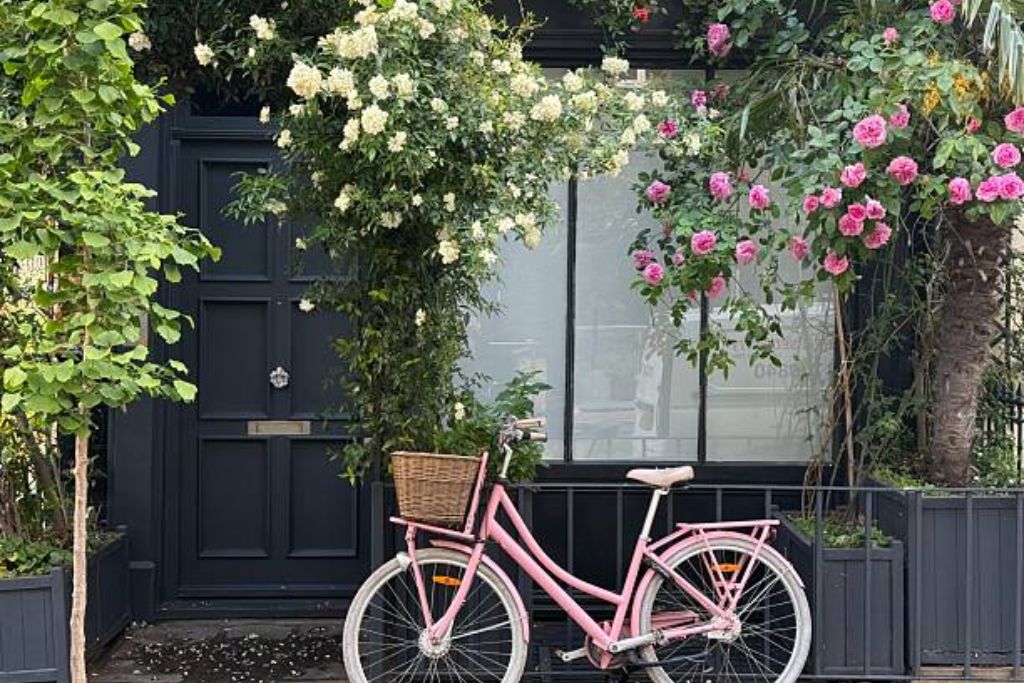
Less village than Marylebone but with more edge, Fitzrovia occupies a pocket of central London long associated with media, advertising, and the creative industries. Charlotte Street is its social spine, dense with restaurants and bars that draw a lively after-work crowd, while the quieter streets around it conceal some of the most interesting independent shops in the city. The BBC’s Broadcasting House sits on its western edge and the BT Tower punctuates its skyline. Best for travelers who want character, convenience, and charm within easy reach of London’s theaters, dining, and nightlife.
Places to Stay
- The Newman — Opened 2026 with chic Art Deco interiors by Lind + Almond, lively all-day Brasserie Angelica, Gambit Bar with chess nights, and a Nordic wellness floor with ice lounge and Finnish sauna.
- Charlotte Street Hotel — Kit Kemp’s Firmdale boutique on Charlotte Street, with the Oscar Bar and a private screening room that makes it a natural home-away-from-home for the film and media crowd.
- The Mandrake — 34 rooms of dramatic excess on Berners Street, with heady nightlife and DJ nights at Waeska Bar, and an A-list clientele drawn by owner Rami Fustok’s art collection and spiritual wellness program.
- Sanderson London — A Morgans Originals icon on Berners Street, transformed by Philippe Starck into a surrealist dream world with the legendary 80-foot Long Bar and a courtyard garden that is one of central London’s best-kept summer secrets.
Places to Eat & Drink
- Akoko — One Michelin star for West African fine dining on Berners Street, where Aji Akokomi’s 10-course tasting menu draws on Nigerian, Ghanaian, and Senegalese traditions in a warm terracotta dining room.
- ROKA Charlotte Street — Japanese robatayaki on Charlotte Street, consistently one of the most reliable scene restaurants in the neighborhood.
- Circolo Popolare — Big Mamma’s exuberant Sicilian trattoria, beloved for its dramatic Instagrammable interiors and a sky-high lemon meringue pie.
- Berners Tavern — Jason Atherton’s grand brasserie in the London Edition hotel, in one of the most beautiful art-filled dining rooms in the city.
Places to Shop
- Lewis Leathers — The legendary Fitzrovia motorcycle jacket maker, supplying rock stars and riders since 1892; every jacket still cut and sewn in London.
- Rivet & Hide — One of the world’s best raw denim shops, with an edit of Japanese and American selvedge that rewards the serious denim obsessive.
- Taylor’s Buttons — A former home of Charles Dickens on Berners Street, now crammed floor to ceiling with every button imaginable, from hand-covered fabric wedding buttons to vintage upholstery finds.
Knightsbridge & Belgravia
Two of London’s most prestigious zipcodes, side by side but distinct in character. Knightsbridge is commercial and confident — Harrods, Harvey Nichols, and Sloane Street’s flagship boutiques. Belgravia, immediately to the south and east, is quieter and more residential, defined by grand Regency townhouses with their white stucco facades, garden squares, home to embassies, old money, and the kind of resident who prefers discretion over display. Together they form the most concentrated luxury corridor in London. Best for travelers who want top-tier hotels, exceptional dining, and shopping — lots of shopping.
Places to Stay
- The Peninsula London — A new build opened 2023 with massive picture windows and park views, 190 rooms designed by Peter Marino, the two Michelin-starred Brooklands by Claude Bosi on the rooftop, spa and a bougie retail arcade.
- Mandarin Oriental Hyde Park — A 140-year-old Knightsbridge landmark on Brompton Road, home to Dinner by Heston Blumenthal, Japanese izakaya The Aubrey, and a back entrance that opens directly onto Hyde Park.
- The Berkeley — Maybourne’s Knightsbridge outpost on Wilton Place, with Cedric Grolet’s Counter patisserie, La Môme brasserie, and a rooftop pool that is one of London’s great summer secrets.
- The Emory — Also part of Maybourne, London’s first all-suite hotel, opened 2024, a sleek glass new build with Hyde Park views, suites by André Fu and Patricia Urquiola, Jean-Georges Vongerichten’s restaurant, and Surrenne — a four-floor wellness club with a 70-foot pool and London’s most advanced spa program.
- The Lanesborough — A Regency-era landmark on Hyde Park Corner with 93 rooms, full butler service, and Céleste restaurant; part of Oetker Hotels.
- COMO The Halkin — Just 41 rooms on a quiet Belgravia street, with Italian interiors, COMO Shambhala wellness, and a distinctive afternoon tea at The Halkin Bar that focuses on nutritional elements and eschews refined sugars.
Places to Eat & Drink
- Brooklands by Claude Bosi — Two Michelin stars on the Peninsula’s rooftop, where a scale model of Concorde hangs from the ceiling and Claude Bosi’s British-French cooking matches the drama of the room.
- Amaya — One Michelin star for Indian tapas in the secluded Halkin Arcade, where an open kitchen of tandoor, tawa skillets, and sigri grills makes for entertaining dining.
- Pétrus — Gordon Ramsay’s one Michelin-starred Belgravia dining room on Kinnerton Street, centered around a spectacular circular wine store housing over 2,000 bottles.
- Cedric Grolet at The Berkeley — The celebrated pastry chef’s London counter; the trompe l’oeil fruit pastries, and unlike Paris there is rarely a line.
Places to Shop
- Harrods — Eight floors on Brompton Road, London’s most iconic store; the food halls alone justify the visit.
- Harvey Nichols — More fashion-forward than Harrods and considerably less overwhelming; the fifth-floor food market is one of Knightsbridge’s best lunch stops and shopping breaks.
- Sloane Street — The luxury fashion corridor connecting Knightsbridge to Sloane Square; Louis Vuitton, Chanel, Hermès, Prada, and Jimmy Choo among the flagships.
- Motcomb Street — Belgravia’s boutique high street, independent jewelers, Coco de Mer lingerie, and fun accessories at egg, to name a few.
- Elizabeth Street — The village heart of Belgravia; Jo Loves, Les Senteurs, and the famed Peggy Porschen pink-fronted bakery.
Soho & Covent Garden
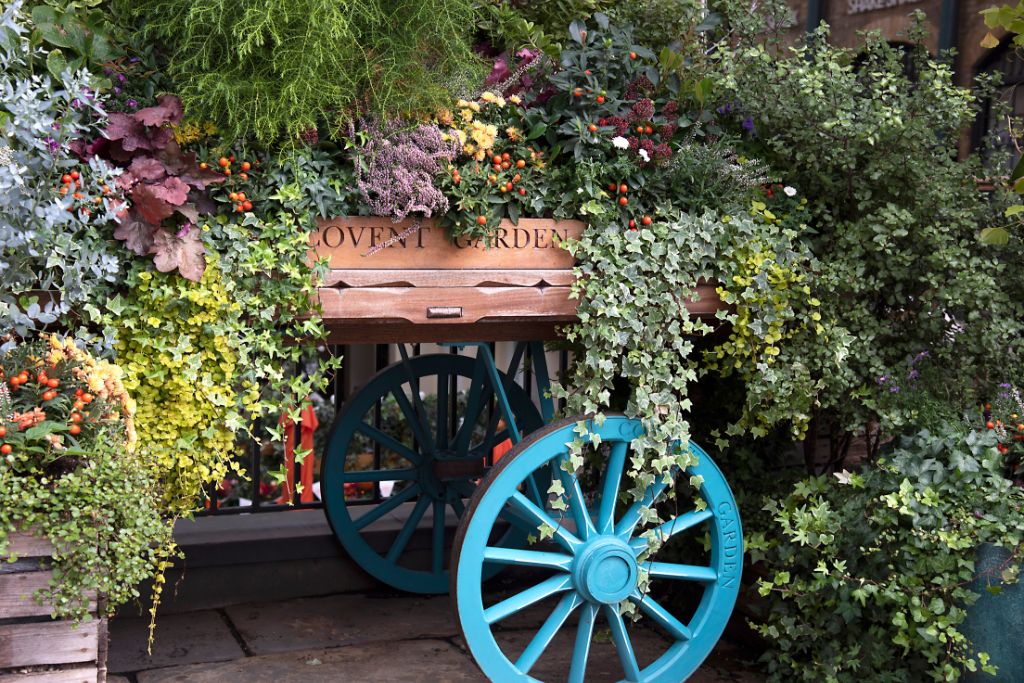
London’s lively entertainment district and the city’s dining and nightlife heartland. Soho is dense, late-night, and unapologetically itself — a square mile of independent restaurants, members’ clubs, jazz bars, and streets that have absorbed every cultural movement since the 1950s. Covent Garden is more theatrical, anchored by the historic piazza, the Royal Opera House, and some of the best people-watching in the city. Together they form the West End’s beating heart, within walking distance of theatres, galleries, and practically everything else. Best for travelers who want to be in the middle of everything, eat and drink exceptionally well, and stay out late without planning ahead.
Places to Stay
- The Savoy — London’s most storied hotel on the Strand, opened 1889, with Thames-facing suites, Kaspar’s seafood bar, the American Bar for classic martinis, and the newly reopened Simpson’s on the Strand.
- St Clement Hotel — Soho House founder Nick Jones’ first independent hotel; 90 rooms with Thames views, Café Clement from an ex-River Café chef, Bobbi’s Bar until 3am, and rooftop restaurant Lunette by Florence Knight opening September. Jones describes it as “what you’d get if Claridge’s and the Chiltern Firehouse had a baby.”
- NoMad London — The former Bow Street Magistrates’ Court reimagined as a sexy 91-room hotel with 1,600 artworks, Side Hustle cocktail bar, and an ideal location directly across from the Royal Opera House.
- Ham Yard Hotel — Kit Kemp’s most ambitious Firmdale property, built around a private courtyard in the heart of Soho, with a bowling alley, buzzy restaurant, and rooftop terrace.
- Broadwick Soho — 57 maximalist rooms by Martin Brudnizki, with antique-brass elephant minibars, Dear Jackie Italian restaurant, and Flute rooftop bar with panoramic Soho views.
- One Aldwych — A chic independent B-corp property with sustainability ethos, calming interiors, caring staff, and a much-loved Charlie and the Chocolate Factory-themed afternoon tea.
- Covent Garden Hotel — Firmdale’s theater-district boutique on Monmouth Street, beloved for its drawing room, Brasserie Max, and central location.
Places to Eat & Drink
- Quo Vadis — A Dean Street institution since 1926, where Jeremy Lee’s seasonal British cooking, perfect martinis, and smoked eel sandwiches draw a crowd that has been coming for decades and has no intention of stopping.
- Simpson’s in the Strand — Reopened March 2026 under Jeremy King after a six-year closure; one of London’s oldest restaurants (est. 1828), beloved by Dickens, Wilde, and Churchill, with the Grand Divan’s domed trolleys and tableside carving service fully restored.
- Mountain — Tomos Parry’s Soho follow-up to Brat, one Michelin star, coal-fired Basque-inspired cooking on Beak Street with an on-site bakery.
- Barrafina — Michelin-starred Spanish tapas on Dean Street, no reservations, counter only; the best reason to arrive early and order everything on the blackboard.
- Berenjak — Persian kebab house from the JKS group on Romilly Street, where the charcoal grill and the koobideh (kabobs) are the reasons the line rarely dies down.
- The Barbary — No reservations, counter only, North African-inspired in Neal’s Yard, convivial dining around a zinc topped bar; newer, larger location in Notting Hill but the original is best.
- Kiln — Moody Thai charcoal grill on Brewer Street with no bookings and a dozen counter stools; the guinea fowl jungle curry is the dish that made its reputation.
- Ronnie Scott’s — The legendary Frith Street jazz club since 1959; late nights, serious musicians, and a first drink that inevitably becomes several.
Places to Shop
- Seven Dials — Seven cobblestoned streets anchored by the Seven Dials Monument; 90 stores ranging from independent boutiques to international flagships.
- Floral Street — Covent Garden’s most rewarding shopping detour; Paul Smith’s original store, Diptyque, Alex Monroe jewellery, and Kent & Curwen for sharp British menswear.
- Neal’s Yard — London’s most colorful courtyard; check out Neal’s Yard Dairy for British farmhouse cheese and Neal’s Yard Remedies for organic beauty.
- Stanfords — The world’s oldest map and travel bookshop on Long Acre.
The City
London’s original square mile, built on the bones of Roman Londinium and still defined by global finance. The Gherkin, the Walkie-Talkie, and the Lloyd’s Building (known as the inside-out building for its exposed structure) punctuate a skyline rebuilt over two millennia. The Tower of London (seeing the Crown Jewels is a must), some of Christopher Wren’s 51 post-1666 Fire churches, including St Paul’s Cathedral, and Roman walls reward the curious at every turn. The London Museum opens in the Victorian General Market buildings at West Smithfield later in 2026, one of Europe’s largest and most anticipated cultural projects. Best for business travelers, history enthusiasts, and surprisingly great for families who want a central base in a luxury hotel with two thousand years of sightseeing on the doorstep.
Places to Stay
- Pan Pacific London — Modern glass tower with floor-to-ceiling city views, a 60-foot infinity pool, and a thoughtful family program including the UK’s first Bonpoint Beauty children’s spa experiences and a dedicated Singa Cub Club. Also one of the most accessible luxury hotels in the city.
- Four Seasons Hotel London at Tower Bridge — A Beaux-Arts former Port of London Authority headquarters at Ten Trinity Square, with a magnificent glass-domed Rotunda lobby, Corinthian columns, Mei Ume restaurant for Chinese and Japanese cuisine, and a subterranean spa pool.
- Andaz London Liverpool Street — The former Great Eastern Hotel of 1884, with grand Victorian fireplaces, a Terence Conran suite, and a secret Freemasons’ temple accessed via a winding staircase that most guests never find.
- Sir Devonshire Square — Opened September 2025 in a former East India Tea Company warehouse of 1768 on the City/Shoreditch border, with 81 rooms, hand-crafted ceramics throughout, and The Cover private members’ club.
Places to Eat & Drink
- St. JOHN Smithfield — Fergus Henderson’s Michelin-starred nose-to-tail pioneer since 1994; roast bone marrow with parsley salad, perfectly made martinis at the bar, and the most influential restaurant in London’s recent history.
- Manteca — Italian-inspired, open-fire cooking on Curtain Road with hand-rolled pasta, wood-roasted fish, and an in-house salumeria; always busy, always worth it.
- Luca — From the team behind The Clove Club; British seasonal ingredients cooked through an Italian lens, with a stunning covered courtyard and one Michelin star.
- Moro — Sam and Sam Clark’s Moorish kitchen on Exmouth Market, open since 1997 and still one of the most vital restaurants in London; wood-roasted everything, charcoal-grilled lamb, and a zinc-topped bar that fills up fast.
- Ottolenghi Spitalfields — Famed chef Yotam Ottolenghi’s largest London restaurant, with candlelit tables, a buzzing cocktail bar, and a counter of extraordinary Middle Eastern-inspired dishes to eat in or take away.
Places to Shop
- Spitalfields Market — Open daily with independent fashion, art, food stalls, and a Sunday antiques market that rewards an early start.
- Leadenhall Market — A breathtaking Victorian covered arcade built in 1881 by the architect of Tower Bridge, used as a filming location for Diagon Alley in Harry Potter; a Vintage Furniture and Flea Market at the end of each month.
- Exmouth Market — Clerkenwell’s pedestrianized street market, known for independent food traders, and boutiques.
Shoreditch
London’s creative heartland and its most unapologetically fun neighborhood. What started as a cheap place for artists and musicians has evolved into one of the most concentrated dining and nightlife districts in the city, without entirely losing the edge that made it interesting in the first place. Brick Lane, Redchurch Street, and the streets around Old Street and Hoxton Square define its character — as do the markets and restaurants of neighboring Dalston and London Fields, which have absorbed much of the same creative energy. Street art, vintage markets, world-class restaurants in deliberately unpretentious rooms, and some of the best clubs in Europe within walking distance of each other. Best for travelers who want serious dining, serious nightlife — basically young hipsters and those who want to be.
Places to Stay
- One Hundred Shoreditch — An independent 258-room hotel on Shoreditch High Street with six restaurants and bars, the buzzy Seed Library cocktail bar by Mr Lyan, and Kaso on the rooftop.
- The Hoxton Shoreditch — The original Hoxton, opened 2006, with exposed brickwork, roaring fires, and the relaxed energy that spawned a global hotel brand.
- Town Hall Hotel — A former Edwardian town hall in Bethnal Green with original Art Deco interiors, a pool, and The Clove Club in residence.
- Aethos London Shoreditch — Opened October 2025 in the former Nobu Hotel building, with terracotta interiors, Mitsu izakaya with DJ sets, and a community members’ club that caters to young creatives.
- Batty Langley’s — Twenty-nine Georgian rooms in a Spitalfields townhouse with four-poster beds, roll-top baths, and breakfast served in bed; the antidote to everything Shoreditch usually stands for.
Places to Eat & Drink
- The Clove Club — Two Michelin stars in Shoreditch Town Hall; the house martini and seasonal British tasting menu are non-negotiable.
- Brat — One Michelin star for wood-fired Basque-Welsh cooking on Redchurch Street.
- Rochelle Canteen — Hidden behind an unmarked gate in a former school playground; Margot Henderson’s seasonal British cooking is held up by almost every chef in London as one of the best places to eat in the city.
- Café Cecilia — Chef Max Rocha’s canalside restaurant in London Fields, named after his grandmother and inspired by his Irish mother’s home cooking; whitewashed brick, an open kitchen, a fashion crowd (his sister is designer Simone Rocha), and seasonal plates that marry River Café generosity with St. JOHN simplicity. The Guinness bread is a must.
- Smoking Goat — Thai barbecue on Redchurch Street; no reservations, always packed, the chilli fish sauce chicken wings are the reason.
- Brick Lane Beigel Bake — A London institution since 1977; open 24 hours for salt beef bagels, smoked salmon, and Jewish baked goods straight from the oven. Lots of after-clubbers in the wee hours.
- Dusty Knuckle — A cult social enterprise bakery in a Dalston car park with legendary potato sourdough and sandwiches that justify the journey.
- Nightjar — Pre-Prohibition cocktail bar on City Road with live jazz at weekends; book well ahead.
- XOYO — Shoreditch’s most celebrated club with a Void sound system, cutting-edge house and techno residencies, and Saturday Pleasurehood nights that are the stuff of East London legend.
- Fabric — The Farringdon institution with a bodysonic dancefloor that vibrates to the music and a Saturday DJ residency that has run since 1999.
Places to Shop
- Brick Lane — The Sunday market is one of London’s great experiences; vintage clothing, street food, and independent traders.
- Redchurch Street — Labour and Wait for British homewares, Present for menswear, and a density of independent boutiques that rewards wandering.
- Columbia Road Flower Market — Sunday mornings only; one of London’s most photographed markets in full bloom.
- Princess May Car Boot Sale — A Dalston school playground transformed every weekend into one of East London’s best vintage finds; stylists empty their wardrobes here and early birds take the prizes.
South Bank & Southwark
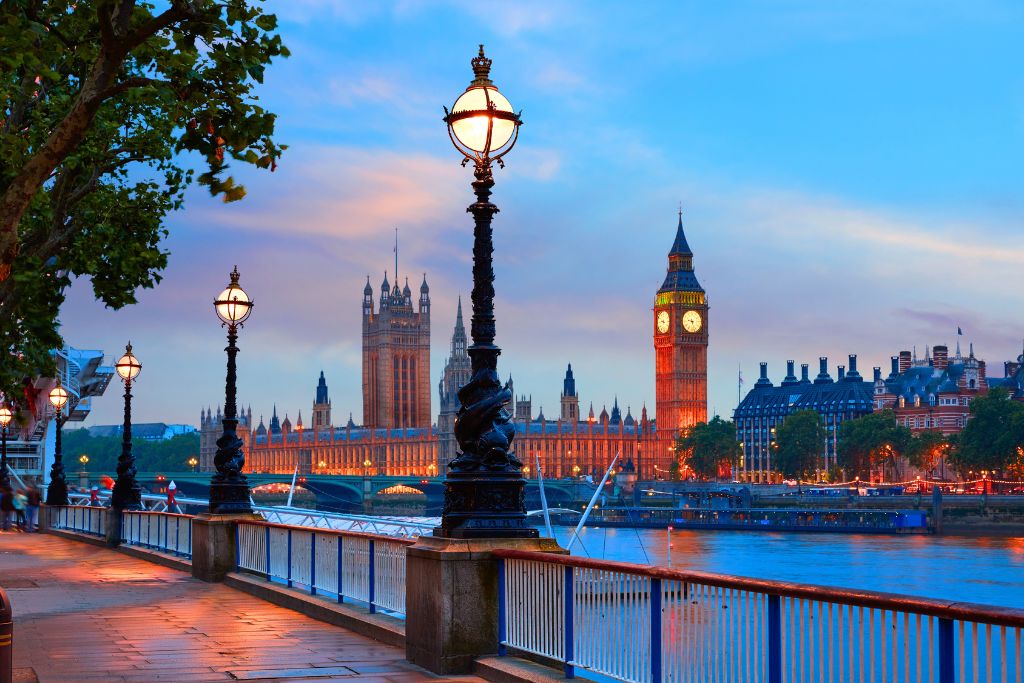
London’s cultural mile, running along the Thames from the London Eye to Tower Bridge and packing more world-class institutions per square mile than anywhere else in the city. The Tate Modern, Shakespeare’s Globe, the National Theatre, the BFI, and the Southbank Centre all sit within walking distance of each other along a riverside path that is one of London’s great walks in any weather. Borough Market — trading in some form since the 13th century — anchors the neighborhood’s food culture, and the Shard punctuates its skyline. Best for culture lovers, families, first-time visitors, and anyone who prefers to cover a lot of ground on foot.
Places to Stay
- Shangri-La The Shard — Occupying floors 34 to 52 of Renzo Piano’s glass tower, with floor-to-ceiling views from every room including the bathrooms, and a 52nd-floor infinity pool.
- Sea Containers London — A South Bank landmark whose interiors by Tom Dixon take their inspiration from the golden age of transatlantic travel; a dramatic copper hull wall sweeps through the lobby, Thames-facing rooms, and the Rumpus Room rooftop bar with 360-degree views.
- Bankside Hotel, Autograph Collection — Set between Tate Modern and Shakespeare’s Globe on the riverfront; eco-conscious, independently owned, and popular with a younger international crowd.
Places to Eat & Drink
- Story — Two Michelin stars and one of London’s most theatrical dining experiences; the nine-course tasting menu includes the famous beef candle, which you actually light.
- OMA — One Michelin star for open-fire Greek cooking at Borough Market; downstairs AGORA serves flatbreads, skewers, and frozen margaritas without bookings.
- Padella — The original Borough Market pasta bar, hand-rolling fresh pasta every morning; no reservations, join the virtual queue and wander the market while you wait.
- José — José Pizarro’s tiny sherry and tapas bar on Bermondsey Street; daily-changing menu, standing room only, one of the best Spanish restaurants in London.
- Borough Market — Trading in some form since the 13th century; the Saturday market is the main event, with the best British and international produce, street food, and a crowd that takes its cheese very seriously.
- Maltby Street Market — Saturday mornings under the railway arches of Ropewalk; smaller and more local than Borough, with some of London’s best street food producers.
- Bread Ahead — Borough Market’s beloved bakery, famous for its doughnuts and sourdough; the half and full-day baking school classes are perfect for British Bake-Off enthusiasts.
Places to Shop
- Bermondsey Street — The neighborhood’s most interesting independent shopping strip; fashion, antiques, galleries, and the Friday Bermondsey Antique Market for curious collectors.
- White Cube Bermondsey — World-class contemporary art across three vast modernist exhibition spaces; always something interesting on.
Whitehall & Westminster
Whitehall has long been the address of power — Horse Guards, Downing Street, the Cabinet War Rooms, and the Houses of Parliament all within the same short walk. What’s changed is that the world’s most significant hotel brands have noticed. The Corinthia set the trend when it opened in 2011 as a conversion of the Ministry of Defence headquarters, and over the past 15 years building after building has followed: the former Metropolitan Police headquarters is now a Hyatt, the Old War Office is now Raffles, and Admiralty Arch — Churchill’s office, Ian Fleming’s inspiration for Bond — is about to become a Waldorf Astoria. Add Trafalgar Square, the National Gallery, the West End theaters, and the Thames, and Whitehall has quietly become one of the most compelling places to stay in London. Best for travelers who want best-in-class luxury with a big helping of history and the arts.
Places to Stay
- Corinthia London — The 1885 landmark on Whitehall Place that set the stage for the neighborhood’s hotel transformation; Tom Kerridge’s first London restaurant, afternoon tea beneath a 1,001-crystal Baccarat chandelier, Velvet cocktail bar by Salvatore Calabrese, and renowned ESPA spa set across four floors.
- Raffles London at The OWO — The Old War Office, where Churchill plotted strategy and Fleming drew inspiration for James Bond, transformed by Thierry Despont into 120 rooms with a Guerlain spa and suites named for Churchill and Haldane.
- Great Scotland Yard Hotel, Unbound Collection by Hyatt — The former Metropolitan Police headquarters, with 152 rooms, police-themed interiors, fireplaces in the rooms, and Ekstedt at The Yard in residence.
- Waldorf Astoria London Admiralty Arch — Churchill’s former office and Fleming’s inspiration, soon to become a Waldorf Astoria with restaurants by Clare Smyth and Daniel Boulud; the most anticipated hotel opening in London of 2026.
Places to Eat & Drink
- Mauro Colagreco at Raffles London at The OWO — One Michelin star for the French-Argentine chef’s Whitehall dining room, focusing on seasonal British ingredients through a Mediterranean lens.
- Ekstedt at The Yard — Niklas Ekstedt’s Nordic open-fire cooking at Great Scotland Yard; everything cooked over wood fire, hay, or juniper embers, making it one of the most distinctive restaurants in central London.
- Kerridge’s Bar and Grill — Tom Kerridge’s first London restaurant at the Corinthia, serving hearty British classics with the precision that earned him two Michelin stars in Marlow; the triple-cooked chips are non-negotiable.
- Mezzogiorno by Francesco Mazzei — Calabrian-born Mazzei’s southern Italian restaurant at the Corinthia, with bold ‘nduja and bergamot flavours and generous pasta-forward dishes designed for sharing.
- Locatelli at the National Gallery — Giorgio Locatelli’s all-day Italian restaurant in the Sainsbury Wing, with Paula Rego’s monumental 10-metre artwork on the wall and Bar Giorgio for espresso and maritozzi downstairs.
Places to Shop
Whitehall is not a shopping destination and doesn’t pretend to be. Having said that, the National Gallery shop is one of the best museum shops in London, and the short walk to Covent Garden puts Seven Dials and Floral Street within easy reach.
Notting Hill & Holland Park
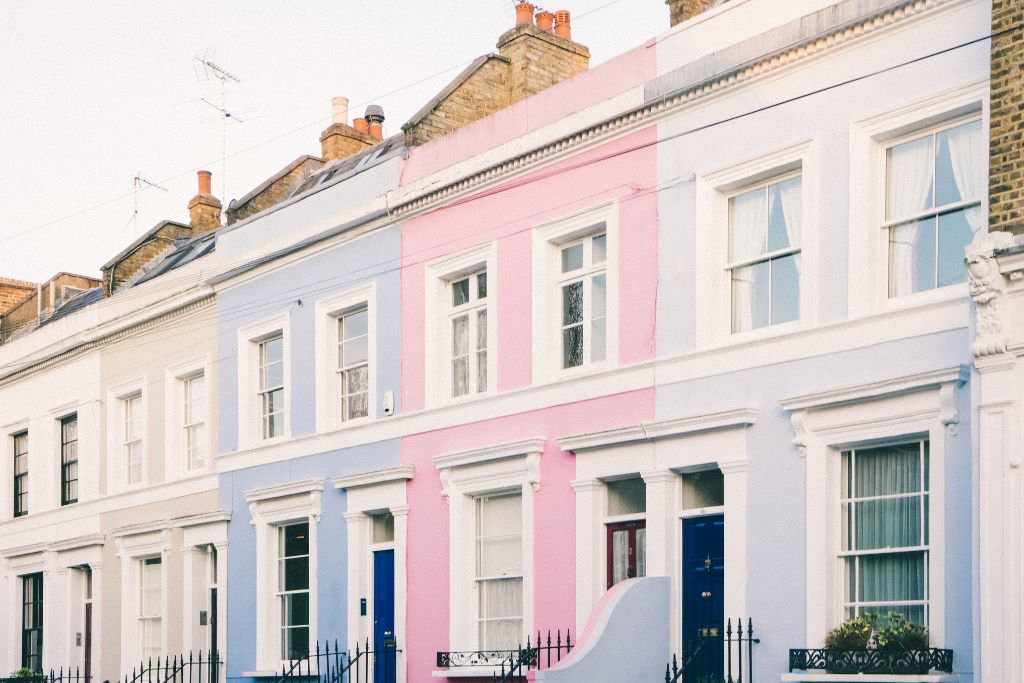
London’s most cinematic neighborhood — and one of its best for eating. The pastel-colored houses surrounding pretty communal gardens, Portobello Road antiques market, and the annual Carnival have long given Notting Hill its global identity, but the dining scene is what brings Londoners here now. Two three-Michelin-starred restaurants, a clutch of one-starred spots, and some of the best gastropubs in the city make this one of the most rewarding neighborhoods in London to eat in. Holland Park, just to the south, offers one of London’s most beautiful and least crowded green spaces — the formal gardens, peacocks, and the calming Kyoto Garden, an authentic Japanese garden gifted from the city of Kyoto, are worth an afternoon. Six Senses has brought acclaimed wellness to the nearby Whiteley development, and the independent boutiques on Westbourne Grove and Portobello Road remain some of the best shopping in west London. Best for travelers who want a residential feel, exceptional dining, and pretty streets that actually look like the movies.
Places to Stay
- Six Senses London — Opened March 2026 in the restored Whiteley building on Queensway, with 109 rooms, a biohacking spa with magnesium pool and cryo facilities, and the brand’s first private members’ club.
- The Laslett — Five converted townhouses on Pembridge Gardens with a library stocked by independent bookshop Lutyens & Rubinstein and a neighborhood feel that makes it the closest thing in Notting Hill to staying in a private home.
- The Portobello Hotel — 21 rooms in a converted neo-classical townhouse, founded 1971, the original rock-and-roll hotel of Notting Hill; Johnny Depp and Kate Moss once shared the round bed in the famous cabin room.
Places to Eat & Drink
- CORE by Clare Smyth — Three Michelin stars from the only female chef in the UK to hold them; the potato and roe and the core apple are signature dishes. Book well ahead.
- The Ledbury — Three Michelin stars for Brett Graham’s tasting menu built around whole animals ethically reared on his own Lake District pastures; one of the most celebrated restaurants in the UK.
- Dove — Jackson Boxer’s elevated comfort food on Kensington Park Road; the burger — dry-aged beef, gorgonzola dolce, Champagne-butter onion lyonnaise in a fermented potato bun — is one of the most talked-about dishes in Notting Hill. Only 10 made per service.
- Gold — A vibey modern European neighborhood restaurant and late-night bar in the heart of Portobello Road.
- The Cow — Tom Conran’s legendary Westbourne Park Road pub, beloved for Guinness, oysters, and an upstairs dining room where Tom Cruise and David Beckham have been spotted.
- The Pelican — One of the prettiest pubs in London with excellent pies, a favorite of locals; book ahead or expect long lines.
- Permit Room — Dishoom’s all-day Bombay-inspired bar-café on Portobello Road with two hotel rooms above — possibly the smallest hotel in London.
- Granger & Co — Bill Granger’s Australian all-day dining on Westbourne Grove.
- Julie’s — A Holland Park institution since 1969, Paul McCartney, Kate Moss, and Princess Diana were regulars. Relaunched a few years ago as a classic neighbourhood brasserie and it is back drawing well-heeled locals and the occasional celebrity.
- Supermarket of Dreams — A luxury food shop on Holland Park Avenue by day that transforms into an intimate izakaya sushi restaurant by night; the Saturday Tuna Fight — where chefs butcher whole tuna tableside, one of the most extraordinary dining experiences in west London.
- Casa Cruz — Argentine decadence meets Mediterranean warmth behind polished copper doors on Clarendon Road; mirrors, a roof terrace, and a fashionable west London crowd that has been coming for a decade.
Places to Shop
- Portobello Road Market — The world’s largest antiques market on Saturdays; vintage clothing, antique dealers, street food, and a crowd that has been coming for decades.
- Golborne Road — An eclectic overflow of cool shops, restaurants, and boutiques at the top end of Portobello; shop for antiques, luxury vintage, and designer Rejina Pyo’s new shop and gallery. Don’t miss Layla for pastries and unique sandwiches, Canteen for produce-led Italian, and Straker’s from the TikTok-famous chef featuring British fare.
- Westbourne Grove — Notting Hill’s chic shopping strip; Daylesford for organic food and homeware, Sézane for French-girl fashion, Reformation for sustainable womenswear, and Ledbury Road just off it for more indie shops like shoe designer Penelope Chilvers.
- The Notting Hill Bookshop — The real bookshop that inspired the Travel Bookshop in the 1999 film; still charming, still worth visiting, with a blue plaque outside to prove it.
- Books for Cooks — A Blenheim Crescent institution with the world’s best selection of cookery books and a tiny test kitchen at the back where recipes are cooked and served at lunchtime.
Chelsea
Few neighborhoods in London carry their history as lightly as Chelsea. Running from the King’s Road — where Mary Quant invented the miniskirt and punk was born at Vivienne Westwood’s shop — down to the Thames Embankment and the candy-colored Albert Bridge, it has always attracted artists, aristocrats, and royalty in equal measure. Sloane Square gave its name to the Sloane Ranger, and Princess Diana was the archetype’s most famous face. That royal-adjacent ease still defines the streets today: immaculate Georgian townhouses, private gardens behind iron gates, and a quiet confidence that no amount of money alone can manufacture. Every May the Chelsea Flower Show transforms the Royal Hospital grounds and surrounding streets into the world’s most celebrated garden. Best for travelers who want beautiful streets and a neighborhood that has been quietly, effortlessly stylish for centuries.
Places to Stay
- The Cadogan, A Belmond Hotel — Sloane Street with 54 rooms, 400 pieces of original art, access to the private Cadogan Place gardens, and the Oscar Suite — named for Oscar Wilde, who was famously arrested here.
- Beaverbrook Town House — Two restored Georgian townhouses on Sloane Street with 14 suites each named after a celebrated London theatre, the Fuji Grill Japanese restaurant with omakase sushi bar, and the Art Deco-inspired Sir Frank’s Bar; the London outpost of Surrey’s beloved Beaverbrook estate.
- At Sloane — London’s answer to Paris’ Hotel Costes, designed by François-Joseph Graf with 30 rooms, a sixth-floor dining room bathed in colorful light from stained glass windows, and a secret bar open until late.
- 11 Cadogan Gardens — Four Victorian townhouses built by Lord Chelsea with 56 individually designed rooms, access to the private Cadogan Gardens, and Hans’ Bar and Grill for a proper Chelsea lunch.
Places to Eat & Drink
- Restaurant Gordon Ramsay — Three Michelin stars on Royal Hospital Road since 2001; the Carte Blanche menu remains one of the great fine dining experiences in London.
- Rabbit — The Gladwin Brothers’ farm-to-fork King’s Road restaurant, sourcing from the family’s Sussex estate; sharing plates, English wines, and a crowd that has made it a Chelsea institution.
- The Pig’s Ear — The Gladwin Brothers’ Chelsea pub on Old Church Street with a tight British-seasonal menu from Nutbourne estate, a proper Sunday roast, and Nutbourne’s own English sparkling wine.
- The Sea The Sea — Fish shop and deli on Pavilion Road by day, intimate seafood bar by evening; daily changing small plates, oysters, and caviar from some of the finest suppliers in the country.
- Bluebird — A Chelsea institution on the King’s Road in a stunning 1920s former garage; all-day dining, a terrace, and reliably good brasserie cooking.
- River Café — Ruthie Rogers’ legendary Italian on the Thames at Hammersmith (technically not Chelsea), where a generation of Britain’s best chefs trained including Jamie Oliver; still the standard for Italian cooking in London after 35 years. Booking essential, or try the newly added River Cafe Café for walk-ins and a more casual menu.
Places to Shop
- King’s Road — The spiritual home of British fashion, from Mary Quant to Vivienne Westwood; still one of the best shopping streets in London, with independents alongside branded flagships.
- Pavilion Road — London’s longest pedestrian mews behind Sloane Street; artisan bakeries, the Cheese Truck, a butcher, fishmonger, and boutiques in a setting that feels more country village than city.
- Saatchi Gallery — Free entry, consistently excellent contemporary art in a 70,000 square-foot former military headquarters in Duke of York Square.
- Chelsea Physic Garden — Founded in 1673 by the Society of Apothecaries, with 5,000 plant species on four acres beside the Thames; one of London’s most beautiful and least visited secrets.
Other Neighborhoods to Note
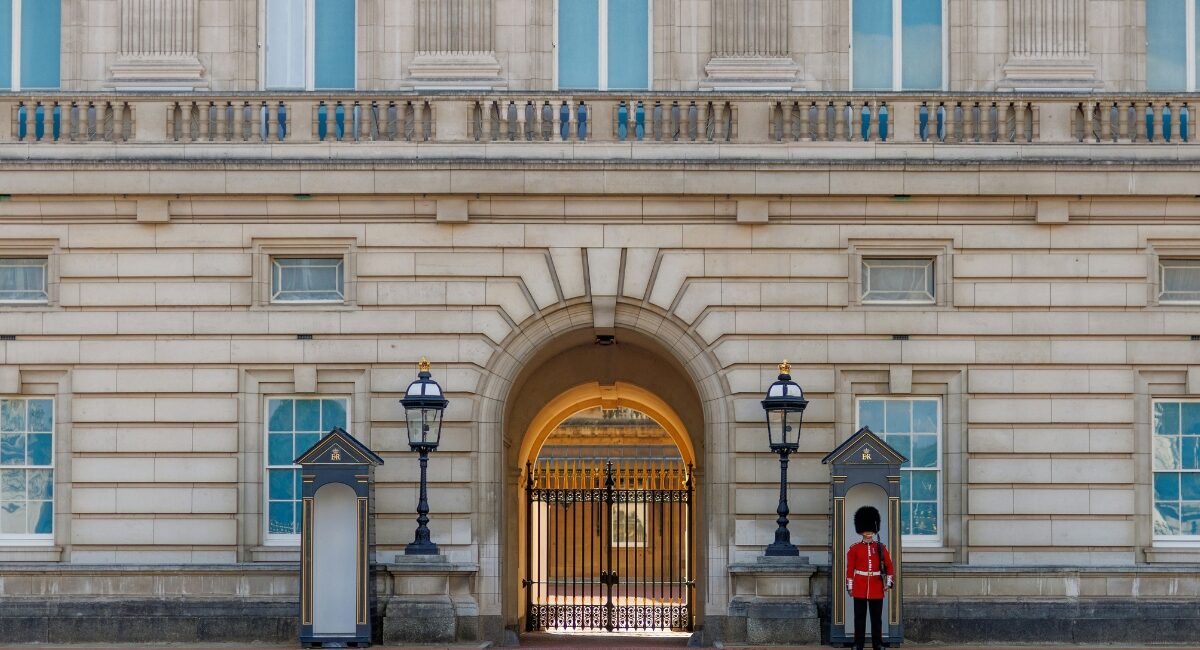
Pimlico and Victoria sit just south of Westminster, in the shadow of Big Ben and the Houses of Parliament, and are more often passed through than stayed in — which is exactly what makes them worth considering. Tate Britain anchors the cultural offer, A. Wong on Wilton Road holds two Michelin stars and the distinction of being the first Chinese restaurant outside Asia to earn them, and Market Halls Victoria is like a fun upscale food court. For hotels, The Rubens at the Palace on Buckingham Palace Road is the closest hotel to Buckingham Palace, overlooking the Royal Mews; its ultra-discreet sister property Hotel 41 next door is residents only and consistently rated among the best small hotels in London. Best for travelers who want to be close to Westminster and Belgravia at slightly more affordable rates.
Islington is North London’s most liveable neighborhood, with Upper Street as its spine and a dining and antiques scene that draws Londoners from across the city. Trullo on St Paul’s Road has been turning out exceptional hand-rolled pasta and seasonal Italian cooking since 2010. Camden Passage — a pedestrian backstreet just off Upper Street — ranks alongside Portobello as one of London’s finest antique hunting grounds, with vintage stalls, independent shops, and a Viennese café. The original Ottolenghi on Upper Street is where it all began.
Primrose Hill is what Hampstead would be if it was slightly younger and more creative, with a village high street of independent boutiques and the hill itself offering one of the best views of the London skyline, especially at sunset. Lemonia on Regent’s Park Road has been the neighborhood’s beloved Greek Cypriot institution for decades.
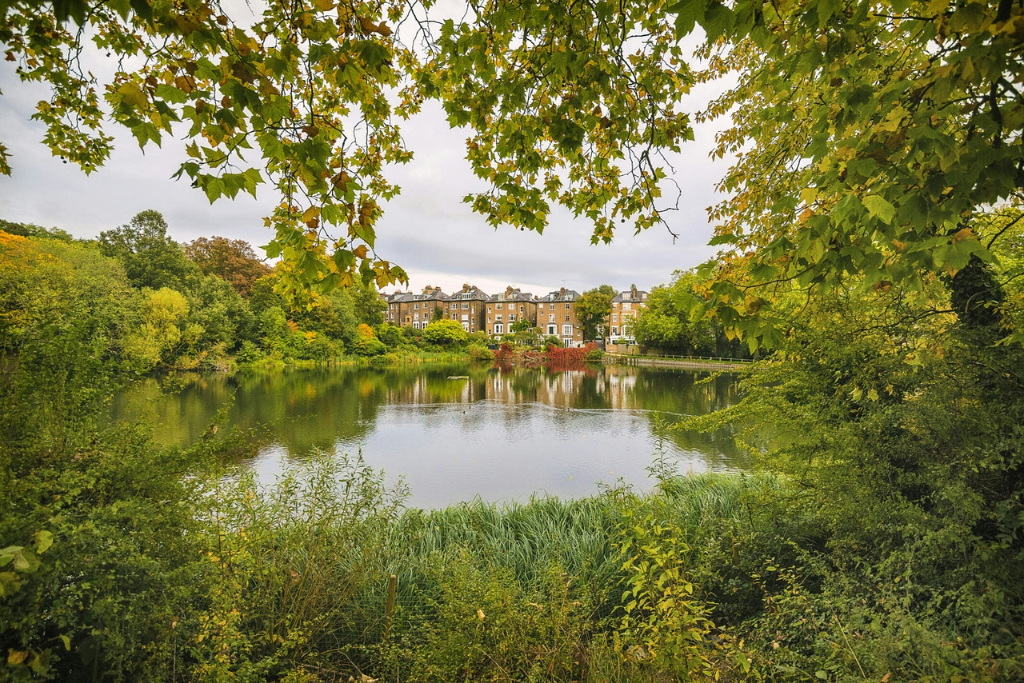
Hampstead sits on a hill above the city with a village high street, the vast Hampstead Heath, and Kenwood House — a Neoclassical mansion with free art collection and summer concerts on the lawn. The Heath’s three swimming ponds — men’s, women’s, and mixed — are open year-round and have a devoted following of wild swimmers. The Holly Bush, a Grade II listed 18th-century pub tucked up a quiet lane off Holly Mount, and The Flask on Flask Walk, serving pints since the 17th century, are two of the finest pubs in London.
Richmond offers the closest thing to the English countryside within the city limits. Richmond Park — 2,500 acres of ancient royal parkland with free-roaming deer — is one of London’s great escapes. The park and surrounding streets are the real-life filming location for Ted Lasso; the show’s Crown and Anchor pub is based on The Prince’s Head on Richmond Green. Kew Gardens, 300 acres of Royal Botanic Gardens founded in 1759, is next door and could consume an entire day. The Kew Bookshop opposite the station and Lloyds of Kew for rare and vintage books are both worth seeking out. Dine at The Dysart Petersham — one Michelin star for seven consecutive years in a beautiful Arts and Crafts building — or at Petersham Nurseries, where Italian-accented seasonal food is served in glasshouses draped in bougainvillea and jasmine on the edge of the park; one of the most atmospheric dining settings in the city.
Battersea has been transformed by the opening of Battersea Power Station as a mixed-use development, bringing new energy to a previously overlooked stretch of the south bank. Stay at Art’otel Battersea, designed by artist Jaime Hayon with a rooftop pool overlooking the chimneys. Dine at JOIA on the 15th floor — the London debut of two Michelin-starred Portuguese chef Henrique Sá Pessoa, with Iberian cooking and 360-degree views across the city.
Stratford and East Bank have been transformed by the legacy of the 2012 Olympics into one of London’s most ambitious new cultural quarters. The V&A East Storehouse opened in May 2025, giving behind-the-scenes access to over 250,000 objects — from Elton John’s costumes to David Bowie’s archive; the V&A East Museum opened in April 2026 celebrating London and global creativity. Sadler’s Wells East, the BBC Music Studios, and London College of Fashion complete the East Bank cluster. Westfield Stratford City — one of Europe’s largest urban shopping centers — is on the doorstep for everything practical. Worth the journey east.
Feature image courtesy of Ben Griffiths, Unsplash. Travel Curator may earn a commission from product or booking links on this page.