In the transportive Danish town of Odense, on the farm-abundant island of Fyn, I ramble down the old town’s cobbled serpentine streets in awe. Wood-beamed, gabled cottages with red-tiled roofs capped with witch-hat steeples line the pathways. Flower boxes sport blooms and flower-flecked vines climb across exterior walls like kaleidoscopic spider webs. A vintage-style cruiser bike leans all catawampus on a white picket fence, which imparts a timeless feel — the sort which makes you forget what century you’re in. Swans suddenly appear, toddling down the street like actors sent from central casting, their fluffy feathers damp from a swim. I half expect them to speak to me. After all, this is the birthplace of legendary storyteller Hans Christian Andersen and those birds might be animal characters from a tall tale, creatures with advice for a human who has lost her way.
But, the birds waddle onward, down the street. My childlike mind imagines that they’re off to meet The Little Mermaid or The Princess and the Pea, some of Andersen’s best loved main characters. Odense has grown to be Denmark’s third largest city, but this historic old town quarter has changed very little since I first saw it years ago. Perhaps this is what it looked like when Andersen grew up here, the son of a shoemaker, a child full of fairytales that he would eventually write down for us all to enjoy.
“Life is the most wonderful fairytale,” Andersen wrote, reminding us to find fantasy everywhere.
In his honor, we share a list of some of the world’s most storybook-like towns, cities, and neighborhoods.
Hallstatt, Austria
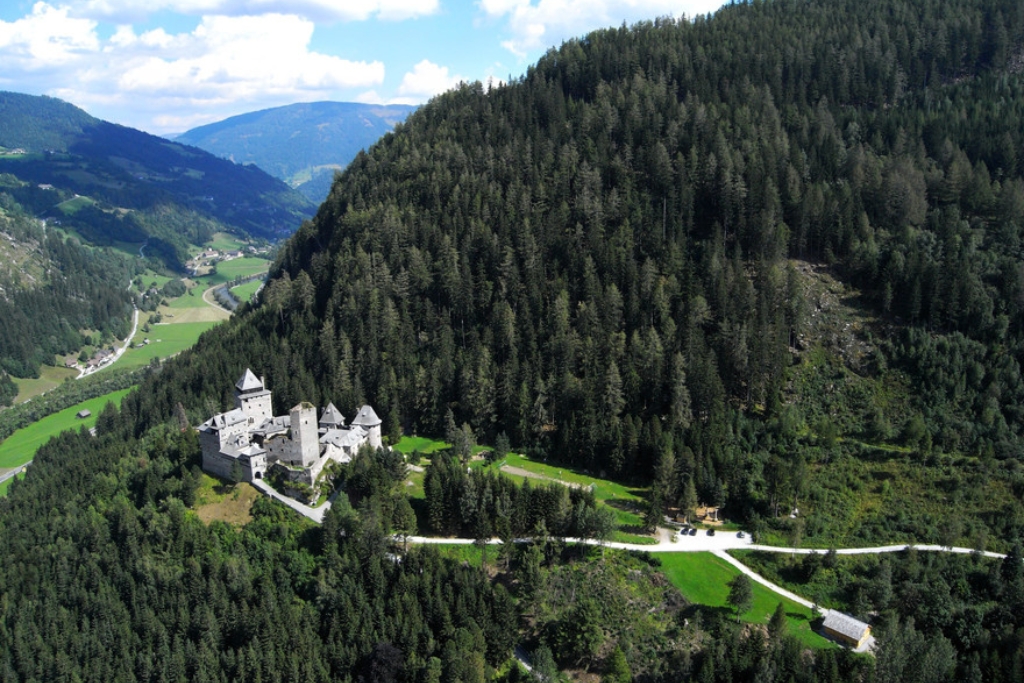
Beyond a sharp curve in the Salzkammergut’s Dachstein Mountains, Hallstatt emerges like a dream. Its five centuries-old, timber-built houses as crowded on the winding narrow streets as teeth in a small mouth, charmingly flow down a steep hill to line the mesmeric banks of a gleaming lake. Their wooden flower boxes burst with color, complementing the dirndl and lederhosen outfits the residents wear. Small boats beckon, bobbing on the water. UNESCO listed, the car-free village attracts crowds aplenty, so plan your visit for offseason, if possible Don’t miss a trip to the 7,000-year-old salt mine, purportedly the world’s oldest, and accessed up the mountain by funicular, then inward via an ancient wooden slide.
Kenmare, Ireland
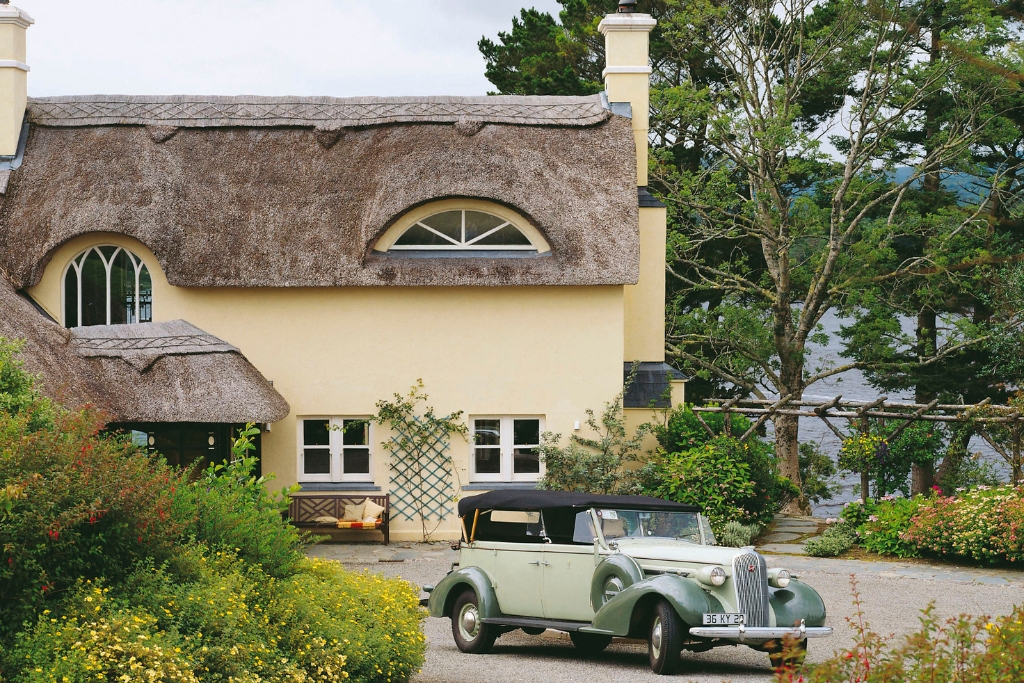
On the edge of Kenmare in County Kerry, set along the evocative Wild Atlantic Way, you’ll find a circle of sacred standing stones. But that’s not all that captivates in this postcard-perfect town bordered by lime green hills and swirling bays. Kenmare’s cobbled streets hold classic stone buildings, most faced with vintage-style wooden storefronts, hand-painted in bold colors: royal and blue, dark greens, red and such. Pubs, gift shops, boutiques, and restaurants are marked with decorative, old-fashioned lettering. Stay at romantic Sheen Falls Lodge, a former hunting lodge, located minutes away across a bridge where you can do falconry, among other pastoral activities. Need a ride? The chauffeur will transport you stylishly into Kenmare via the resort’s own, glamorous 1936 Buick.
Puebla, Mexico
Did you know that Mexico has an official designation for enchanted villages called Pueblo Mágicos (magic towns)? The classification trumpets unspoiled hamlets revered for their beauty, old-school ways, and authenticity. Puebla, the Baroque capital of Mexico (some say the world), rife with ornate buildings including some 70 colonial-era churches, manifests a bedazzling folk version of the architectural genre. Think: hand-painted Talavera tiles on wedding cake-style buildings. While the city’s too large to be labeled a “Magical Town” officially, it clearly delights the senses. Nevertheless, near the city, 12 villages have made the list. Check out Cholula for its grand pyramid and Atlixco for its vast fields of flowers and views of the volcano.
Jaipur, India
A bustling city where you might see both a camel and an elephant crossing the street, vendors selling everything from herbs to vintage keys, bike riders balancing a tower of bread on their heads, women in gem-colored saris, monkeys running amok, flower markets, and lavish palaces, Jaipur summons an otherworldly sense of cinematic drama — perfect as a Disney backdrop. Known as the “Pink City” for its array of flamingo-hued buildings, detailed with lattice screens, white painted floral borders and delicious balconies, the city simply sweeps you into its glory.
Rothenburg ob der Tauber, Germany
You can walk the entire length of Rothenburg’s meticulously preserved medieval walls, a jaunt which takes you past 42 towers, six gates, and offers a bird’s eye view of the mitty-esque town. A jolly labyrinth of serpentine streets and half-timbered houses, unique boutiques, and fine eateries, the city gets crowded during the day, but becomes almost as silent as a monk’s tomb at night — in a good way. That’s when you can immerse in its history, and when its “from a storybook illustration” charm begins to feel starkly real. Be sure to grab a photo (after the influencers leave for the day) of The Plönlein, a quixotic half-timbered house that rises between two cobblestone lanes like a flower growing. Sign up for the amusing and informative Night Watchman Tour. Best time to visit? During the festive season to enjoy Rothenburg’s joyful Christmas market.
Chaoeun, Morocco
Chaoeun is love at first sight. Radiant, bold, blaring, playful, its myriad blues cover the city like a sea; they fuse with the sun to project off the buildings like little explosions of periwinkle light. The abundance of blueness — walls, doors, stairways — is like an animating elixir. Walking through twisty, cobbled streets, in search of a riad feels like swimming in a sea of blue. Along the tawny cobblestoned pathways, some sparkly with light, piles of Berber rugs (orange, red, pink, green) stand in stacks, ruby-colored baskets hold leather goods, trinkets, skeins of thread, sweaters, a rainbow of pigments and paints, and brass tea services, while woolen cloaks (called djellaba) hang on hooks against the endless blue backdrop. People, traditionally dressed, sit outside sipping from tiny cups. The eye-popping town in northwest Morocco takes some effort to visit. It’s further afield, but well worth the journey.
Maienfeld, Switzerland
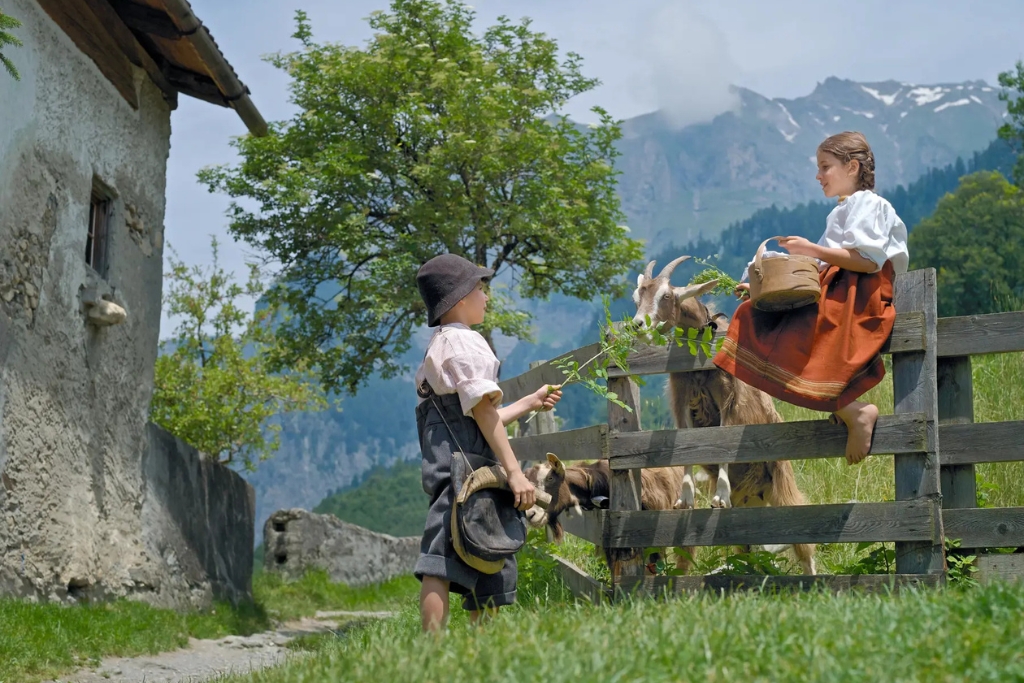
Two miles across the Rhine River from the spa town of Bad Ragaz, Maienfield in the mountainous Graubünden canton, is literally a storybook village — and not just because it looks picturesque. A bucolic idyll from the get go, Maenfield never aspired to be quaint or fetching. Characteristically created over time with narrow streets, fountains hewed from local stone, surrounding vineyards, and centuries-old stucco cottages, it continues to embody the rustic simplicity of this Alpine region. That’s what caught writer Johanna Spyri’s attention, when she set her beloved 1880s children’s classic, Heidi, in Maienfield and the surrounding environs. Today visitors can delve into Heidi’s story with a visit to Heididorf (the Heidi village), composed of restored, reconstructed 1880s-era buildings, complete with goats to herd and horse-drawn carriages for a ride. Adults can wine taste or hike the Heidi Trail, a popular path through the Alpine foothills. And everyone can simply mull over the scenery, which hasn’t changed much since Spyri wrote her novel.
Colmar, France
With its ancient half-timbered architecture and Renaissance flourishes, bay windows, and ornate wooden galleries, Colmar reigns as a peerless example of Alsace’s unique blend of German and French cultures. Step into town and you may think you’ve been cast as a cartoon character in a rendition of Beauty and the Beast because the cityscape is so fairy-tale fantastic. Abundant with flowers, unless carpeted by snow, the town’s restaurants waft a perpetual perfume of sausages and sauerkraut — embodying its blend of border region personalities. With canals snaking through key neighborhoods like La Petite Venise (Little Venice), it offers must-see sights such as Maison Pfister, a 16th-century building with an octagonal turret, elaborate woodwork and allegorical murals and museums such as Unterlinden with its renowned art collection. For an afternoon break, order up a glass of fruity Gewurztraminer, likely made minutes from town.
Franklin, Tennessee
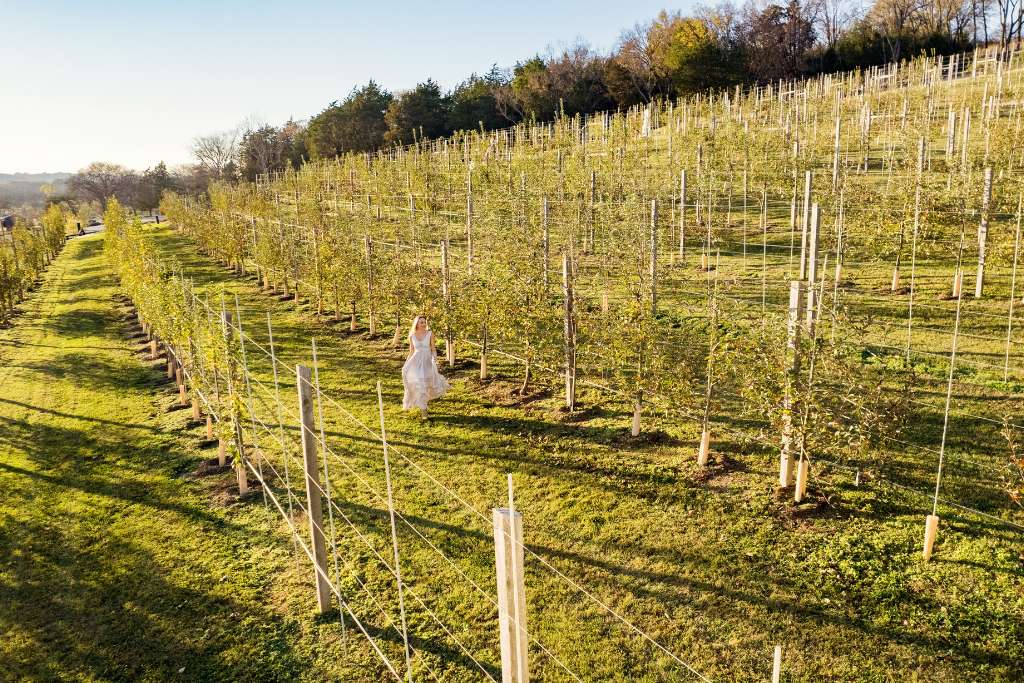
It’s an unexpected sight in the middle of Tennessee’s verdant horse country, a best-kept secret kind of place, just 20 miles south of Nashville. Historic, with a vibrant live music culture and loads of landmark buildings, Franklin has a Main Street so quintessentially Hallmark movie-like in appearance that the franchise has used it for a plenitude of films. Its brick-sheathed sidewalks and pristine 19th-century architecture are just some of the reasons it received Great American Main Street status from the National Trust for Historic Preservation. Franklin brims with galleries, specialty shops, au courant restaurants, and playful vintage showpieces, such as Gray’s on Main, a reimagined 1870s pharmacy. Best of all, Franklin has ethics: it boasts 100 percent LEED certification, setting an example for towns everywhere. Take a break at Landmark Booksellers, located on Main Street, one of the nation’s most storied independent bookstores.
Castle Combe, England
You’ll think you’re watching a British detective television mystery until you realize that this archetypal Cotswold village in Wiltshire conjures real life magic. On the Bybrook River, its amber-colored stone cottages once housed artisan weavers. Miraculously, the village has been left unscathed by modern “aesthetic” annoyances — such as television aerials or visible wires or grotesque modern architecture. Homes date back to the 1600s — and no new ones have been built since. Take advantage of an honesty box, where residents vent baked goods and crafts via front yard caches. Peruse the 14th-century Market Cross and St. Andrew’s Church, before a pub lunch with the kind of ambiance that never goes out of style.
Fjaerland Norway
What could be more fairytale-esque than a toy-town obsessed with books and the stories they tell? Poised deep within a dramatic fjord’s arm, hemmed by glacial expanses and bordered by thick woods, remote Fjaerland isn’t merely precious. It’s a book-filled lollapalooza, where shelves, book boxes and book stands, large and small, dominate every nook and corner. Think: books shelved in boathouses, front yards, piers, open air sheds, phone booths—even pig pens. Rich with farm animals who might be storybook characters themselves, friendly residents and characteristic wooden buildings painted in bright colors all in a row, Fjaerland became Norway’ s first official “book town” in 1995. Explore Fjaerland, as well as a collection of other quaint villages on a customized, VIP trip with Up Norway, an upscale outfitter who offers itineraries meant to peel back the layers of their destination.
Featured image courtesy of Austria Tourism.