Download our pins at the bottom to save every place to stay, eat, shop, and drink to your Google Map app.
Among Barcelona’s considerable charms, there’s the fact that it’s human in scale. Even with its metropolitan-area population of nearly 5 million people, the footprint of Spain’s second city simply isn’t that large. It’s largely flat and delightfully walkable, with a user-friendly metro that makes getting around easy. Still, the choice of where to stay in Barcelona merits some thought, as the visitor’s experience among the ancient warren of the Gothic Quarter is quite different from that of the wide, leafy avenues of Eixample.
But come to think of it, savvy visitors to the Catalan capital probably don’t want to stay in either of those famous neighborhoods, particularly not for their first visit, and especially not in the summer, when the tourist density gets high and local frustrations can run even higher. That’s where expert insight comes in. Lots of guides will point you toward the best neighborhoods in Barcelona — complete with “insider secrets” with their own Instagram pages and “hidden gem” tapas bars that have become TikTok darlings — but we’re offering something different.
Our curated guide is based on frequent return visits to this city that we love, as well as personal recommendations from Spanish and international tastemakers who’ve chosen to make this cosmopolitan capital their home. “Live like a local” is surely one of travel’s emptiest clichés — locals commute to work in the morning, stand in line at the post office, and go to the dentist, after all, while you’re there to have fun, eat some jamón Ibérico, and gawk at the Gaudí — but choosing the right neighborhood can make all the difference between feeling like you’re staying in a beautiful museum or immersed in an imperfectly modern city.
That’s not to say one is better than the other. Even with its relatively compact size, Barcelona is a city of neighborhoods. Here, we’ve broken it down into eight districts and compiled our recommendations for memorable hotels, spots to eat and drink, and boutiques to know. In many cases, these addresses are worth flagging no matter which part of the city you choose for your base. Not only do they merit a trip, but they can also provide an excuse to indulge in one of Barcelona’s greatest pleasures: strolling in the sunshine amid the architectural treasures, and thanking your lucky stars to be in this wonderfully urbane corner of the Mediterranean.
Gothic Quarter
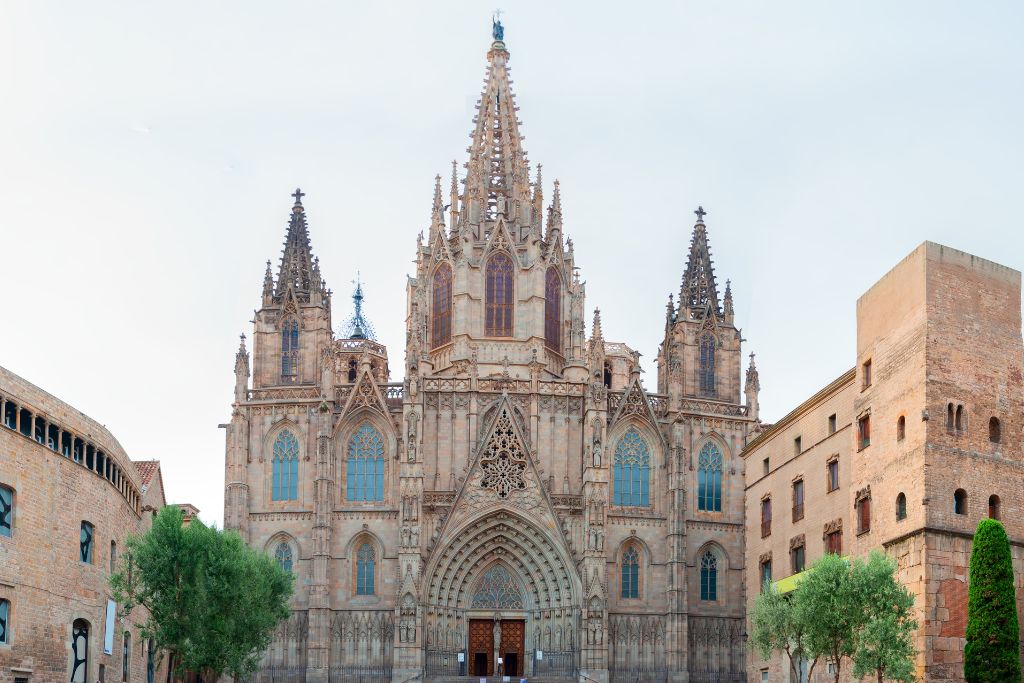
The Gothic Quarter, or Barri Gòtic in Catalan, is Barcelona’s oldest district. It was built over the Roman settlement of Barcino and layered with medieval architecture that the city has been restoring and sometimes embellishing. There are worthwhile attractions, such as the Barcelona Cathedral, Plaça Reial, and the Roman ruins visible through Plaça Sant Jaume. But more than any particular address, these narrow streets to the east of Las Ramblas merit a wander with no destination in mind, particularly in the early morning or golden evening, when the slanted light adds to their romantic allure. While it’s true that the Gothic Quarter is packed with tourists, heavy on souvenir shops, and navigationally challenging, it’s also at the center of sightseeing and nightlife. This means it’s well-suited to first-timers and short-stay visitors who want proximity to landmarks.
Places to Stay
- Hotel Neri — A small luxury hotel carved from a 12th-century palace on Plaça Sant Felip Neri; the rooftop terrace is one of the most atmospheric in the city.
- The Wittmore — An adults-only, design-forward hideaway with 22 light-flooded rooms, a living room full of thought-provoking books, and a patio with the largest vertical garden in town.
- Ohla Barcelona — A contemporary design hotel on Via Laietana with a rooftop pool that has clear views across the barrio; popular with a younger luxury crowd.
- Grand Hotel Central — A refined property on Via Laietana that balances location with a rooftop pool and service standards that hold up well under scrutiny.
Places to Eat & Drink
- Bar La Plata — An old tapas bar near the waterfront that’s stubbornly resisted modernity since 1945. Forget fancy; come here for perfectly crispy boquerones fritos and chilled vermouth poured from wood casks.
- Contraban — Forget what you think you know about hotel restaurants. This gem, within the stylish Wittmore hotel, has a wide-ranging menu of shareable plates inspired by the emotions of the creative process (impatience and frustration among them).
- Plaça Reial terrace bars — For a drink with the piazza setting, skip the obvious traps and look for the corner spots that cater to local regulars.
Places to Shop
- Sombrereria Mil — Five generations of master hatmakers, since 1856, turning out everything from cozy winter caps to flamboyant fedoras, as well as custom creations.
- Sombrereria Obach — Another hat shop with history, in this case dating from 1924, selling a curated selection of classic European and trendy American brands.
- La Veintinueve — This boutique, whose name means “the 29” and which also has an outpost in Madrid and an online shop, was founded in 2010 to offer pieces that add a bit of retro pizzazz to a woman’s closet.
Eixample
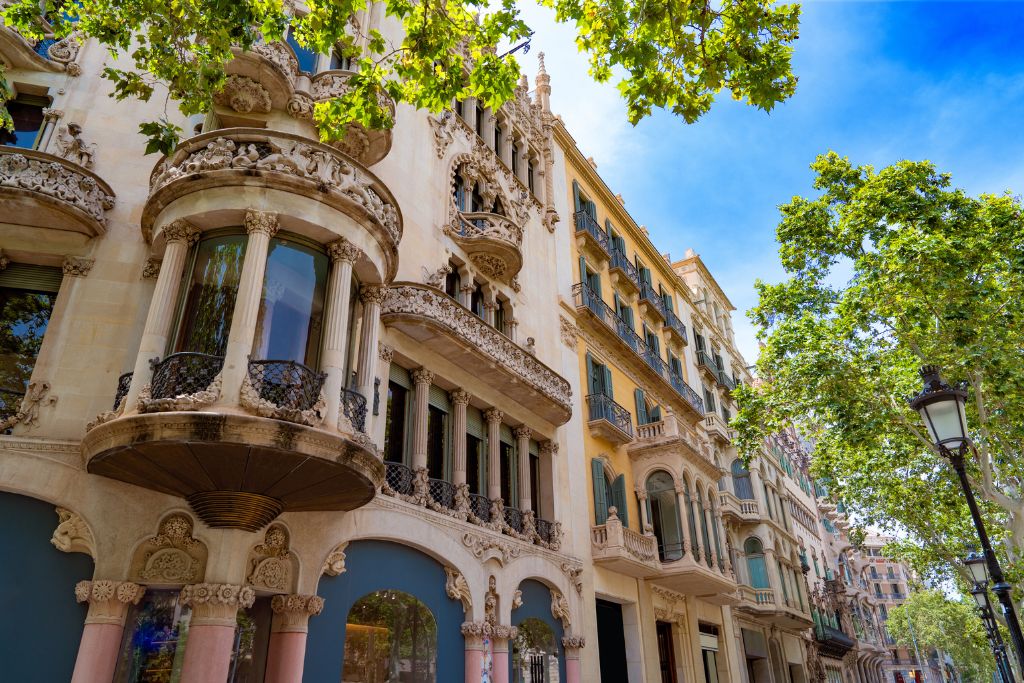
Practically speaking, Eixample is the best neighborhood in Barcelona for most travelers. This orderly, highly walkable grid that fans out above the Gothic Quarter was designed by engineer Ildefons Cerdà in the 1860s as a democratic expansion of the cramped medieval city. It’s home to the city’s most famous Modernista architecture, including Gaudí’s Sagrada Família, Casa Batlló, Casa Milà (La Pedrera), but dozens of its lesser-known Art Nouveau facades stop you mid-stride. Honestly, even the sidewalk tiles are beautiful—hexagonal and subtly patterned. The neighborhood divides along the grand Passeig de Gràcia boulevard into Esquerra (left) and Dreta (right), with the latter being denser with landmarks and more hotel-heavy. There’s luxury shopping at every turn, and the stretch known as Gaixample, around Carrer del Consell de Cent, is a hub of LGBTQ+ nightlife and has some of the city’s best bars.
Places to Stay
- Almanac Barcelona — A sleek, contemporary luxury hotel just off Passeig de Gràcia, known for its understated design, chic, light-filled rooms, plant-forward dining at Virens, rooftop pool, and one of the city’s best locations for exploring the Gothic Quarter and Eixample.
- Mandarin Oriental Barcelona — A discreet, beautifully luxury hotel designed by Patricia Urquiola on Passeig de Gràcia, with one of the city’s best rooftop pools.
- Sir Victor — A design-forward property that attracts a fashion and food-aware crowd. It’s home to a trendy restaurant from Mr. Porter and a member’s club from the Sir Hotels group.
- Claris Hotel & Spa — A neoclassical palace converted into a full-service luxury hotel, with an eclectic art collection (sculptures from the Roman Empire, Egyptian engravings commissioned by Napoleon) and a rooftop that catches evening light beautifully.
- Cotton House Hotel — A 19th-century guild building–turned–Autograph Collection hotel; the interiors are warm and textile-rich without tipping into fussiness.
- Monument Hotel — A five-star hotel set in a striking pre-modernist mansion, with food and beverage overseen by renowned chef Martín Berasategui.
Places to Eat & Drink
- La Dama — A glamorous “secret apartment” inside Casa Sayrach, where velvet-lined salons, inventive Mediterranean plates, and a seductive cocktail bar make it one of Barcelona’s most beautiful dinner reservations.
- Disfrutar — A recent number one on the World’s 50 Best (and now a worthy hall of famer) serving avant-garde Catalan cooking from three former El Bulli chefs. Book months in advance.
- Casa Fiero — New hotspot that riffs on Barcelona’s classic casa de comidas, a type of homestyle restaurant serving homestyle food at accessible prices, with a heavy dose of nostalgia sprinkled on top.
- Lasarte — Refined three-star dining from Martín Berasategui and resident chef Paolo Casagrande. The restaurant-within-the-restaurant, Il Milione, offers a tasting menu inspired by The Book of Marvels of the World, which documents the journey of Marco Polo.
- Bar Calders — A local favorite in Esquerra for vermouth, pintxos, and a terrace that fills from noon onward.
- Cervecería Catalana — Standing-room-only at peak times, but worth the wait for excellent tapas and montaditos (small sandwiches on crusty bread), paired perfectly with ice-cold beer.
- Morro Fi — A small natural wine bar with rotating bottles and zero pretension; go early or expect to hover.
- Sips — A regular at the top of the World’s 50 Best Bars list, Sips is a casual bar with a relaxed setting that belies its high-concept mixology and gastronomic approach to cocktail creation.
- Amar — Stylish new spot for Mediterranean haute cuisine, overseen by chef Rafa Zafra of Cala Jondal (Ibiza) fame.
- Mesa Lobo — Quite possibly the hippest table in town, serving no-frills raw and cured dishes, garden-fresh vegetables, and hearty stews that “taste like home” to a young crowd of restaurant insiders.
- El Nacional — Maybe it’s touristy, but no matter. El Nacional is one of the most beautiful food halls anywhere, a soaring, Art Nouveau–inspired space with separate counters for oysters and cava, DO wines and acorn-fed Iberian ham, and local beer with cured fish in a can.
- Gresca — A sleek counter-dining spot with a daring menu—heavy on organ meats and other spoils of whole-animal butchery— that may scare casual foodies away but has become something of a hangout for local star chefs.
Places to Shop
- Passeig de Gràcia — Barcelona’s flagship boulevard, lined with Zara’s HQ store, Loewe, and luxury international brands inside Modernista buildings.
- Carrer d’Enric Granados — A pedestrian street with independent boutique and concept stores selling everything from the minimalist women’s fashion at The Avant to gorgeous array of secondhand designer handbags at Cotton Vintage.
- El Corte Inglés (Diagonal) — When in Rome… The department store is reliable for Spanish brands, food halls, and anything you forgot to pack.
El Born
El Born, which includes the sub-neighborhoods of Sant Pere, Santa Caterina, and La Ribera, is the next-gen heart of Barcelona’s design and food scenes. It’s adjacent to the Gothic Quarter but has a different character: younger, more creative, less gatekeeper-y. It runs from Mercat de Santa Caterina to the waterfront near Barceloneta, and its main artery, Passeig del Born, is one of Barcelona’s better streets for a slow afternoon. A neighborhood anchor is the beautiful Basílica de Santa Maria del Mar, which was built by residents in the 14th century, before Baroque clutter took hold. The streets around Carrer del Rec and Carrer dels Flassaders hold concept stores, ceramics studios, and wine bars. Hotel options are limited but concentrated and well-chosen.
Places to Stay
- Borneta — A new boutique property from the upstart Miiro hotel group, which prides itself on finding up-and-coming locations. Many of the 92 rooms have terraces overlooking main streets like Passeig de Picasso or Carrer de la Fusina.
- Barcelona EDITION — The sleekest luxury address in El Born, with moody rooms, a rooftop pool, and immediate access to the neighborhood’s best boutiques, wine bars, and late-night energy.
Places to Eat & Drink
- Bar del Pla — The ideal lunch stop: confident Catalan cooking, cold beer, natural and biodynamic wines, and a long dining counter that reminds you that restaurants are meant to be social and fun.
- Bormuth — Standing-room-only at peak hours; arrive at noon for vermouth and a plate of something fried before the crowd makes it impossible.
- El Xampanyet — Century-old cava bar (well, 1929, but close enough) on Carrer de Montcada; the house sparkling is poured in ceramic jugs and the briny anchovies—an unlikely specialty of the house; don’t knock them until you try them — and presented as towering piles.
- Paradiso — A high-concept cocktail bar hiding out behind a humble facade, where the creations play with temperature, texture, aromas, and glassware that wouldn’t be out of place in an art gallery.
Places to Shop
- Mercat de Santa Caterina — Fresh food market beneath a Gaudí-adjacent wavy ceramic roof; less tourist-saturated than La Boqueria, and stocked with food that locals buy.
- Carrer dels Flassaders — A concentration of independent boutiques selling ceramics, leather goods, and clothing that feel uniquely linked to Barcelona.
- Casa Gispert — A 19th-century nuts and dried fruits shop with a wood-fired roasting oven still in operation; the smell alone justifies the visit.
Gràcia
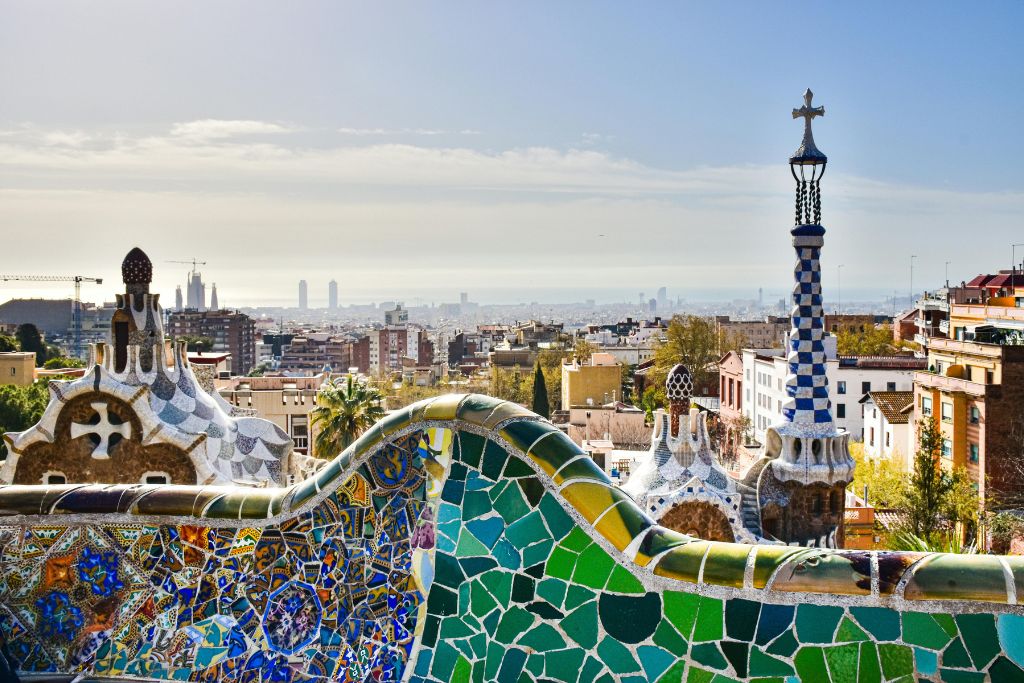
Gràcia was an independent municipality until Barcelona absorbed it in 1897, and it still operates with a village rhythm. It has squares rather than avenues, neighborhood associations instead of anonymity, and an August festival (La Festa Major de Gràcia) that enlivens every street with decoration. It sits immediately north of the Eixample and immediately below Park Güell, which makes it a useful base for anyone whose itinerary leans heavily toward Gaudí. The residents skew younger, more international (many long-term expats and digital workers), and more politically engaged than in the tourist-heavy zones to the south. The food scene is excellent for the price, the bars stay open late without tourist inflation, and the hotel options, while fewer, tend toward the thoughtful boutique end. It’s not the most efficient base for heavy sightseeing, but it’s probably the best neighborhood for living an idealized Barcelona lifestyle for a week.
Places to Stay
- El Palauet Living Barcelona — Six suites inside a Modernista palace; for those who want privacy, space, and the feel of a private apartment rather than a hotel.
- Hotel Casa Fuster G.L Monumento — the most iconic Gràcia luxury address, right at the top of Passeig de Gràcia where the neighborhood begins. It’s a full five-star grand hotel with a rooftop, jazz bar, and major Modernist credibility.
Places to Eat & Drink
- La Pepita — Creative tapas and natural wines in a beautifully tiled space on Carrer de Còrsega; a new little sister, Mini Pepita, recently opened next door with the same good food and music, plus a small terrace.
- Plaça de la Vila de Gràcia — The neighborhood’s main square is lined with simple bars that work well for an alfresco vermouth moment.
- La Pubilla — Ideal if you’re looking for well-executed Catalan cuisine with a very good lunch menu and a mostly local crowd. Very close by, from the same owners, Hermós Bar de Peix is a small seafood bar inside the market with exceptional produce.
- Shoronpo — Great ramen and even better brothless noodles.
- Tangana — Mediterranean tapas with a refined touch served in a bustling, beautiful space, from the chef who opened the beloved Bar Cañete.
- Bodega Solera — A classic tapas bar run by one of the city’s old-school restaurateurs, with a great bar atmosphere.
Places to Shop
- Carrer de Verdi — The neighborhood’s iconic street, known for its lively atmosphere, upscale cafés, and independent boutiques.
- Pic Nic — Concept shop that anchors Carrer de Verdi, worth a stop for its curated selection of fashion, accessories, decoration, and magazines.
- BeTheStore — Lifestyle and design boutique that’s strong on stylish basics, from Fjallraven Kanken backpacks to Blundstone boots, with up-and-coming local designers mixed in.
La Barceloneta
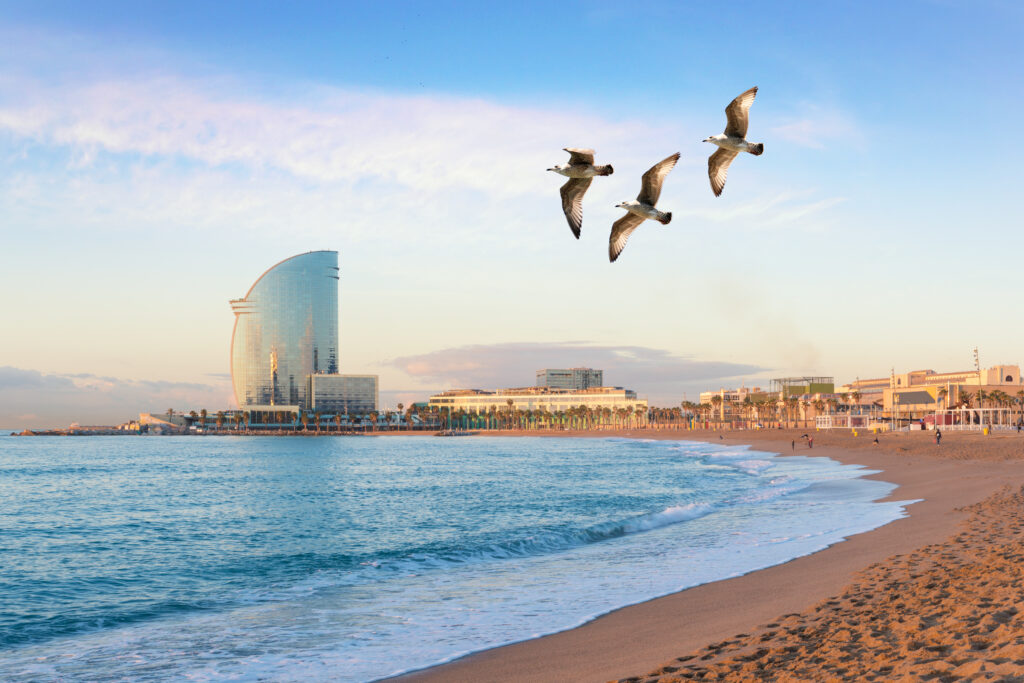
The narrow grid of streets between the port and the sea in La Barceloneta was built in the 18th century for sailors and dock workers. Today, the rough-and-tumble charm of its waterfront has been somewhat replaced by the veneer of glitz that seems to have washed off the megayachts in the marina. It gets packed with visitors in summer, and some of the seafood restaurants take shameless advantage of those newbies. (While others are genuinely excellent.) Staying here in the high season is most useful if the beach is a big part of your Barcelona plans, or if you’re arriving or departing via the cruise port. But the rest of the year, it can be quite pleasant for long lunches and coastal walks—or if you want to splash out in a high rise hotel that specializes in late-20th-century-style luxury..
Places to Stay
- W Barcelona — The sail-shaped tower at the end of the breakwater; the new Noxe restaurant on the 26th floor offers Japanese fine-dining with a panoramic view that’s worth a visit even if you aren’t staying in the hotel.
- Hotel Arts Barcelona — A Ritz-Carlton property that remains one of Barcelona’s most consistently polished luxury options; it’s worth paying for the upgrade to a sea-view room.
Places to Eat & Drink
- La Cova Fumada — Cash only, no reservations, and often closes early when the fish is all sold. One of the few seafood spots in Barceloneta that’s kept its identity.
- Bar Leo — A no-frills tavern that feels out-of-time and is beloved by neighborhood regulars for its simple tapas, loud music, and cold beer.
- Restaurant Barceloneta — Still traditional, but in this case with white tablecloths, relatively formal service, and yachtie vibes. Book ahead and order the well-executed rice dishes.
Sarrià
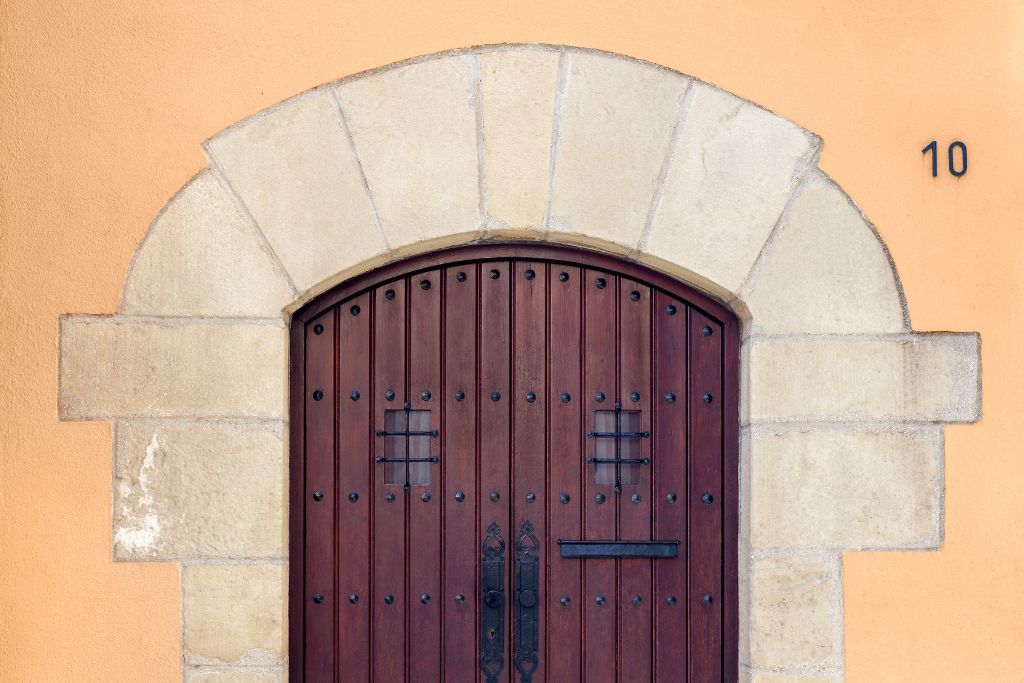
High in the hills behind Barceloneta, Sarrià still feels a bit like the prosperous medieval village it once was. It’s less than 30 minutes from the center on the FGC rail line, but its slower space and smaller scale make it feel further away from Barcelona than it really is. The area is, unsurprisingly, quite residential, largely populated by old-money Catalan families. It’s also not particularly interested in tourism, which means the restaurants are excellent and authentic without being overly expensive—no flags on menus here. The distance from the main attractions makes it impractical for Barcelona initiates, but for fourth- or fifth-timers will find much to enjoy on the lovely Plaça de Sarrià and the cobblestoned streets where the dominant language is Catalan and the commerce is practical and local.
Places to Stay
- METT Barcelona — Up the hill, atop Tibidado, the 100-year-old Gran Hotel la Florida was recently given a contemporary makeover as part of the Abu Dhabi–based METT brand featuring a large spa, indoor/outdoor pool, and spacious rooms with views of the city.
- Casa Maxence — An Art Nouveau mansion that’s owned by the Guillon family (who founded Valmont cosmetics) and previously served as the brand’s southern European office. Now its bedrooms are available as accommodations for special wellness and longevity retreats.
Places to Eat & Drink
- La Venta — A Catalan institution high on Tibidabo (above Sarrià) with the sort of stunning views that would allow it to coast on looks alone. It doesn’t: The place has been doing traditional cuisine well for decades.
- Cocina Hermanos Torres — Slightly outside Sarrià in the adjacent Les Corts neighborhood but worth the detour for the extraordinary three-star cooking of Sergio and Javier Torres and setting that’s more like a kitchen with tables inside than a traditional restaurant.
- Fragments Cafè — A neighborhood institution on Plaça de la Concòrdia where the owners aim to honor their mother by turning out reliable, satisfyingly homestyle cuisine.
- El Jardí de l’Abadessa — Reliably excellent, seasonal Catalan menu served in an enormous and beguiling garden that’s surrounded by nature.
Places to Shop
- Sarrià Shopping Hub/Carrer de Canet — A pedestrian street lined with international brands like Calzedonia, centuries-old shops, and new young designers. Occasional street markets add to the offer.
- La Deliteca — A winsome café that doubles as a wine store and gourmet shop, offering Italian products like fresh pasta, mortadella, burrata, and olive oil.
- JC Apotecari — The neighborhood go-to for self-care, including top-of-the-line natural and organic cosmetics. Expect Spanish brands like Hierbas de Ibiza as well as international finds like Aesop lotions, Creed fragrances, and Mason Pearson hair brushes.
El Raval
Historically, El Raval was Barcelona’s rougher side, the neighborhood just west of Las Ramblas that tourists were always told to avoid. But then city planners spent two decades trying to rehabilitate it, and those efforts largely worked. The MACBA (Museu d’Art Contemporani de Barcelona), the CCCB cultural center, and the relocated Filmoteca together anchor a creative community that gives El Raval its current character. It’s still gritty in places (watch your phone — but that’s always a good idea in Barcelona), culturally mixed, and genuinely interesting throughout. While the southern part still requires more caution than the main tourist zones, the northern section around the Rambla del Raval and MACBA is thoroughly transformed. It’s one of Barcelona’s best places for interesting, affordable eating.
Places to Stay
- Casa Camper Barcelona — Not officially a 5-star hotel, but a solid design hotel by the shoe brand; central, calm, and with great food, including a 24-hour snack room that’s one of the better hotel amenities in town.
- Le Méridien Barcelona — The most straightforward five-star choice for Raval, right on La Rambla with polished rooms, a rooftop pool, and immediate access to the Boqueria, MACBA, and the neighborhood’s gallery-and-bar scene.
- Hotel Bagués — A five-star boutique option just off La Rambla in the Raval/Gothic seam, set in the former Masriera jewelry palace with only 31 rooms, a rooftop plunge pool, and strong old-world glamour.
Places to Eat & Drink
- Suculent — The reason we included El Raval in this guide: a serious Catalan bistro that applies technique to traditional recipes without sacrificing their soul. It’s one of the best meals you’ll have for this price in the city.
- Bar Cañete — A long counter where diners pack in elbow-to-elbow as white-jacketed waiters serve them classic tapas based on the best ingredients from the nearby market—anchovies from Santoña in olive oil, fried artichokes from El Prat—with minimal intervention.
- Bar Marsella — Possibly the oldest bar in Barcelona, operating since 1820 and largely unchanged: tarnished mirrors, absinthe in dusty bottles, and local regulars who put up with the new arrivals.
- La Confiteria — A converted 19th-century sweet shop now operating as a cocktail bar; worth stopping by for a drink if only to admire the interiors.
Places to Shop
- Vintage stores — El Raval is ground zero for vintage fashion in Barcelona; look for pay-by-weight shops like Holala!, Vintage Kilo Raval, and Le Swing Vintage.
- Grey Street — Cute gift and treasure shop that sells ceramics, hand-printed papers, jewelry, and home and fashion accessories from local and international designers.
Poblenou
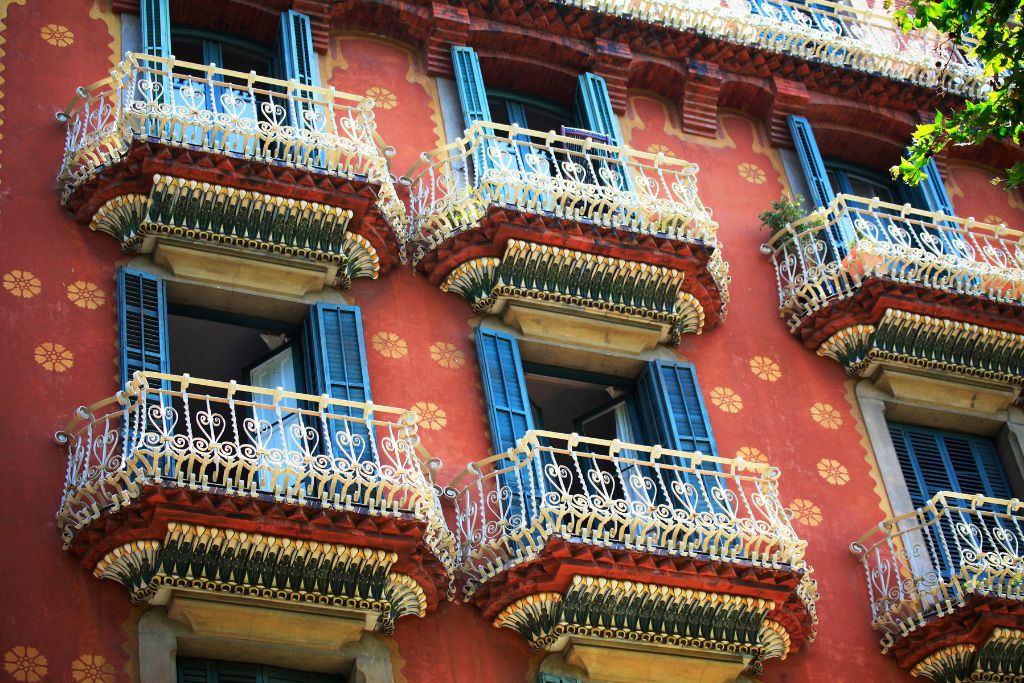
In the 19th and early 20th centuries, the coastal area of Poblenou was Barcelona’s industrial engine—the Catalan Manchester, if you will—and was becoming forgotten. It underwent a reinvention for the 1992 Olympics, when it served as the site of the Olympic Village. Soon after, it was rebranded as the @22 district, tech companies, studios, and co-working spaces filled the old factories. The unofficial reinvention, driven by artists, chefs, and nightlife operators priced out of El Born and Eixample, is more interesting. It feels like a neighborhood in transition: former factory walls covered in murals, ramen shops and natural wine bars taking over old printing houses, and a beach that’s quieter than the one in nearby Barceloneta. It’s a good choice for travelers who want proximity to the sea and immersion in an honest neighborhood that’s still in development.
Places to Stay
- The Level at Meliá Barcelona Sky — the clear luxury anchor for Poblenou, set in the district’s sleek high-rise corridor, pairing skyline views, a rooftop pool, and a polished high-rise feel with easy access to both the beach and the neighborhood’s creative energy.
Places to Eat & Drink
- Ramen Ya Hiro — Widely considered the best ramen in Barcelona; small, no-frills, and draws a committed local following.
- Can Recasens — A century-old deli and restaurant on Rambla del Poblenou that’s a reliable choice for charcuterie boards and local wine; the brick-lined space is visually extraordinary.
- Two Schmucks — A World’s 50 Best Bars alumni that relocated here; inventive cocktails in an irreverent setting that still takes its concoctions seriously.
- Federal Café — The reliable brunch option for the international crowd; flat whites, avocado toast, shakshuka, and vegan burgers.
Places to Shop
- Moryarty — Fun, playful, and beautiful vintage and vintage-inspired posters and frames at affordable prices; they ship worldwide.
- Limonada de Lavanda — A clean beauty haven specializing in natural cosmetics like face oils, perfumes, hair serums, and vegan makeup from Spanish and international brands.
Download our pins to easily save each location to your Google Maps:
Feature image courtesy of Canva Pro. Travel Curator may earn a commission from product or booking links on this page.