Gorilla trekking begins as something mythic, then quickly becomes something surprisingly ordinary: The moment the wild starts to feel unexpectedly close to home.
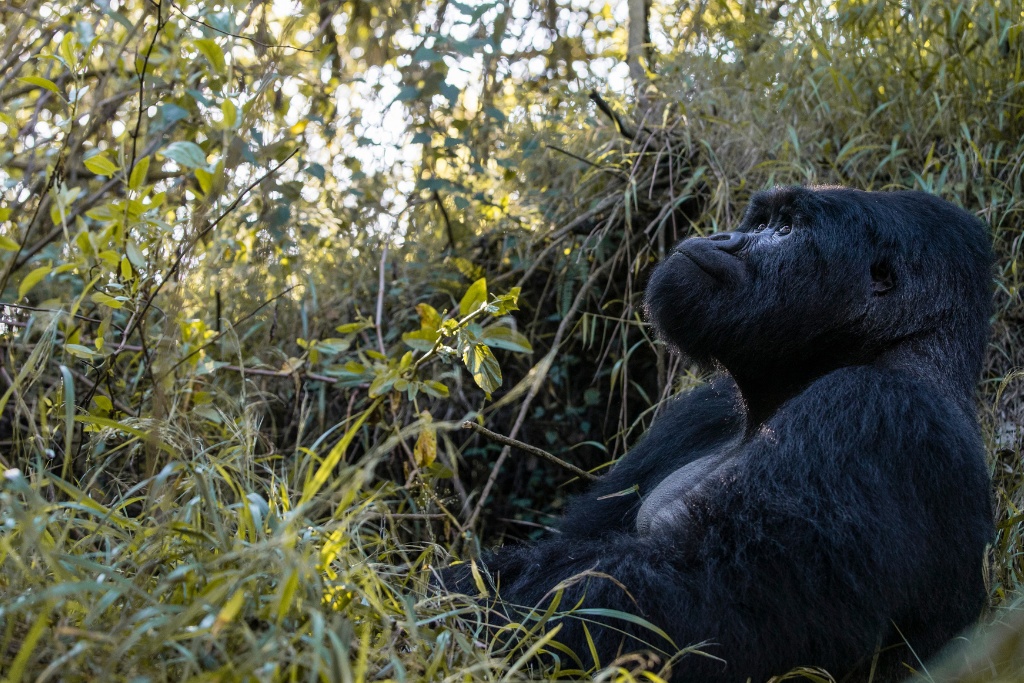
There are certain experiences that, for most of us, exist in the abstract. I have to admit, gorilla trekking was one of mine. Not something I had grown up dreaming about, nor something I had carefully plotted into a future itinerary. No, my preparation for this trip included the cult-favorite Sigourney Weaver biopic Gorillas in the Mist, which, had I seen in my formative years, would’ve definitely led to some sort of Africa vision board. Nonetheless, there I was, several hours into a climb through the dense forests of Uganda, moving slowly through the volcanic landscape that felt at once unfamiliar and deeply alive. Jane Goodall once observed that “what we choose to pay attention to has the power to shape the future.” Standing there, it felt less like a statement about conservation and more like bold instruction on being present in the moment. The first sight of them is almost disorienting. Not because they’re imposing (though they are), but because of how quickly the moment shifts from surreal to real. What began as something mythic became, within minutes, something entirely recognizable, and, dare I say, maybe even a little mundane. A family lounging the day away on a lazy Sunday. Babies clinging, teenagers circling, a father resting — life simply happening in its most natural rhythm.
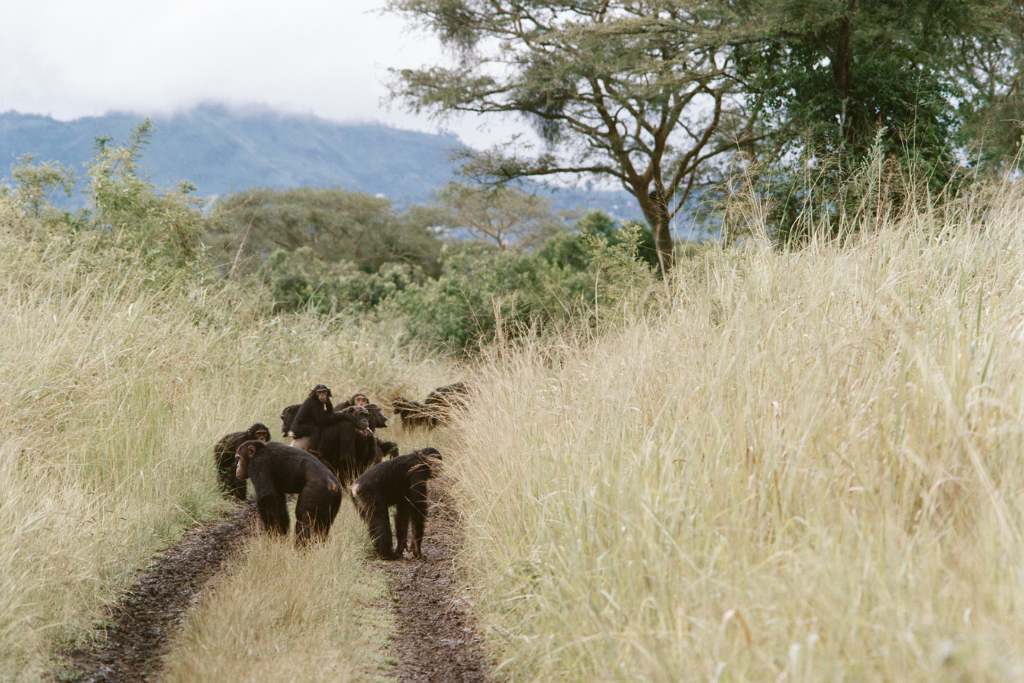
For one hour, I was able to witness these completely ordinary and simultaneously extraordinary actions. Standing just at the edge of their world, aware of both the closeness and the distance between us, I felt the weight of it all. We share 98 percent of our DNA with these beautiful beings, and yet exist in entirely different realities. It was humbling in a way that is difficult to articulate, and, in that moment, the connective tissue between place, people, and story began to come into focus.
I didn’t go to Rwanda and Uganda knowing what I was looking for or really even what to expect, which, it turns out, was exactly the point. There is a particular kind of freedom in arriving somewhere with no real reference point. No inherited nostalgia, no well-worn expectations, no version of the place you are trying to confirm or disprove. Just the simple understanding that you are, entirely, a visitor. Both Rwanda and Uganda became that for me. Two countries navigating their own trajectories. Rwanda, moving forward with a clarity and cohesion that is both striking and deliberate. A place where healing has been embraced collectively, and where that intention expresses itself in modern, creative ways. In contemporary art spaces, in design-led hotels that blur the line between hospitality and home, in a city like Kigali that invites you to stay longer than you expected. Uganda, by contrast, feels wilder. Less resolved. A place still finding its footing, where the edges are rougher and the energy more untamed, but beauty and kindness abound. Moving between the two is to realize, perhaps for the first time, that not knowing can be its own kind of clarity.
Here’s my take on trekking in these East African countries.
Don’t Sleep on Kigali
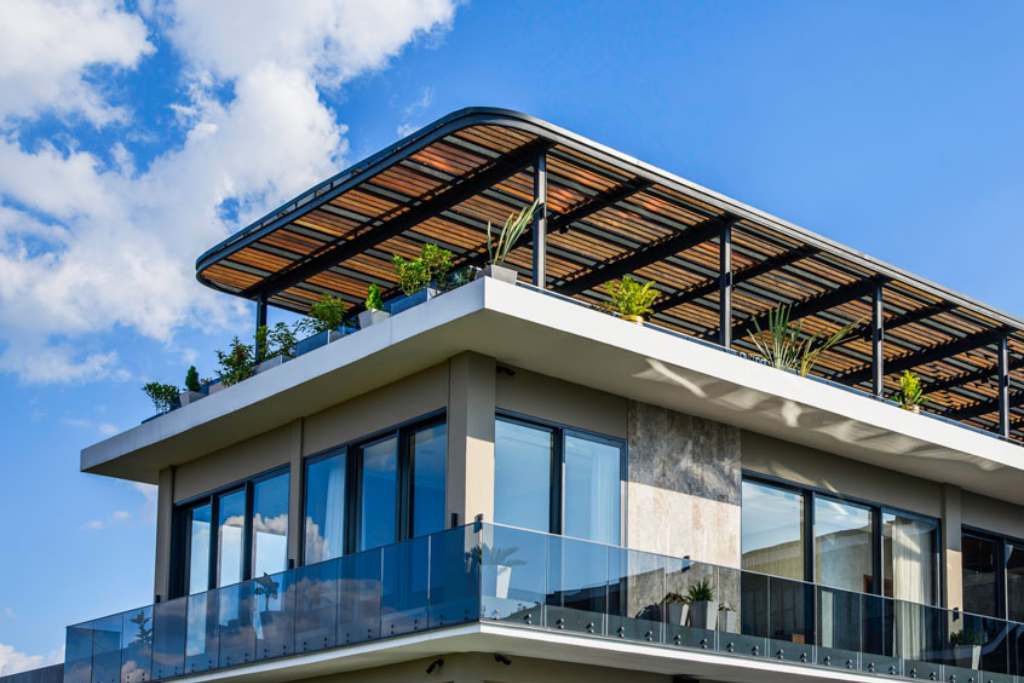
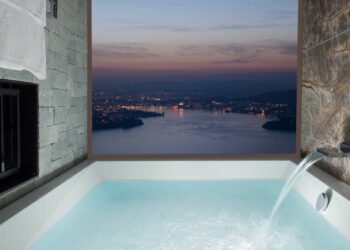
Known as the Land of a Thousand Hills, Rwanda’s topography reads like a study in green shapely curves. Showing off soft, continuous, and almost impossibly lush undulating landscapes, Kigali sits gently within this complexion, composed and confident for a city that is often treated as a prelude to the main event of heading north toward the gorillas. But this capital city has much more to offer than cozy accommodation before a trekking adventure. Case in point: Perched above it all in Rebero, The Pinnacle Kigali resists easy categorization. Not quite a hotel, not quite a private residence, but something perhaps more compelling in that in-between space where boutique hotels often reside. The first thing to strike the senses is the light. A wall of windows stretches across the main entry and living space, revealing, almost all at once, the full scale of what sits below — the pool, cut cleanly into the hillside, tiered terraces, and restaurants cleverly dotted around the property, taking full advantage of those unencumbered views of the city beyond, softened by that endless greenery. It is a moment that makes you pause, not out of excess, but because of how deliberately it has been framed. The Pinnacle trades on elevation in every sense. Balanced high above Kigali, it offers both a physical vantage point and a certain perspective on what modern African luxury can look like — clean lines, expansive volumes, a confidence in restraint, a love of the arts, and a championing of creatives.
What began as founder Sheila Kyariisima’s private residence still carries that imprint, but it has evolved into something more layered and perhaps arguably more personal. Moving through the property, spaces openly spill into one another with ease in a way that feels intuitive rather than designed. Intimate corners give way to larger, more open rooms, and back again. There is also a private members’ club element woven into the experience, lending the property a distinct sense of social energy. Not busy, never over-programmed, but ever-present. And architecturally, native materials are on display and artfully guiding the experience of discovery across the three floors. Yet, despite the sheer scale, The Pinnacle never feels out of reach. Each room is aptly named after a place significant to Kyariisima and her family, a discreet detail that feels foundational to the property’s more personal side. That sense of narrative continues through the impressive art collection, which invites participation through a self-guided tour. I found myself happily wandering without quite realizing it, in search of sculptor Maureen Visagé’s enchantingly witty Bubblegum Girls, placed throughout the property with a lightness of touch. (There are 13 in total and harder to spot than you might think.)
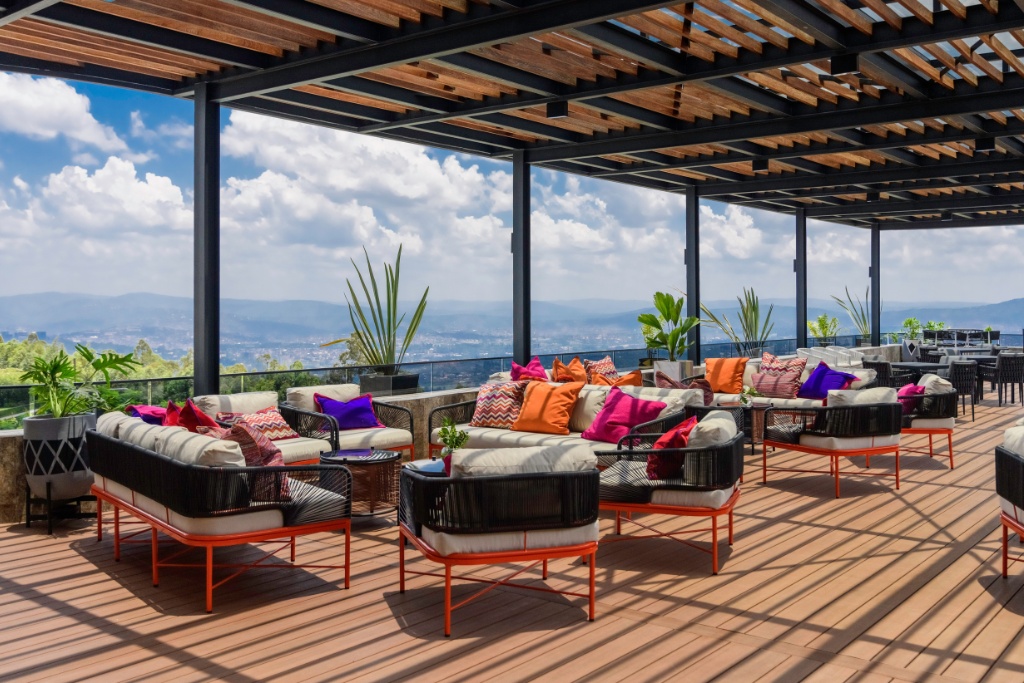
In many ways, The Pinnacle feels emblematic of Rwanda itself. A country that has taken something unimaginable and chosen to build forward. Thoughtfully. Intentionally. With a clear sense of purpose. The property acts as a main character within that narrative. A place to arrive, to recalibrate, and to understand that Kigali is not simply a stop on the way to somewhere else but rather a destination in its own right — and there is much to explore. From the energy of Kimironko Market to the impossible weight of the Kigali Genocide Memorial (a must visit to fully understand this remarkable country), from the newly opened Gahinga Institute of Contemporary Art (GICA) to a growing network of designer boutiques and cultural spaces. The city rewards those who stay long enough to pick up on its subtleties, and The Pinnacle makes that easy with concierge-led experiences and a pace that encourages exploration without urgency.
Next Stop: Uganda
The drive north toward Volcanoes National Park begins to loosen the edges of that Rwandan order and modernity. Along the way, we stopped at the Ellen DeGeneres Campus of the Dian Fossey Gorilla Fund, set just outside Volcanoes National Park. The campus is beautifully considered, its architecture low-slung and deliberate, designed to sit gently within the landscape rather than compete with it. Inside, the story of gorilla conservation is told with a clarity that is sobering and inspiring. Nearly 60 years of work, much of it pioneered by Dian Fossey and her fellow trimates, Jane Goodall and Biruté Galdikas, has been carried forward by teams who continue to track, protect, and advocate for these special creatures with a kind of unwavering commitment that is humbling to witness. It’s here you begin to understand the stakes. After absorbing the immensity of it all and partaking in a gorilla personality test — I’m a Digit (intensely curious with a gentle, trusting demeanor), which just so happens to be Fossey’s favorite — it was time to continue the journey and cross into Uganda.
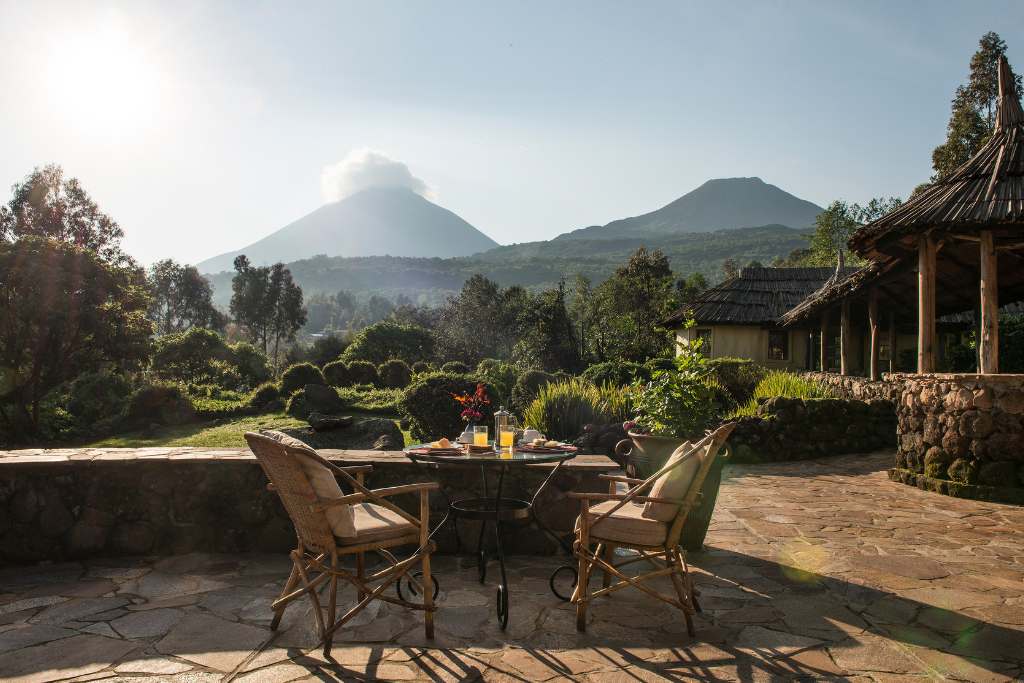
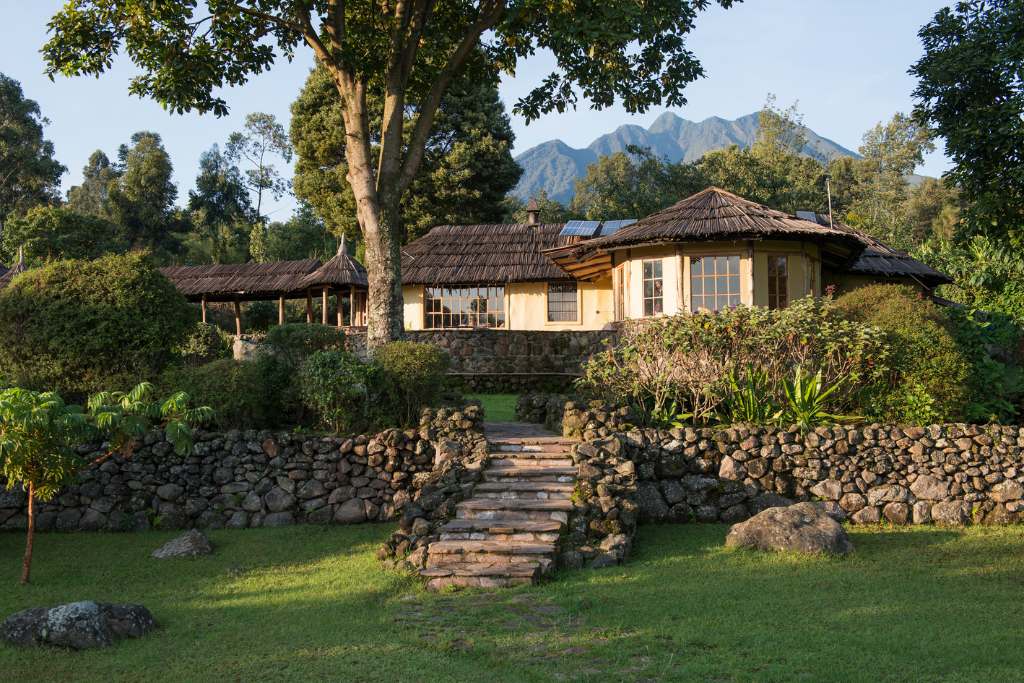
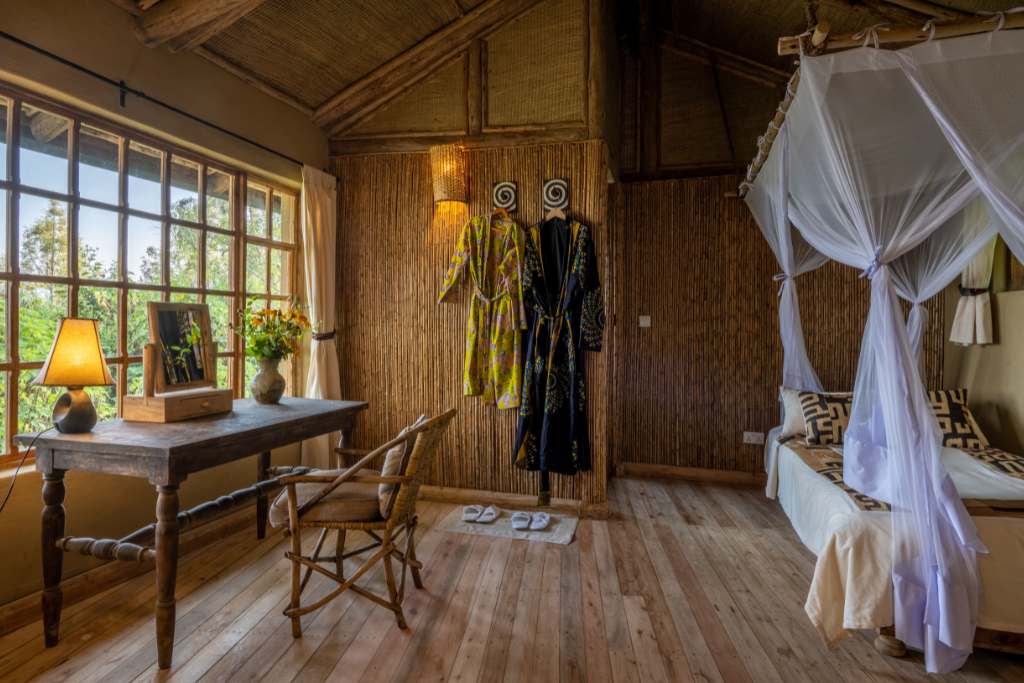
Here, the smooth tempo of Rwanda gives way to something far more raw and offbeat. Roads that were paved begin to dissolve into uneven tracks. The landscape feels less contained, the terrain softer and less defined. And then, with one unassuming right turn, Mount Gahinga Lodge, part of Volcanoes Safaris, appeared. Set high in the mountains at nearly 7,000 feet, the property feels like a welcoming refuge where anticipation for trekking is finally allowed to settle in. The communal spaces are warm in their aesthetic, and equally matched by the freestanding stone fireplace that defines the great room. The space invites conversation with fellow trekkers and travelers about the day ahead, or the day just passed, over something hot in hand. I was rarely seen without a hot chocolate, and there were always delectable treats within arms reach. The bandas themselves are a study in safari-chic interiors. Handbuilt, thoughtfully composed, each one grounded by not one but two fireplaces, an architectural nuance that feels less indulgent and more essential on damp mountain nights. And, outside, the Virunga volcanoes hold their position on the horizon with an omnipresence that I found comforting and dreamy at times in between rain spells.
Meet The Batwa
One of the oldest indigenous groups of the Central African rainforest, the Batwa lived within these forests for generations before being displaced in the name of conservation. It’s a history that cannot be simplified, nor neatly resolved. Today, many Batwa families live in communities supported, in part, through initiatives connected to Volcanoes Safaris and Mount Gahinga Lodge. Visiting one such community offered something far more valuable than observation. It was an opportunity to listen. To begin to understand, however incompletely, what it means to be separated from land that once defined not only livelihood, but identity. Like much in Uganda, the experience resists a singular narrative, proving to be both hopeful and complicated.
There are tangible efforts being made through employment, education, housing initiatives, and the preservation of cultural traditions, and Volcanoes Safaris has created pathways for support that are practical and considered — and tourism plays a big role here. What stayed with me was not just the scale of the need, but its proximity to being met. A home can be built for between $5,000 and $7,000. A figure that feels, at once, modest and immense. There is a committee within the community that helps determine where that support is most needed, ensuring that resources are directed with care and intention. Spending time there was one of the most meaningful parts of my trip. Not because it offered easy answers, but because it didn’t. It reframed travel as something more than movement through a place and gave texture to a strong and dynamic group of people simply asking for presence, awareness, and a willingness to engage with the realities that exist alongside the beauty of conservation. For those visiting the region, Mount Gahinga Lodge offers a direct way to learn more about the Batwa community and to understand how support can be meaningfully extended.
Those Virunga Views
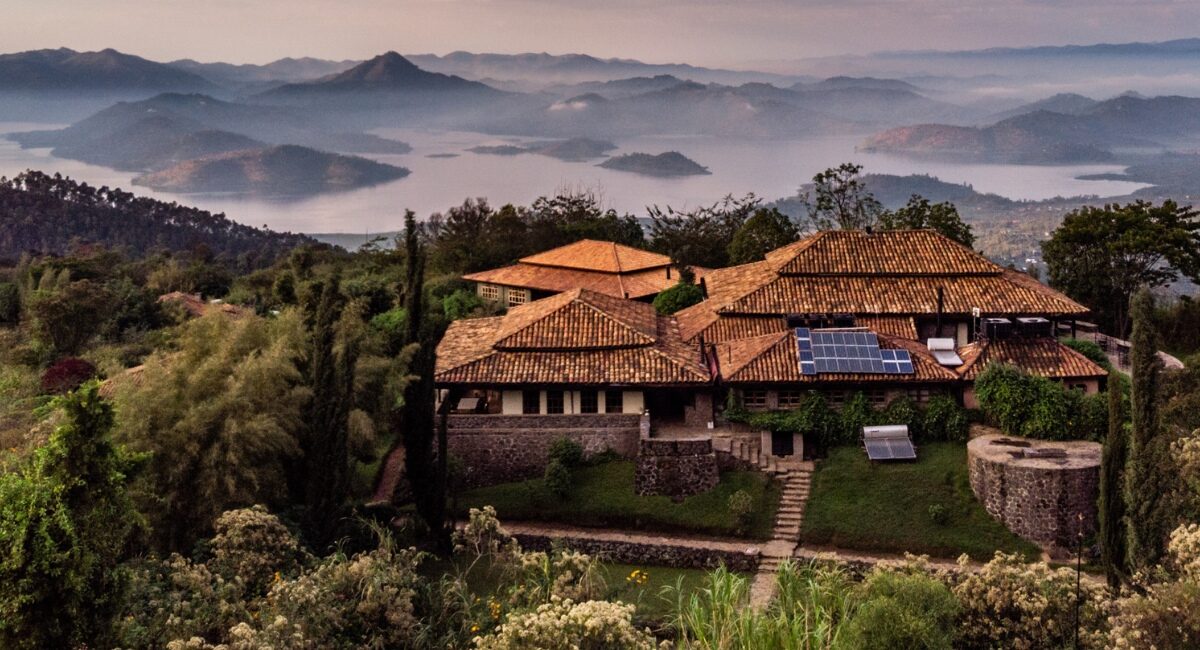
Crossing the threshold back into Rwanda, I landed at Virunga Lodge, where, wherever you are on this property, a beautiful vista just over one shoulder. It’s not just the view that defines the experience here, but the constancy. To one side, the Virunga volcanoes rise with peaceful authority. To the other, the twin lakes of Bulera and Ruhondo stretch out in soft, reflective blues. Built by Praveen Moman in the early 2000s, the hilltop escape has long set the tone for what might be described as Rwandan Afro-chic: Handcrafted details, layered textures, a sense of place that feels both rooted and enduring.
Mornings begin in the Dian Fossey Map Room, a space that traces the history of conservation while offering what may be one of the most compelling places to have coffee anywhere in the world. You sit, cup in hand, looking out across the same hills that have shaped so much of the region’s story, and it all begins to settle into perspective. Birdsong becomes a kind of background hum as you learn, almost accidentally, to identify what moves through the trees. Walks around the property turn into impromptu lessons in plant life and medicinal remedies — perhaps the landscape’s way of revealing itself in small, thoughtful ways. I attempted to learn the art of weaving Rwanda’s signature baskets. Attempted being the key word here.
That might just be my lesson to learn on this trip. To allow myself to be new at something. To engage, however imperfectly, with a tradition that carries meaning far beyond my own experience. One evening, as the light began to soften, I was treated to a traditional dance performance by members of the local community. A sharing of culture that carried both pride and joy, and which, in that moment, felt like a fitting crescendo to everything that had come before. By the time I left, there was a sense of something having settled. Not resolved, exactly, but understood in a way that felt deeply personal. A kind of palate cleanser, yes. But also a final reminder. That the most meaningful journeys are not always the ones you set out to take, but the ones that, somehow, choose you.
Feature image, courtesy of Volcanoes Safaris